
Naphtha shortage sparks renewed push to reduce single-use plastics across Japan
Shortage of naphtha tied to Middle East tensions has disrupted packaging supplies, prompting bakeries, retailers and restaurants to pilot bring‑your‑own container schemes to cut single‑use plastics.
The recent strain on naphtha supplies, a petrochemical feedstock for plastic packaging, has coincided with a small but visible rise in businesses asking customers to bring reusable containers. Local shops and food chains from Kawasaki to Osaka have begun promoting "my container" options as both a practical response to shortages and an environmental measure to curb single‑use plastics. The moves illustrate how supply shocks and growing ecological awareness are prompting retailers and eateries to test models that could reduce daily plastic waste.
Kawasaki bakery asks customers to bring containers
In early May, a small baked‑goods shop in Miyamae Ward, Kawasaki, started asking customers on its website and social media to bring their own containers for cookies and breads. Shop owner Mayumi Kawada said the store had noticed plastic packaging bags becoming harder to procure since March, with traditional suppliers struggling by late April. Kawada added that even if petrochemical supply normalizes, the shop plans to keep encouraging container reuse as a long‑term practice. The appeal has drawn steady local interest, though it remains a neighborhood‑level effort rather than a mass shift.
Retail chain expands ‘my container’ service to dozens of outlets
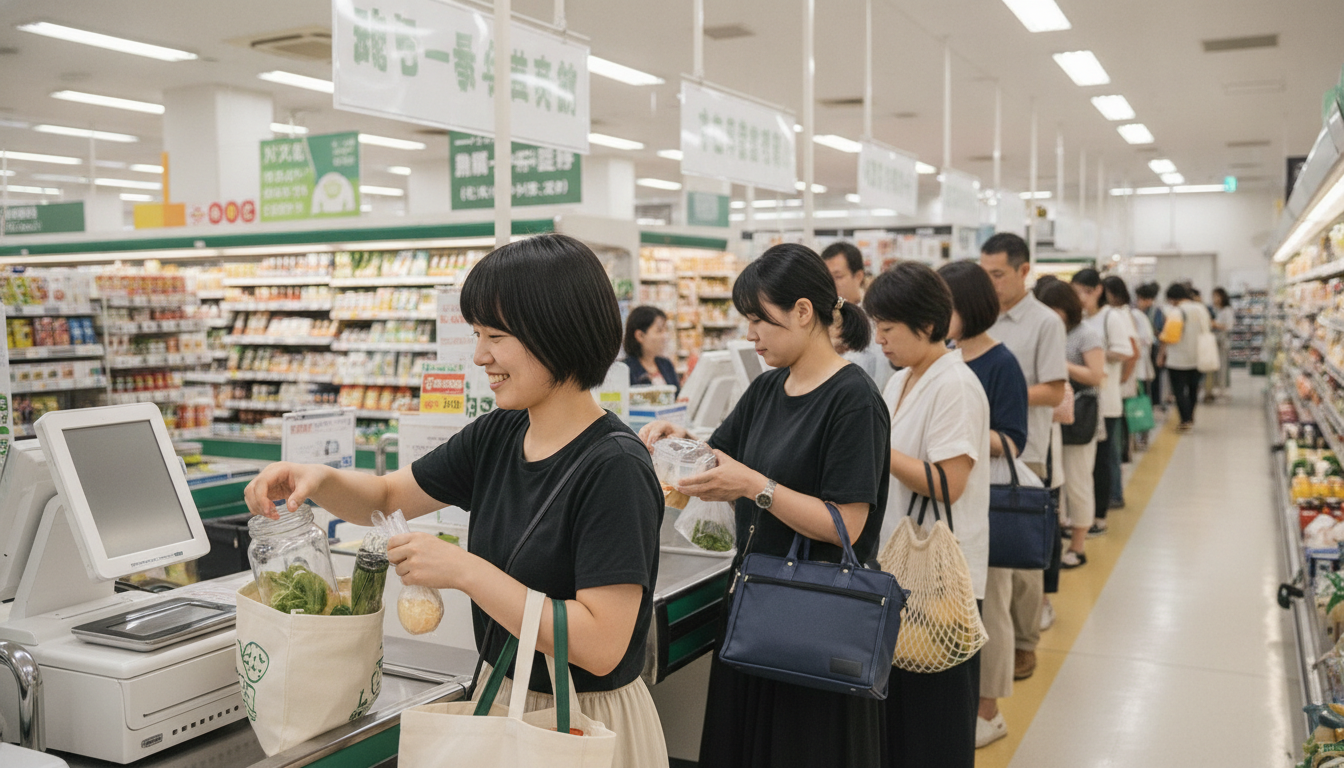
Rock Field, the Kobe‑based operator behind RF1 deli stores, introduced a service in April 2024 allowing staff to fill customers’ own containers, initially at three locations. The program has since expanded to 96 outlets as the company responds to both supply constraints and growing shopper interest in reducing single‑use plastics. A company representative said earlier uptake was modest but that more prominent in‑store signage and publicity are being considered to raise awareness. The expansion signals that major retailers see operational viability in accommodating reusable containers at scale.
Low customer participation highlights practical barriers
Despite pilots at shops and chains, businesses report that most customers do not routinely bring containers, leaving adoption rates low. Foodservice operators and retailers point to practical burdens on consumers: remembering to carry and clean containers, and arranging logistics for purchases during workday routines. A Kyoto Thai restaurant that began accepting customers’ containers during the COVID‑19 period said usage has been limited to regulars, with only one or two customers per month opting in. Owners suggest that reducing the perceived hassle—through incentives or standardized practices—would be necessary to broaden participation.
Events and sports demonstrate reusable systems can work
Where container reuse has taken hold is often at organized events and venues with centralized logistics. Festivals, concert organizers and some stadiums have introduced returnable cups and dish systems that cut single‑use plastics while keeping foodservice efficient. Those examples show that reuse works when infrastructure and staff procedures are in place and when audiences are prepared to comply with clear return and cleaning rules. The contrast with everyday retail highlights the importance of institutional support rather than relying solely on voluntary customer behavior.
Supply chain pressures behind the push for alternatives
Industry sources link recent packaging shortages to disruptions in naphtha supplies, a raw material derived from crude oil used widely to make plastic films and bags. Middle East tensions have contributed to market unease, leading some suppliers to tighten allocations and pushing businesses to seek alternatives. Retailers and small shops have felt the impact unevenly: larger chains can source substitutes or adjust procurement, while smaller operators face delays and higher costs. The scarcity has therefore acted as a catalyst for experimentation with reuse and non‑petrochemical packaging options.
Businesses call for incentives and clearer norms to scale reuse
Operators and advocates say sustained reduction in single‑use plastics will depend on incentives and standardized practices that lower the friction for customers. Suggestions include small discounts for bring‑your‑own containers, clearer labeling on what types of containers are acceptable, and co‑operative arrangements among nearby shops for cleaning and handling. Several business owners interviewed said public awareness is rising and that now is an opportune moment to make reuse more visible through signage and coordinated campaigns. They argue that policy measures and industry guidance could accelerate adoption beyond isolated pilots.
The current mix of supply disruption and environmental concern has nudged a range of food businesses to try practical alternatives to single‑use plastics. While uptake remains limited and often depends on customer effort, retailers and event operators point to concrete steps—discounts, visible promotion and improved logistics—that could make container reuse more practical. If those measures are paired with clearer industry standards and public encouragement, the modest experiments underway now could provide a template for wider change in how takeaway food is packaged.

