
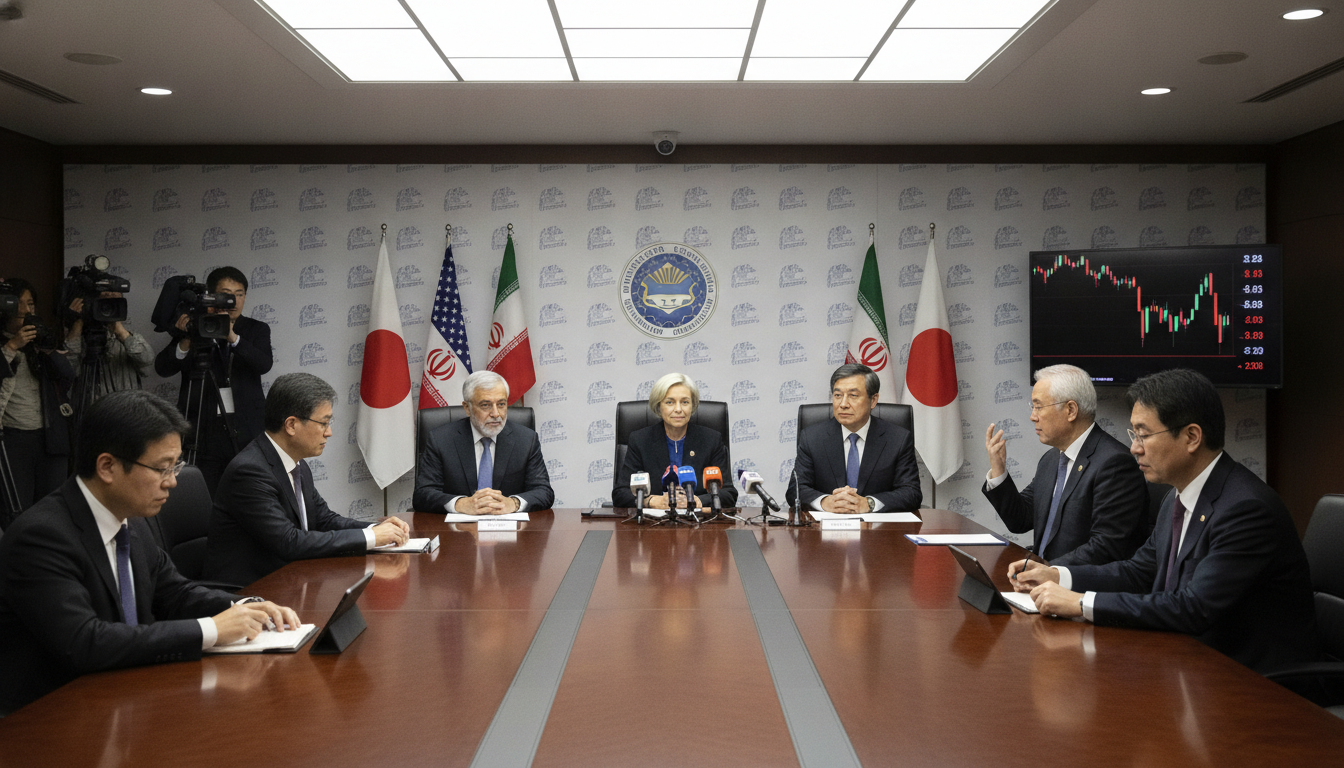
U.S.-Iran deal sparks Asian market rally but Asia’s inflation and commodity pain will persist
A tentative U.S.-Iran deal to end the three-and-a-half-month war has lifted markets, yet economists warn that commodity prices and inflation in Asia will remain elevated for months. The U.S.-Iran deal is already easing immediate risk premiums, but analysts say a durable decline in prices and inflation expectations will take time to materialize. (apnews.com)
U.S.-Iran deal sends Asian markets higher
Asian equities advanced on Monday as investors reacted to President Donald Trump’s announcement that the United States and Iran had agreed to a framework ending active hostilities. The prospect of reopening the Strait of Hormuz and ending a U.S. naval blockade pushed risk appetite higher and lifted stock indexes across the region. (apnews.com)
Trading floors saw a swift re-pricing of futures and oil benchmarks, with Brent and U.S. crude sliding from the peaks reached during the conflict. Market commentary emphasized the sharp but incomplete nature of the repricing, noting that rallies could reverse if the memorandum fails to be signed or if on-the-ground tensions flare again. (axios.com)
Oil and energy flows remain uncertain
Energy specialists caution that a political agreement does not immediately restore disrupted supply chains and tanker routes. Even with a deal on paper, it will take weeks to clear logistical bottlenecks, re-route cargoes, and repair insurance and shipping arrangements that had tightened sharply during the conflict. (apnews.com)
Analysts say the physical restoration of flows through the Strait of Hormuz is necessary but not sufficient to bring prices back to pre-war levels, because spare capacity, refinery margins and strategic reserves all need time to adjust. The lag in restoring normal volumes means elevated energy costs may continue to feed through to consumer prices. (newsorga.com)
Commodity prices to stay above pre-war levels for months
Despite the immediate price dip after the announcement, most commodity analysts expect prices to remain higher than the February baseline for an extended period. The World Bank and other multilateral forecasters have documented large supply shocks and warned that the pass-through from energy and fertilizer shortages will keep commodity price indices elevated. (newsorga.com)
Agricultural markets are notable for long transmission delays: fertilizer shortages, port congestion and logistics costs typically take months to affect planting, harvests and retail food prices. This means consumer-facing inflation in food and transport could persist well after diplomatic normalisation. (fortune.com)
Inflation pressures in Asia to linger
Economists tracking the region say Asia’s import-dependent economies are at particular risk of “sticky” inflation as higher energy and food costs feed into core measures. Surveys and central-bank reports show inflation expectations have been revised upward across multiple Asian economies, with panellists generally forecasting higher inflation for the remainder of 2026. (haver.com)
Countries with limited fiscal space or heavy reliance on imported staples may face difficult policy trade-offs, where tamping down inflation risks stalling growth. Policymakers from Jakarta to Manila and beyond are already signalling readiness to act if price pressures intensify. (japantimes.co.jp)
Central banks weigh policy responses
Monetary authorities in Asia now confront a complex mix: weaker downside risk to global growth if oil eases, but still-elevated core inflation driven by pass-through from energy and food. Rating agencies and macroeconomic forecasters expect some central banks to keep policy tighter for longer or to respond with targeted interventions to stabilise currencies and bond markets. (spglobal.com)
The Federal Reserve’s stance and any shifts in U.S. interest-rate expectations will also shape Asian monetary responses, since higher U.S. rates would strengthen the dollar and maintain upward pressure on local yields despite the peace accord. Market participants are watching upcoming policy meetings closely for guidance. (moneycontrol.com)
Impact on households, trade and corporate margins
For consumers across Asia, the relief from falling pump prices may be gradual rather than immediate, with food and transport bills set to reflect earlier cost spikes. Exporters may see mixed effects: some manufacturers gain from lower energy bills while others face margin pressure from higher input costs incurred before the repricing. (newsorga.com)
Governments and regional institutions are being urged to prepare targeted support and trade finance measures to protect vulnerable households and maintain food security while markets normalise. Multilateral bodies have advised quick action to prevent temporary shocks from becoming long-lasting setbacks for growth and livelihoods. (fortune.com)
As the U.S.-Iran deal moves from announcement to implementation, markets will continue to test the durability of the peace agreement and the pace at which commodity markets normalise. Policymakers and businesses in Asia face a transitional period where risk premia fall unevenly, and the full economic benefits of de-escalation may only materialize over several months.

