
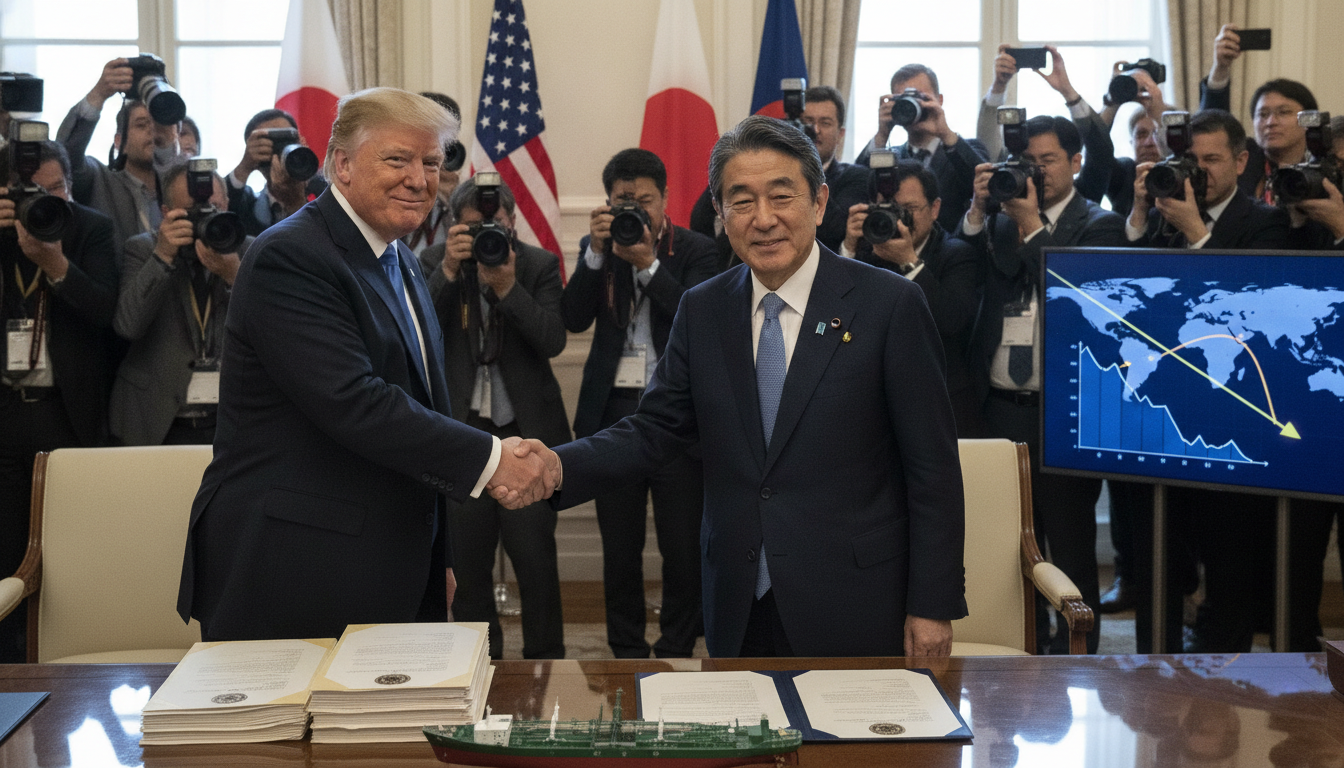
Trump Announces Deal to Reopen Strait of Hormuz, Japan May See Gradual Relief in Fuel Supply and Prices
Deal to reopen the Strait of Hormuz announced June 14–15, 2026 could ease Japan’s oil procurement, but experts warn gasoline price relief may be gradual and not immediate.
The United States announced on June 14, 2026 (June 15 in Japan) that a tentative agreement with Iran would pave the way for ending hostilities and reopening the Strait of Hormuz, a key shipping chokepoint for crude oil. The announcement raised hopes that Japan’s disrupted oil flows could normalize, though market specialists caution that physical and contractual bottlenecks will delay tangible relief. Oil-market analyst Yuki Togano of the Japan Research Institute said the agreement was foreseeable and that any easing of consumer fuel costs would take time to reach households.
Deal and U.S.-Iran Incentives
Both Washington and Tehran had political and economic incentives to pursue a ceasefire and the reopening of the Strait of Hormuz, according to analysts. U.S. policymakers faced the high-consumption summer driving season from late May through early September 2026 and the risk that surging gasoline prices would complicate domestic politics ahead of the November 2026 midterm elections.
Iran, meanwhile, saw its oil exports and foreign exchange earnings severely constrained by maritime disruptions and reciprocal measures, putting pressure on its currency and household incomes. Those converging pressures increased the likelihood of an agreement by the end of July 2026, Togano said, pointing to pragmatic motives on both sides.
Immediate Market Reaction and Shipping Constraints
Global oil markets reacted to the announcement with reduced risk premiums, but traders emphasized persistent volatility. Spot crude benchmarks fell from levels that had factored in a blocked Hormuz, yet the remove of geopolitical risk does not instantly reverse insurance, shipping and storage costs that rose during the crisis.
Tanker owners and insurers will need time to adjust policies and to re-route vessels back through the strait, and charterers must re-establish logistics and contracts that were altered during the closure. Those operational frictions will dampen any near-term drop in retail fuel prices.
Implications for Japan’s Crude Procurement
Japan remains heavily dependent on Middle Eastern crude for its refineries, so maritime access through the Strait of Hormuz is central to Tokyo’s energy security. The reopening is expected to help restore the flow of long-term term shipments and spot cargoes that had been diverted, but importers face lead times measured in weeks to months.
Refiners must also manage inventories and refinery turnarounds; even with tanker traffic resuming, Japan’s crude throughput and product stockpiles will take time to rebalance. That lag means domestic fuel markets may not reflect the full effect of restored supply immediately.
Gasoline Price Forecast and Household Impact
Togano and other market watchers say that, assuming sustained access to the Hormuz, wholesale and retail gasoline prices could ease in the second half of 2026, with a possibility that average pump prices might approach about ¥180 per liter later in the year. This estimate depends on crude returning to global markets, stable exchange rates for the yen, and no new supply shocks.
However, he warned that consumer-level relief may be muted by taxes, distribution margins and lingering insurance-related shipping costs. Given those frictions, some analysts expect most households to feel clearer price relief by early 2027 rather than immediately.
Policy Options and Remaining Risks
Japanese authorities have a limited set of short-term policy tools to shield households, including strategic reserve releases and temporary subsidies, but those measures can only blunt price spikes for a finite period. A coordinated approach with industry and careful monitoring of refinery runs can help smooth supply, while fiscal measures target the most vulnerable households.
Risks remain substantial: any breakdown in the U.S.-Iran agreement, renewed attacks in the region, or production shifts by major exporters could quickly reintroduce upward pressure on prices. Market participants will watch OPEC+ announcements and tanker insurance developments closely for signs of renewed stress.
Indicators to Watch in the Coming Months
Investors and policymakers should track several concrete indicators to assess when benefits of the Strait of Hormuz reopening reach Japan. Key signals include sustained declines in Brent and WTI benchmarks, increased AIS traffic through the strait, falling tanker insurance premiums, and improvements in Japanese import volumes and refinery utilization rates.
Exchange-rate movements for the yen and domestic wholesale margin trends will also determine how much of any global price drop is transmitted to Japanese consumers. Together, these data points will signal whether the market shift seen at the announcement becomes a durable supply-side recovery.
Market optimism after the June 14–15, 2026 announcement is warranted but cautious; the reopened Strait of Hormuz removes a major logistical barrier, yet the pathway from resumed crude flows to cheaper gasoline at the pump involves operational, contractual and fiscal steps that will play out over months rather than days.

