
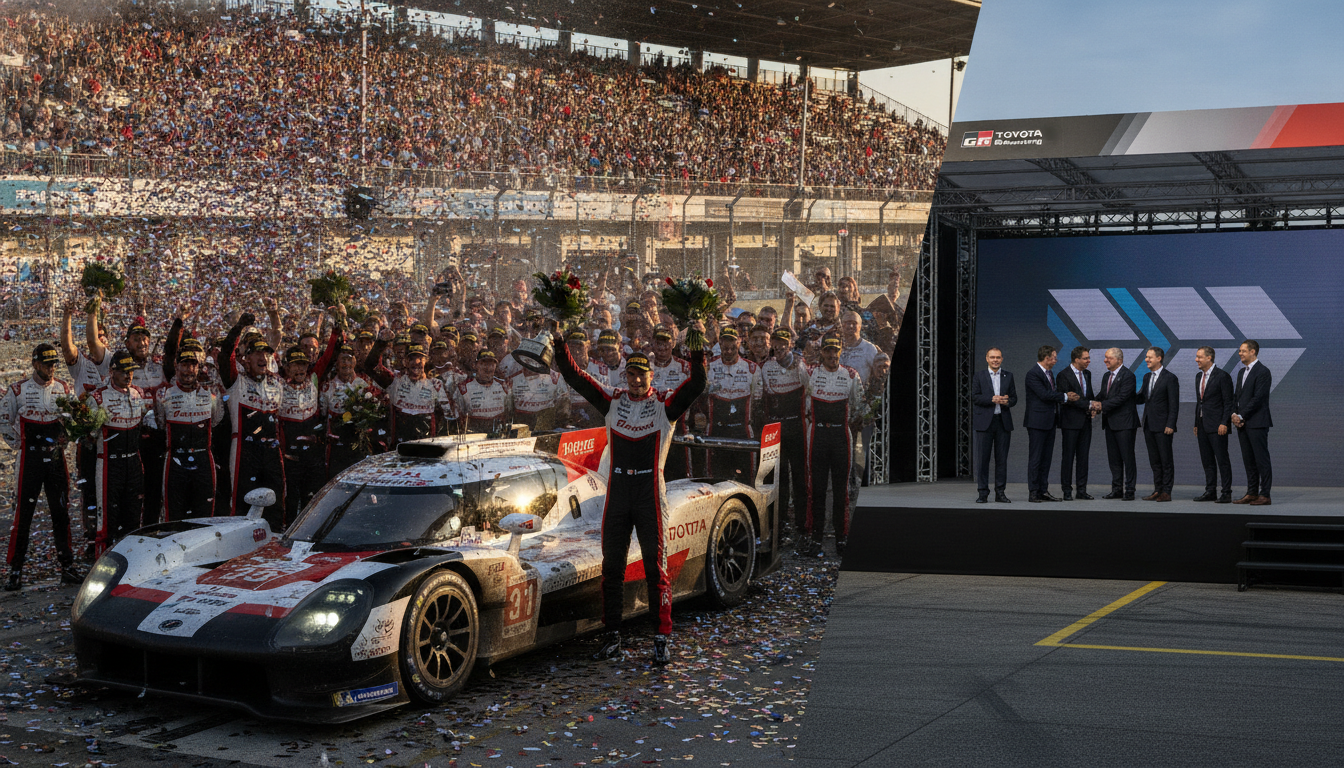
Toyota Le Mans victory credited to split of racing division as Nakajima delivers on pledge
Toyota Le Mans victory on June 14 in Nagoya paid off after the company reorganised its racing division, ending a long pursuit of an endurance crown and raising its global profile.
Toyota’s long-awaited Le Mans victory on June 14, 2026, in Nagoya has been widely attributed to a strategic reorganisation of the company’s racing operations and the promise kept by racing head Takashi Nakajima. The win by the No. 7 Toyota reinforced the manufacturer’s commitment to endurance racing and highlighted the impact of management changes on track performance. Team officials and industry analysts say the structural shift allowed faster decision-making and clearer lines of responsibility during the season.
Nakajima delivers on promise at Le Mans
Nakajima had publicly vowed to bring Toyota its next major endurance title after a period of near-misses and incremental gains. His leadership through the redesign of team structures and race strategy was cited by insiders as a decisive factor in converting potential into victory.
The racing chief’s pledge became a rallying point for engineers, drivers and support staff, focusing resources on reliability and race execution. That concentrated push culminated in the No. 7 car crossing the finish line first, delivering a headline result for Toyota Racing on June 14.
Toyota’s split of racing units cited as key move
Toyota’s decision to break up its consolidated racing division into more specialised units aimed to streamline operations and sharpen technical focus. Sources within the company say the reorganisation separated development, race operations and strategic planning into distinct teams with clearer accountability.
By decentralising certain responsibilities, Toyota was able to reduce bottlenecks in decision cycles and accelerate upgrades during race weekends. This operational nimbleness proved valuable when rapid tactical choices were required under evolving track conditions.
No. 7 car’s execution and race reliability
The No. 7 Toyota combined pace with a measured approach on endurance reliability, a balance that has eluded many competitors in previous years. Engineers emphasised durability alongside speed, and the car avoided the mechanical issues that sidelined rivals throughout the 24-hour event.
Consistent stints, careful traffic management and fault-free pit work allowed the No. 7 crew to manage wear and conserve critical components. That conservative discipline underpinned the car’s ability to challenge and eventually overcome the competition late in the race.
Strategy and pit-stop discipline sealed the win
Race strategy hinged on synchronising fuel windows, tyre choices and driver rotations to exploit the team’s strengths while limiting exposure to traffic and safety-car disruptions. Toyota’s pit crews executed with precision, shaving seconds from service times while maintaining strict checks on vehicle systems.
Those marginal gains accumulated across the race and were decisive in a contest where small leads are hard-won. Team strategists praised the clearer command structure created by the reorganisation, which simplified communications between the pit wall and the garage.
Technical developments and hybrid deployment
Technical updates this season focused on hybrid system integration, thermal management and component durability to meet the unique demands of a 24-hour race. Team engineers prioritised system robustness, allowing the hybrid powertrains to deliver performance without pushing components beyond proven limits.
These engineering choices reflected a broader Toyota aim: to showcase road-relevant technologies under extreme motorsport conditions. Success at Le Mans reinforces the brand narrative linking competition research with production car advancements.
Rivals’ setbacks shaped the final outcome
Several rival teams encountered reliability failures and strategic errors that opened opportunities for Toyota to capitalise as the race progressed. While competition remained intense throughout, late-race attrition among challengers cleared a path that Toyota’s disciplined approach was ready to exploit.
The result does not diminish the efforts of Toyota’s rivals, but it does underscore the premium that endurance racing places on consistency and organisational resilience. Teams that can marry speed with durability remain the benchmark in 24-hour competition.
Implications for Toyota’s wider motorsport ambitions
The victory at Le Mans strengthens Toyota’s position in international endurance racing and will likely influence its motorsport investment and marketing strategies going forward. Internally, executives have signalled that the reorganisation will be reviewed for broader application across global racing programmes.
A high-profile endurance win also provides a platform for Toyota to accelerate development of hybrid and electrification solutions tested under race conditions. The success is poised to bolster both the team’s confidence and the company’s public messaging about technological leadership.
The Le Mans triumph on June 14 offers Toyota a tangible payoff from its recent organisational changes and strategic focus, converting managerial intent into on-track success in one of motorsport’s most demanding events.

