
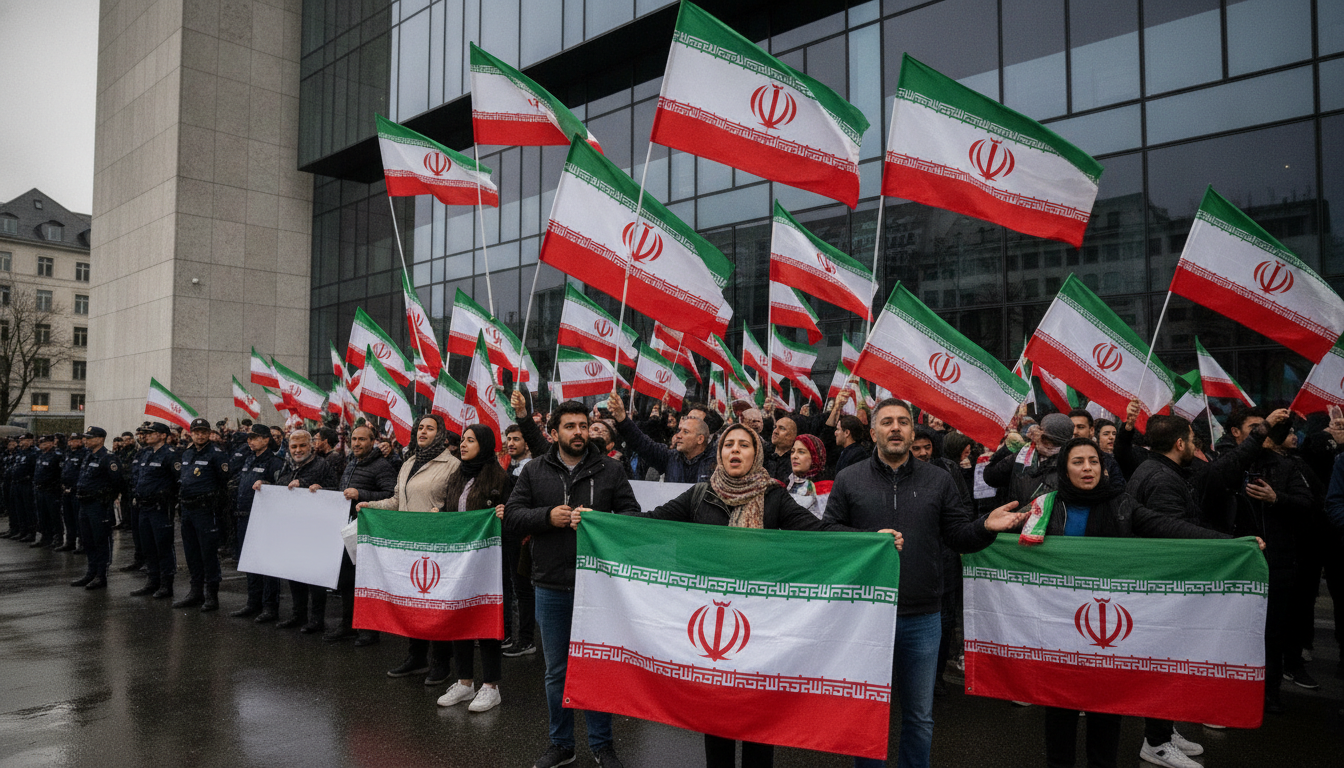
Lion and Sun flag sparks protests outside Los Angeles World Cup match
Iranian-Americans rallied outside the Los Angeles stadium on June 7 and again ahead of Iran’s opening World Cup match on June 15, 2026, when the Lion and Sun flag became the focal point of protests and security concerns. The Lion and Sun flag, favored by some anti‑regime groups, carried deep historical meaning for demonstrators but conflicted with stadium and FIFA rules that restrict political symbols. Tensions around the emblem underscored how the 2026 FIFA World Cup in the United States has become a stage for diaspora politics as well as sport.
Gatherings outside the stadium
On June 7, 2026, a crowd of roughly 200 Iranian‑American residents assembled along the approaches to the Los Angeles venue in clear weather, according to local reports. The group ranged from elderly couples to families with young children and had organized partly through social media channels. Many attendees carried flags that differ from the current Iranian national banner, drawing attention from passersby and media.
Flag used by opposition groups and its historical roots
The Lion and Sun flag dates back centuries and was used in variants under the Safavid, Qajar and Pahlavi dynasties before the 1979 Islamic Revolution. The emblem, depicting a lion and a rising sun on a red, white and green field, is widely recognized among Iranian monarchists and some opposition circles as a symbol of pre‑revolutionary Iran. For many in the diaspora the flag conveys nostalgia and a political statement against the current Tehran government, giving it potent symbolic weight at public demonstrations.
FIFA regulations and stadium policy
FIFA and tournament organizers maintain rules that prohibit clearly political signage and objects inside match venues, and stadium operators routinely enforce a list of banned items at entry points. Organizers emphasized ahead of the match that flags or banners deemed political or likely to provoke disturbances would not be allowed inside. Those planning to bring alternative national symbols faced the risk of confiscation at perimeter checkpoints or denial of entry.
Divisions among fans and the impact on players
Support for the Iranian national team in Los Angeles split along political lines, with some attendees intent on cheering the squad regardless of political differences and others using the match as an opportunity to protest. That division creates a difficult position for players, who may prefer to focus on sport while being seen as representatives of a nation in deep political contention. Analysts and community leaders have warned that the overlap of sports fandom and political expression can heighten emotions and complicate efforts to maintain a peaceful matchday atmosphere.
Security preparations and local authority response
Local law enforcement and stadium security stepped up preparations in the days before the opener, increasing staff at entry points and coordinating with tournament organizers to manage crowds. Security measures included standard bag checks, flag inspections and clear messaging to fans about prohibited items. Organizers sought to balance the right to peaceful demonstration outside the venue with their obligation to keep the stadium free from political disruption during play.
The debate over the Lion and Sun flag at the Los Angeles World Cup match illustrates how international sporting events often mirror broader geopolitical tensions. As Iranian‑American communities continue to express divided loyalties, tournament organizers and local authorities are being tested on how to uphold safety and neutrality while respecting peaceful public expression.

