
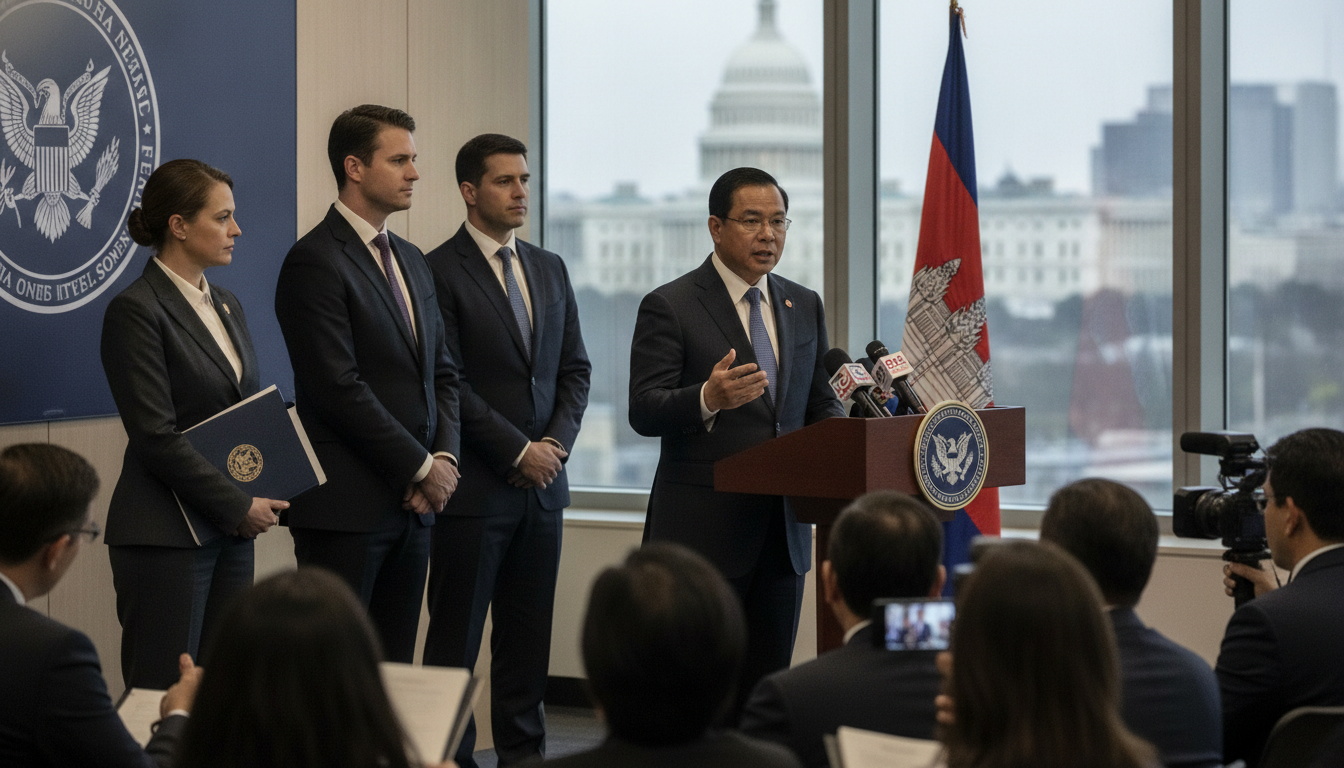
Sar Sokha Hires U.S. Law Firms to Seek Removal from Congressional Bill Targeting Scam Industry
Interior Minister Sar Sokha retained two U.S. law firms for $285,000 to press U.S. lawmakers to remove his name from a congressional bill targeting figures linked to the global scam industry.
Cambodia’s Interior Minister, Sar Sokha, has signed personal contracts with two U.S.-based law firms totaling $285,000 in an effort to have his name removed from a U.S. congressional bill aimed at individuals tied to the global scam industry. The move, confirmed by documents and statements circulated by his office, thrusts the deputy prime minister into an international legal and political dispute over allegations tied to fraud networks. The development comes as Phnom Penh faces growing scrutiny of its response to organized scam operations that have victimized people across the region and beyond.
Sar Sokha signs legal agreements in Washington
Sar Sokha personally authorized the agreements with the two American law firms, according to material released by his office. The contracts, which financial records indicate total $285,000, designate the firms to engage with U.S. legislators and legal channels on his behalf.
Cambodian officials framed the retention as a defensive legal step to contest what they describe as mistaken or politically motivated listings. The legal hires underscore how domestic officials are increasingly turning to international legal advisers when faced with foreign legislative measures.
Scope of the U.S. congressional bill
The U.S. congressional measure names figures and networks it says are connected to a sophisticated global scam industry that uses fraud, extortion and illicit finance. The bill proposes tools including sanctions and visa restrictions to disrupt those it identifies as facilitators or beneficiaries of the operations.
While the measure targets a broad set of actors linked to scam networks, being named in such legislation can carry diplomatic and reputational consequences beyond any formal penalties. Officials named in the bill have sought various remedies, from legal challenges to diplomatic engagement, to reverse or limit the listing.
Terms of the contracts and legal strategy
The signed contracts assign the U.S. firms to lobby and to pursue legal avenues that could persuade lawmakers or committee staff to reconsider Sar Sokha’s inclusion. The agreement includes outreach to congressional offices and provision of legal memoranda and supporting evidence aimed at rebutting the allegations.
Legal specialists engaged in transnational reputation matters say such retainers are common when public officials want to mount a coordinated response in Washington. The sum paid reflects a blend of lobbying, counsel and public affairs work tailored to a politically sensitive legislative environment.
Reactions in Phnom Penh and among observers
Cambodian government spokespeople defended Sar Sokha’s actions as a legitimate legal response and said the minister sought to protect his reputation and to clarify the government’s stance on criminal networks. The office emphasized that the contracts were personal arrangements entered into by the minister.
Opposition figures, rights groups and some regional analysts expressed concern that resorting to U.S. legal channels underscores broader governance and rule-of-law questions in Cambodia. Observers noted the optics of a senior cabinet minister spending significant funds on foreign counsel rather than addressing domestic enforcement gaps publicly.
Implications for Cambodia’s anti-scam campaign
The controversy arrives amid intensified regional alarm over scam centers and transnational fraud rings that have been linked to mass victimization and significant illicit proceeds. Cambodian authorities have announced enforcement operations in recent years, but critics contend those efforts have not dismantled the networks themselves.
If Sar Sokha successfully persuades lawmakers to remove his name, the outcome could reduce immediate diplomatic friction but would not resolve scrutiny of the underlying scam problem. Conversely, failure to secure removal could harden U.S. congressional support for measures that place pressure on Cambodian institutions to take stronger, more transparent action.
Potential next steps in Washington and Phnom Penh
The U.S. congressional process that produced the bill allows for amendment, debate and potential inclusion in wider legislation, meaning the issue could remain active for months. The retained law firms may seek to present evidence, arrange meetings with key staffers and propose language changes that narrow or remove individual references.
Domestically, the Cambodian government faces a choice between a public-facing push to demonstrate enforcement against scam networks and further diplomatic engagement behind the scenes. Both tracks carry political risks and may influence bilateral interactions with Washington and with regional partners concerned about cross-border crime.
As the legal teams begin outreach, attention will focus on whether lawmakers accept the arguments or proceed with the bill as written, and on how Phnom Penh frames its response to ongoing international concerns over scam operations.

