
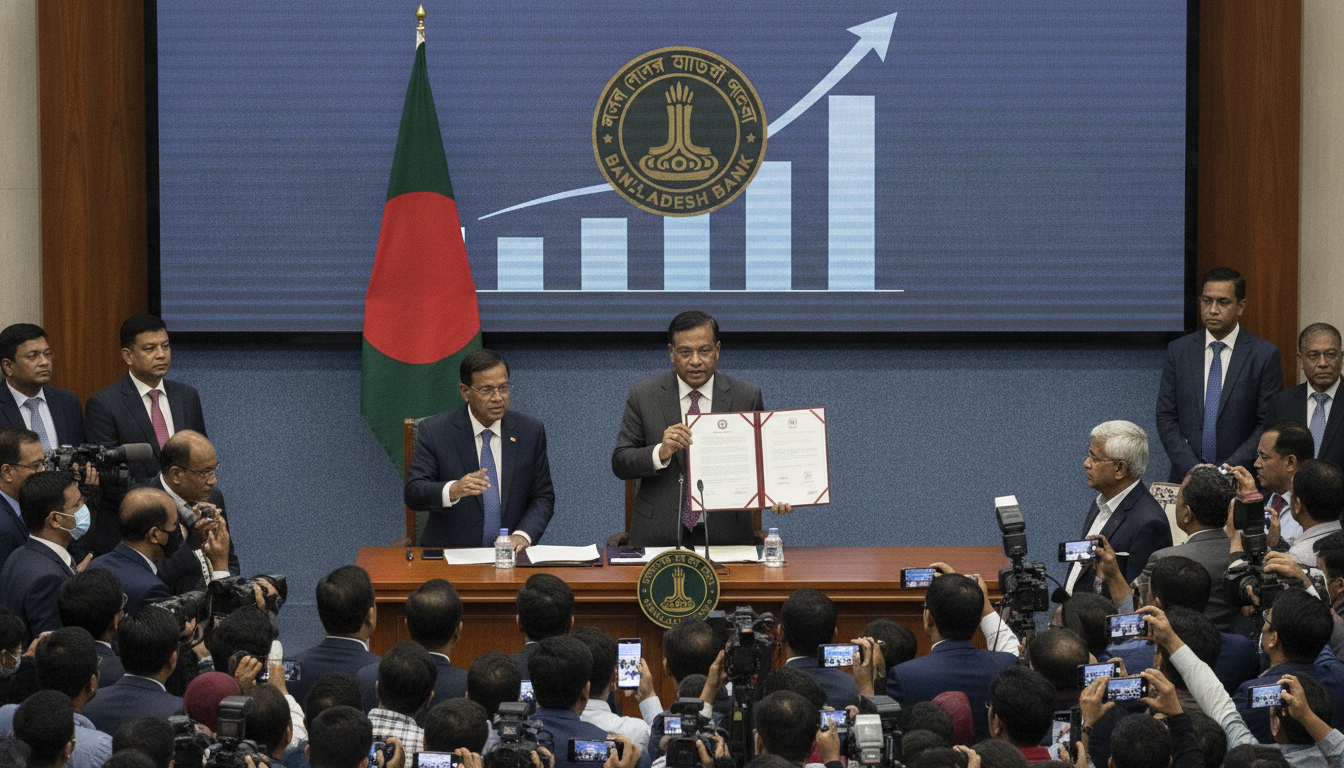
Bangladesh Banks Bailout: Government Earmarks 400 Billion Taka to Stabilize Troubled Lenders
Bangladesh allocates 400 billion taka in next budget to prop up troubled banks, addressing systemic risk amid governance failures and rising bad loans.
Bangladesh this week moved to ease mounting pressure on its banking system by reserving 400 billion taka in the forthcoming national budget to support institutions judged to be under stress. The announcement frames a pre-emptive bailout aimed at shoring up liquidity and preventing contagion, and it places the government at the centre of efforts to contain a widening crisis in the financial sector. Officials say the funding is intended to stabilise lenders judged systemically important, but analysts warn that cash injections alone will not resolve entrenched governance problems.
400 Billion Taka Allocation in Upcoming Budget
The finance ministry has signalled that funds will be made available through the next fiscal-year appropriation to recapitalise or provide emergency support to struggling banks. The package is intended to reassure depositors and counterparties by demonstrating state readiness to intervene where systemic risk is identified. Exact disbursement criteria and oversight mechanisms have not been publicly detailed, leaving market participants to await clarifying guidelines from authorities.
Islami Bank Draws Regulatory Scrutiny
Islami Bank has emerged as a focal point amid protests and police presence at its Dhaka headquarters, raising concern about governance at one of the country’s largest lenders. The bank faces allegations of improper lending practices and weak internal controls that critics say contributed materially to its distress. Regulators and market watchers are closely monitoring developments because problems at a major institution could transmit through the banking system.
Scale of Nonperforming Loans and Governance Gaps
Banking sector strain is being driven by elevated nonperforming loans and chronic governance failures that have persisted for years. Analysts point to a pattern of related-party lending, inadequate credit appraisal and supervisory lapses that have allowed asset quality to deteriorate. While recapitalisation can buy time, experts argue that restoring prudent lending standards and board accountability is essential to a durable recovery.
Central Bank and Finance Ministry Response
Bangladesh Bank and the finance ministry have signalled coordinated action to limit fallout and to improve oversight of weak institutions. Authorities will likely deploy a combination of targeted capital injections, temporary liquidity facilities and stricter supervisory engagement with boards and senior management. Officials face a delicate balance: intervene enough to calm markets while avoiding incentives that encourage risk taking by other banks.
Market and Public Reaction
The announcement prompted mixed reactions from depositors, investors and ratings observers, with some relief at the scale of the allocation and unease about the longer-term cost to taxpayers. Confidence measures such as deposit flows and interbank rates will be watched closely in the days after the budget is tabled. Public protests and heightened media scrutiny around individual banks have added urgency to policy decisions and increased political sensitivity around any state support.
Policy Options and Risks Ahead
Economists caution that any bailout must be paired with governance reforms, improved transparency and independent asset-quality reviews to be effective. Without structural measures — including stronger board oversight, clearer conflict-of-interest rules and better enforcement — the root causes of distress will remain. There is also the fiscal risk that repeated interventions could strain public finances and weigh on growth if not tightly targeted and time-limited.
The government’s budgetary allocation signals willingness to act to prevent systemic collapse, but the path to sustainable stability depends on tighter supervision, credible restructuring plans for troubled banks, and accountability for past failures. The coming weeks, as authorities publish implementation details and begin supervisory actions, will be critical in determining whether the package restores confidence or merely postpones deeper corrections in the sector.

