
Cheng Li-wun’s Washington Visit Aims to Clarify KMT Positions Amid Taiwan Tensions
KMT chair Cheng Li-wun concluded a two-week U.S. trip June 12, defending her party’s budget cuts and seeking to ease Taiwan tensions through direct talks with lawmakers and think tanks. The visit was framed by the Kuomintang as an effort to boost the party’s international profile and explain policy choices to an American audience. Meetings in Washington drew both praise for engagement and pointed questions about the logic of the party’s fiscal proposals.
Visit Timeline and Official Meetings
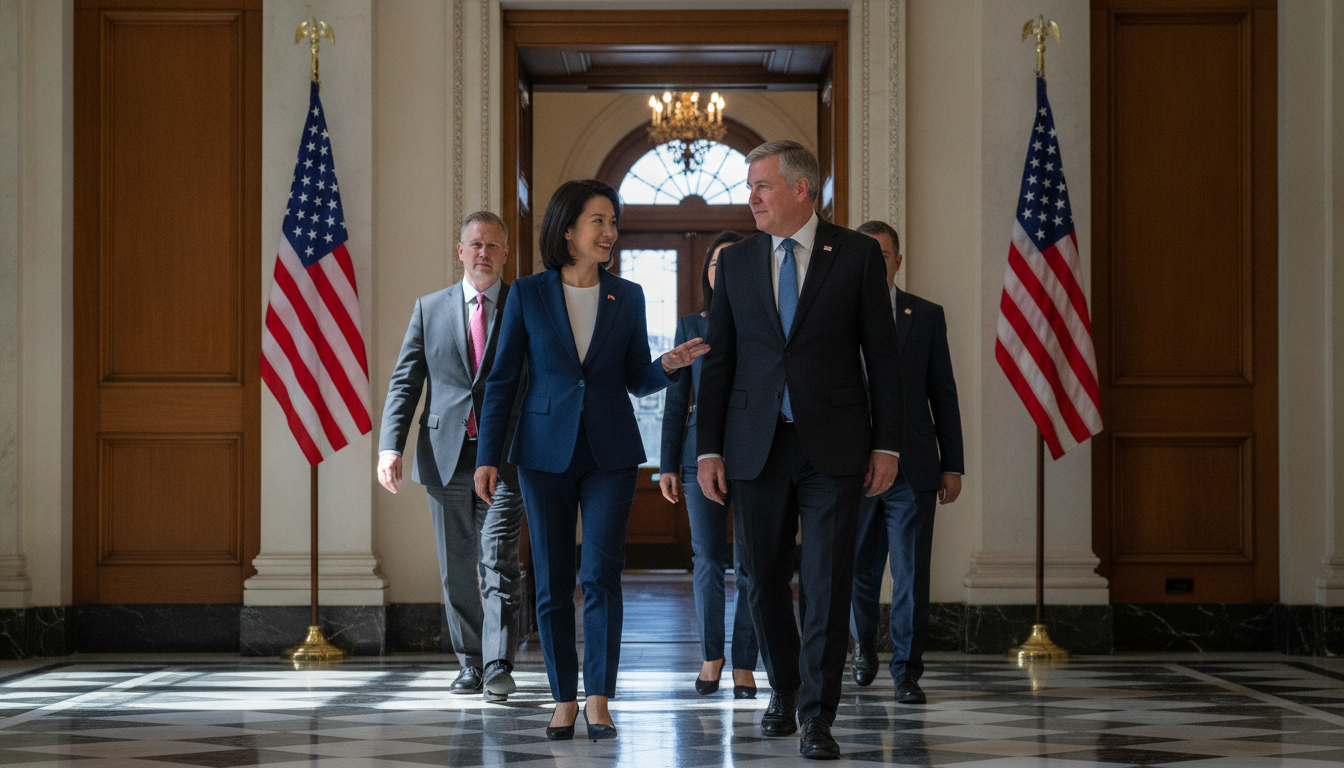
Cheng Li-wun’s visit culminated in a series of sessions in Washington on June 12 with members of Congress and staff from major policy institutes. The two-week itinerary included briefings intended to lay out the Kuomintang’s positions on fiscal policy and cross-strait relations. Officials accompanying the chair described the trip as a targeted outreach to strengthen lines of communication with U.S. decision-makers.
Local reports said Cheng met with a range of lawmakers and non-governmental experts to explain her party’s priorities. Those engagements were presented by the KMT as evidence of an intent to maintain constructive dialogue despite heightened regional tensions. The meetings provided a stage for direct exchanges that party leaders judged essential for Taiwan’s international standing.
Budget Cuts at the Center of Questioning
One recurring theme at Cheng’s briefings was the KMT’s proposed budget adjustments, which U.S. interlocutors scrutinised closely. Several American participants reportedly told the delegation they “struggled to see the logic” behind specific cuts, prompting detailed explanations from KMT representatives. The debate highlighted a deeper divide over fiscal strategy between the party and some foreign observers.
KMT officials defended the measures as part of a broader plan to stabilise public finances, arguing that short-term savings would support longer-term economic stability. Critics in Washington questioned potential impacts on defence, social services and Taiwan’s capacity to respond to regional pressure. The exchanges underscored how domestic fiscal proposals can have diplomatic resonance when discussed on an international stage.
Reception from U.S. Lawmakers and Think Tanks
Although some lawmakers pressed the KMT on the substance of its budget plans, others praised Cheng for engaging directly and transparently. Think-tank analysts attending sessions highlighted the value of hearing opposition perspectives to better understand Taiwan’s internal dynamics. Several observers noted that sustained dialogue helps reduce misperceptions even when disagreement remains.
Participants characterised the tone of conversations as professional and candid, reflecting mutual interest in stable relations across the Taiwan Strait. At the same time, the willingness of U.S. policy experts to publicly question specific proposals signalled that engagement alone does not guarantee endorsement. The balance of critique and recognition framed Cheng’s trip as useful but inconclusive.
Domestic Political Calculations in Taipei
The KMT portrayed the trip as part of a strategy to rebuild international credibility and present policy alternatives ahead of future political contests. Party officials emphasised the need to show voters that the KMT can manage external relations while pursuing fiscal discipline at home. The outreach to Washington was offered as proof that the opposition remains a serious interlocutor on national security and economic matters.
Opposition leaders in Taipei will likely use the trip’s outcomes to bolster campaign messaging, while opponents may seize on sceptical responses from U.S. audiences to question the party’s judgment. Political analysts say the domestic impact will depend on how clearly Cheng and her team translate international feedback into public policy adjustments. For the KMT, managing the narrative at home is as crucial as persuading foreign audiences.
Potential Effect on Taiwan-U.S. and Cross-Strait Dynamics
Observers said Cheng’s meetings, though rooted in policy explanations, cannot be separated from the broader context of Taiwan tensions in the region. Direct engagement with U.S. lawmakers may help clarify the KMT’s stance on issues that affect bilateral cooperation, but it also puts Taipei’s political debates under international scrutiny. How the party balances fiscal priorities with defence and diplomatic considerations will be watched closely by partners and rivals alike.
Some analysts warned that international discussions about domestic budget choices could be read as signals about Taiwan’s readiness to respond to cross-strait pressure. Others argued that transparent dialogue with Washington could reduce miscalculation by improving mutual awareness of priorities and constraints. The net effect on tensions will depend on subsequent policy choices and the tone of follow-up exchanges.
Next Steps for the KMT and Government Response
Following the Washington engagements, the Kuomintang has signalled plans to continue outreach to international stakeholders while refining its budget proposals. Party officials are expected to brief domestic constituencies on the trip’s outcomes and to adjust messaging where necessary. The KMT will also need to sustain dialogue with U.S. contacts to turn meetings into clearer understandings of policy implications.
Taipei’s government has yet to publish a formal response to Cheng’s visit, leaving room for further domestic debate over the balance between fiscal restraint and readiness. Policymakers in both camps will now weigh the political benefits of international engagement against the substantive criticisms voiced overseas. How that balance is struck will shape Taiwan’s policy trajectory in the months ahead.
Cheng Li-wun’s Washington visit highlighted the tensions that arise when domestic policy proposals enter the international arena, and it demonstrated the continuing importance of face-to-face diplomacy in a fraught regional environment.

