
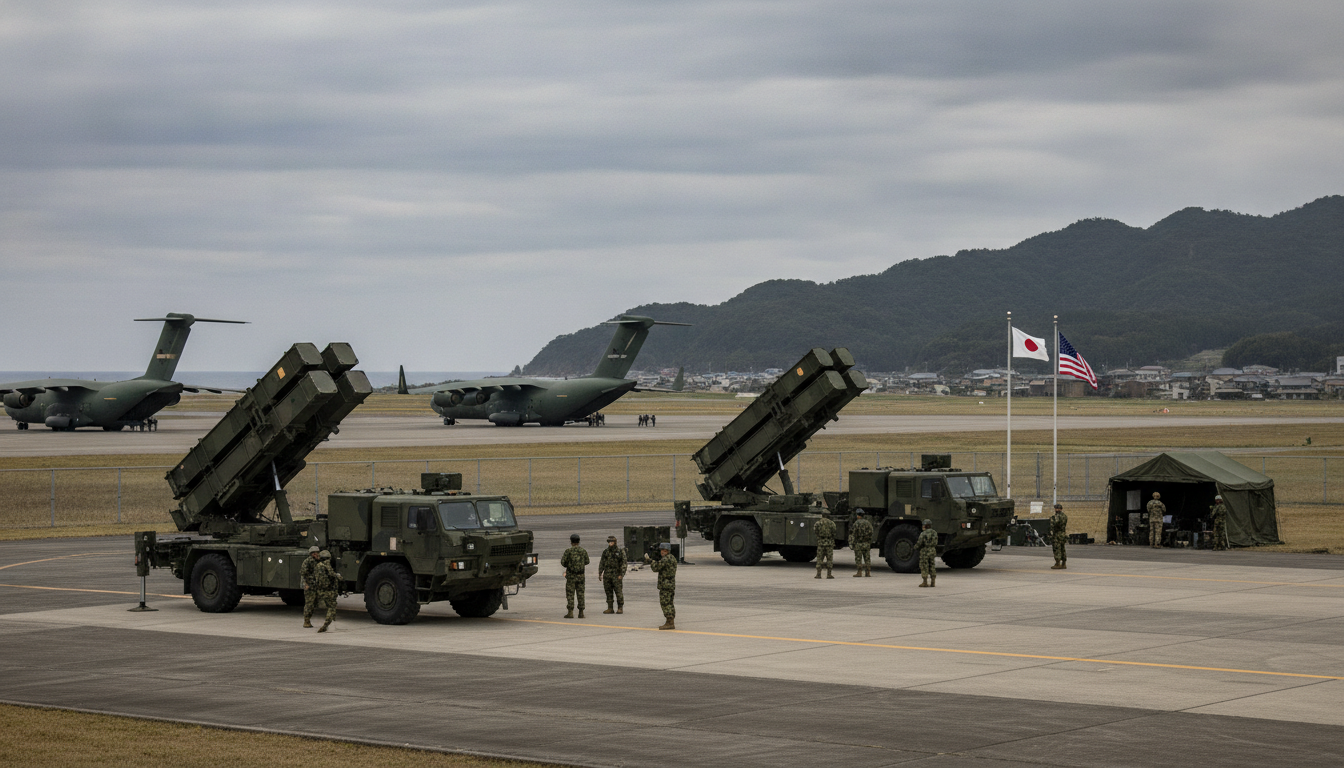
U.S. to Deploy Typhon Missile System Launchers to Japan for Exercises; Launchers to Stay in Country
U.S. military will send Typhon missile system launchers to Japan for joint exercises in late June and again in September 2026, with the launchers to remain in-country to bolster deterrence.
The U.S. military will deploy the Typhon missile system to Japan for joint drills scheduled in late June 2026 and again in September 2026, and the launchers will remain in the country afterward. The move, announced by U.S. defense officials, is described as part of stepped-up deterrence efforts aimed at countering Chinese military pressure in the region. Japanese and U.S. officials said the temporary deployments and retention of launchers reflect deeper operational cooperation within the alliance.
U.S. Forces to Station Typhon Launchers in Japan
The U.S. military confirmed shipments of mobile Typhon launchers to be used in combined exercises with Japan’s Self-Defense Forces later this month and in September 2026. Officials said the launchers will stay on Japanese soil following the exercises, marking a change from past short-term rotational visits.
Military planners framed the retention as an operational measure to increase readiness and reduce deployment timelines for follow-on missions. The presence of forward-deployed launchers is intended to allow faster integration in joint scenarios and to provide persistent capability in a region where response time is deemed critical.
Scheduled Joint Drills in Late June and September 2026
The first series of combined exercises is set for the final week of June 2026, with a larger series of drills planned for September 2026. U.S. and Japanese commanders described the training as focused on command-and-control interoperability, target acquisition, and integrated surface-to-surface firing procedures using the Typhon system.
Both sides emphasized the exercises are defensive and designed to test alliance procedures under realistic operational pressures. Japanese defense officials will join U.S. personnel in live-fire rehearsals and command exchange exercises intended to validate rapid decision-making and joint logistics.
Alliance Strategy: Strengthening Deterrence Against China
U.S. and Japanese officials said the deployments are part of a broader effort to strengthen deterrence amid growing regional tension with China. The Typhon missile system, classified by planners as a midrange capability, is being positioned to improve the allied ability to respond to contingency scenarios quickly.
Analysts noted that keeping launchers in Japan signals a more persistent U.S. operational posture in East Asia and reflects increased willingness by Washington to place advanced systems closer to potential flashpoints. Tokyo has framed the cooperation as bolstering national defense while remaining within Japan’s defensive-only policy.
Local and Regional Security Reactions
Japanese ministries have begun consultations on basing arrangements and force protection measures associated with the Typhon launcher presence. Local authorities near planned hosting facilities are being briefed on safety, transport, and temporary support requirements tied to the deployments.
Regional capitals are likely to watch the move closely; defense commentators say allied steps that alter the forward basing of missile systems tend to draw diplomatic responses. Tokyo and Washington have framed the activity as routine alliance cooperation, emphasizing transparency and adherence to bilateral agreements.
Operational and Logistical Considerations for Japan
U.S. military planners said logistical steps to sustain the Typhon launchers will include storage protocols, maintenance rotations, and combined training for Japanese support units. The arrangement will require coordination on command and control access, movement corridors, and security arrangements for the systems while they remain in-country.
Officials also noted that host-nation responsibilities will be limited by existing bilateral status-of-forces arrangements, with most operational control retained by U.S. units during exercises. Japanese defense spokespeople have described planning as pragmatic and focused on interoperability and safety.
The Typhon missile system’s appearance before Japanese media last year at Marine Corps Air Station Iwakuni underscored the growing operational familiarity between U.S. forces and their Japanese counterparts. Defense officials say the latest deployments will further institutionalize that familiarity through repeated joint training and closer logistic ties.
The deployments mark a visible intensification of U.S.-Japan security cooperation aimed at maintaining stability in the Indo-Pacific and ensuring the alliance can deter and, if necessary, respond to regional contingencies.

