
Tokyo events this week: Oku Asakusa Bon Dance, Seisho Pride, Tokyo Streets X and 81 Music Festival
Discover community-focused Tokyo events from Monday, June 22 to Sunday, June 28, 2026, including Oku Asakusa Bon Odori, Kanagawa’s Seisho Pride parade, Tokyo Streets X and the new 81 Music Festival.
This week’s Tokyo events calendar centers on neighborhood festivals, grassroots arts and new music showcases across the metropolitan area. From Monday, June 22 through Sunday, June 28, 2026, residents and visitors can attend traditional Bon Odori dances, a regional pride parade, waterfront programming and several participatory arts activities. The schedule emphasizes community participation, local performers and family-friendly programming concentrated in districts across Tokyo and neighboring Kanagawa.
Oku Asakusa Bon Odori Revives Neighborhood Traditions
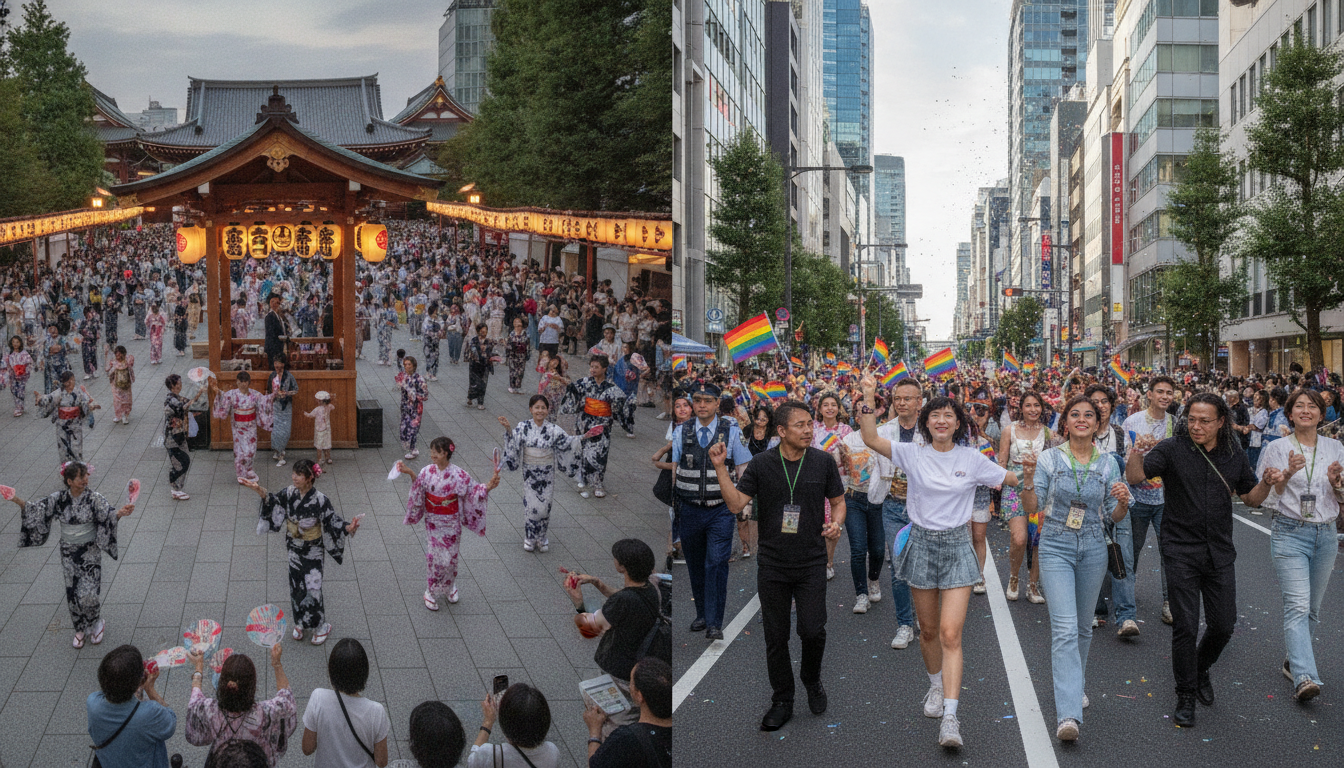
The Oku Asakusa Bon Odori returns this week as a focal point of local summer festivities, bringing traditional circle dances to streets lined with paper lanterns. Organizers have staged the event as a community-driven ode to the Bon Festival, with a central yagura scaffold serving as the dance core. Participants and observers gather in a ring around the lantern-laden structure to perform and watch Bon Odori steps that vary by neighborhood. The event is positioned as both a cultural celebration and a local reunion, with small food stalls and informal music supporting the evening program.
Community volunteers and neighborhood associations coordinate the flow of dancers and spectators to maintain space for movement and to preserve the event’s informal, welcoming atmosphere. While the festival draws attendees of all ages, the emphasis remains on local participation; residents are invited to join the circle and learn steps from experienced dancers. Event organizers recommend arriving early to secure a viewing spot near the yagura and to enjoy neighborhood offerings before the dance program begins. Visitors should be prepared for narrow streets and limited seating, and to show consideration for residents and small vendors servicing the occasion.
The Bon Odori schedule typically concentrates activity after dusk, when lanterns and string lighting create the event’s distinctive nighttime atmosphere. The procession around the scaffold is accompanied by taiko drumming, traditional songs and occasional amplified announcements guiding participants. Many attendees wear yukata or summer kimono, adding to the festival’s visual cohesion and traditional feel. Photographers and tourists are asked to respect personal space and avoid intruding on the dancers’ circle during performances.
Local authorities and volunteer stewards handle crowd management with temporary signage and guidance at key junctions, and public-transport options tend to be the most convenient way to access the area. Organizers advise checking tram and train schedules for the evening and to consider walking from nearby stations to ease local traffic. As with other neighborhood festivals, movement in and out of the site can be slow during peak times, so planning for extra travel time is recommended.
Seisho Pride Parade Marks Kanagawa’s Only Pride Event
Seisho Pride, billed as Kanagawa’s only pride parade, stages its march and related programming during the week, providing a visible platform for LGBTQ+ communities in the greater metropolitan region. The parade combines a march with stalls and performances intended to foster inclusion and community solidarity. Organizers emphasize accessibility and safety while welcoming allies, families and advocacy groups to participate. The event is one of the more prominent regional pride activities outside Tokyo’s central pride gatherings.
Alongside the procession, the pride weekend includes booths hosted by local NGOs, health providers and community organizations offering information and support services. Public addresses, short cultural performances and information sessions typically punctuate the festival area, offering a mix of celebration and outreach. Event coordinators encourage respectful conduct and advise attendees to follow safety instructions and respect the dignity of marchers and speakers. The parade’s presence in Kanagawa helps broaden the geographic reach of the region’s pride calendar, creating a space for local voices that may not otherwise be represented.
Local governments and event partners frequently coordinate to ensure the parade route is clearly marked and that first-aid and accessibility services are available. Many vendors at the site offer food and merchandise with proceeds often supporting community programs or local advocates. Police and volunteers typically provide logistical support for pedestrian flow and intersections, and parade organizers publish guidance in advance covering meeting points and recommended arrival windows. Attendees planning to join the march are advised to confirm start times and meeting locations, and to carry water and sun protection given the summer season.
Seisho Pride’s scheduling during this week gives regional audiences an accessible alternative to central-city pride events, offering a community-scale environment that highlights local organizers and performers. For families and first-time attendees, the smaller-scale context often proves more approachable while retaining the core messages of equality and visibility. Observers who cannot participate in the march in person are encouraged to follow local reporting and official social accounts for summaries and photo coverage following the parade.
Tokyo Streets X and 81 Music Festival Spotlight Emerging Talent
Tokyo Streets X serves as a platform for up-and-coming musicians and street performers, bringing a curated lineup of emerging talent to outdoor stages and unconventional urban spaces. The event is positioned as a discovery venue, where audiences can encounter new acts across genres, from indie bands to experimental solo artists. Programming favors shorter sets to maximize exposure for a wide range of performers, and organizers often intersperse live sets with pop-up art and visual displays. The festival’s format encourages casual attendance and movement between performance sites.
The newly launched 81 Music Festival is being promoted as one of Tokyo’s newest full-scale music events, promising a denser schedule of national and regional acts across multiple stages. While Tokyo Streets X highlights emerging street-level talent, the 81 Music Festival tends to incorporate established local acts alongside newer names, producing a mix of headline sets and discovery slots. Both events reflect an increasingly diverse live-music scene in the city, where intimate discovery events and larger festival formats coexist. Attendees looking for new music are advised to check daily lineups and artist times to prioritize preferred sets.
Production teams for these music events typically emphasize sound quality and artist hospitality, and many venues offer limited merchandise booths and artist meet-and-greet opportunities. Several stages are sited to minimize residential disturbance while maintaining pedestrian access, and organizers often coordinate with local authorities on sound curfews and queuing. The twin presence of street-focused showcases and a new festival format means that audiences can curate a week of concerts that range from impromptu street performances to scheduled headline appearances. Ticketing varies by event, with some street sets remaining free and festival stages requiring pre-purchased entry.
For music professionals and fans alike, this week presents both networking and listening opportunities, as promoters and talent scouts commonly attend discovery events like Tokyo Streets X. Artists gain exposure to new audiences, while fans benefit from compressed programming that surfaces fresh talent. Those planning to attend multiple sets should consider transit time between venues and the potential for standing-room crowds at popular time slots. Early arrival at outdoor stages will improve viewing positions and provide time to purchase concessions before performances begin.
Tokyo Port Fest Brings Waterfront Programming and Family Activities
Tokyo Port Fest returns as a waterfront highlight this week, offering family-oriented programming alongside maritime demonstrations and live entertainment. The festival typically assembles a mix of food stalls, craft vendors and interactive exhibits near the harbor, creating an accessible public space for weekend leisure. Maritime displays, such as small-boat demonstrations and harbor tours, complement a schedule of music and stage performances designed to appeal to broad age ranges. Organizers often design the program to balance entertainment with educational elements about Tokyo’s maritime history.
Event sites at the port are normally configured to provide clear pedestrian routes and designated rest areas, and staff coordinate crowd flow near popular viewing platforms and piers. Food options tend to emphasize local and seasonal ingredients, with many vendors offering kid-friendly menus and seating clusters. Live stages present a rotation of local acts and cultural performances, often programmed to allow families to move between activities without missing headline elements. The port setting allows for late-afternoon performances paired with sunsets over the water, making for a scenic festival experience.
Public transport and shuttle options typically serve the waterfront area during festival hours, and organizers publish guidance on the best station exits and walking routes. Security and first-aid stations are commonly available on-site, and festival literature urges visitors to keep valuables secure and to supervise children near piers. Due to the outdoor, waterfront nature of the programming, organizers recommend sun protection during daytime hours and light layers for evening breezes. Attendees planning harbor tours are encouraged to verify boarding times and ticket availability in advance to avoid queues.
The port festival’s family-friendly orientation makes it suitable for mixed-age groups and for those seeking a leisurely festival day without the intensity of a music-only event. Program diversity aims to create a relaxed but active environment, where local artisans, performers and maritime agencies can engage directly with attendees. For community groups and neighborhood families, the port fest provides seasonal public programming that reinforces ties between city residents and Tokyo’s waterfront heritage.
Community Arts and Improv Offer Interactive Neighborhood Experiences
Several community-run arts events and improv nights are scheduled this week, creating opportunities for hands-on participation and spontaneous performance. Community drawing sessions invite artists and amateurs alike to work together on public canvases or street-side sketch projects, often guided by local illustrators. These drawing events are framed as low-barrier creative spaces designed to encourage skill-sharing, public art creation and informal critique in a neighborly setting. Materials are sometimes provided by organizers, while many participants bring their own sketchbooks and supplies.
Improv nights and short-format theater workshops provide additional interactive options, with local troupes hosting drop-in sessions for first-timers and experienced performers. These events typically prioritize playfulness and connection, using short games and prompts to lower the barrier to stage participation. For attendees, improv nights offer a chance to practice performance skills or to simply enjoy unscripted comedy and storytelling in a casual venue. Organizers often pair improv with open-mic slots or collaborative jam sessions to broaden participation and community engagement.
Both the drawing events and improv programs emphasize inclusivity and accessibility, with many sessions priced affordably or offered on a pay-what-you-can basis to encourage wide attendance. Local community centers and independent venues usually manage these programs, and volunteers provide logistical support and materials. Participants are encouraged to check start times and any age restrictions before attending, and to arrive slightly early to register or collect supplies. These grassroots offerings are notable for fostering creative networks that persist beyond a single event week.
The presence of community arts alongside larger festivals highlights the city’s layered cultural landscape, where neighborhood initiatives coexist with municipal and commercial programming. For visitors seeking deeper, hands-on cultural exchange, these community events provide a more intimate way to engage with local creatives. They also offer accessible points of entry for residents exploring new hobbies or seeking social connection through shared artistic practice.
Event schedules, transport and accessibility for the week of June 22–28, 2026
This week’s events span multiple neighborhoods and adjacent prefectures, so transit planning is essential for attendees who want to visit multiple sites. Public transport remains the most reliable option in central Tokyo and Kanagawa, with many event venues located within walking distance of major stations. Attendees should allow additional time for transfers and for walking between festival sites, particularly during evening peak hours when trains and exits can become crowded. Where available, pedestrian maps and official guidance will indicate the best access points and recommended station exits.
Ticketing and admission vary by event, with some programs free to the public and others requiring advance purchase or on-site registration. Festival organizers typically publish daily schedules and ticket details on their official channels; prospective attendees are advised to confirm entry requirements ahead of arrival. Many free-to-attend street performances and community workshops operate on first-come, first-served principles and may impose capacity limits for safety. For paid events, early booking can secure better entry times and help plan a multi-event itinerary without last-minute changes.
Accessibility measures are increasingly part of event planning, yet facilities differ by site. Larger festivals and municipal events often provide wheelchair-accessible routes, reserved viewing areas and accessible restrooms, while smaller neighborhood events may have limited access due to narrow streets or temporary staging. Attendees with mobility needs should consult event-specific accessibility information and contact organizers if unclear. Additionally, many events now include volunteer points or information booths to assist with wayfinding, lost-and-found and basic medical needs.
Weather and seasonal considerations can affect scheduling and programming throughout the week. Outdoor events in late June may face warm temperatures or occasional rain, and organizers sometimes publish contingency plans for weather interruptions. Attendees should bring sun protection, rain gear and reusable water bottles to stay hydrated. For evening events, light layers are recommended because coastal areas and open plazas may feel cooler after sunset.
This week’s Tokyo events present a dense and varied program for residents and visitors alike, combining tradition, grassroots creativity and live music across multiple neighborhoods. Whether participants choose to join the Oku Asakusa Bon Odori circle, march with Seisho Pride, scout new artists at Tokyo Streets X or relax at Tokyo Port Fest, the week offers community-driven experiences that reflect the region’s summer rhythms. Plan transportation and tickets ahead, respect local spaces and organizers, and use official event guidance for the most accurate schedules and access information.

