
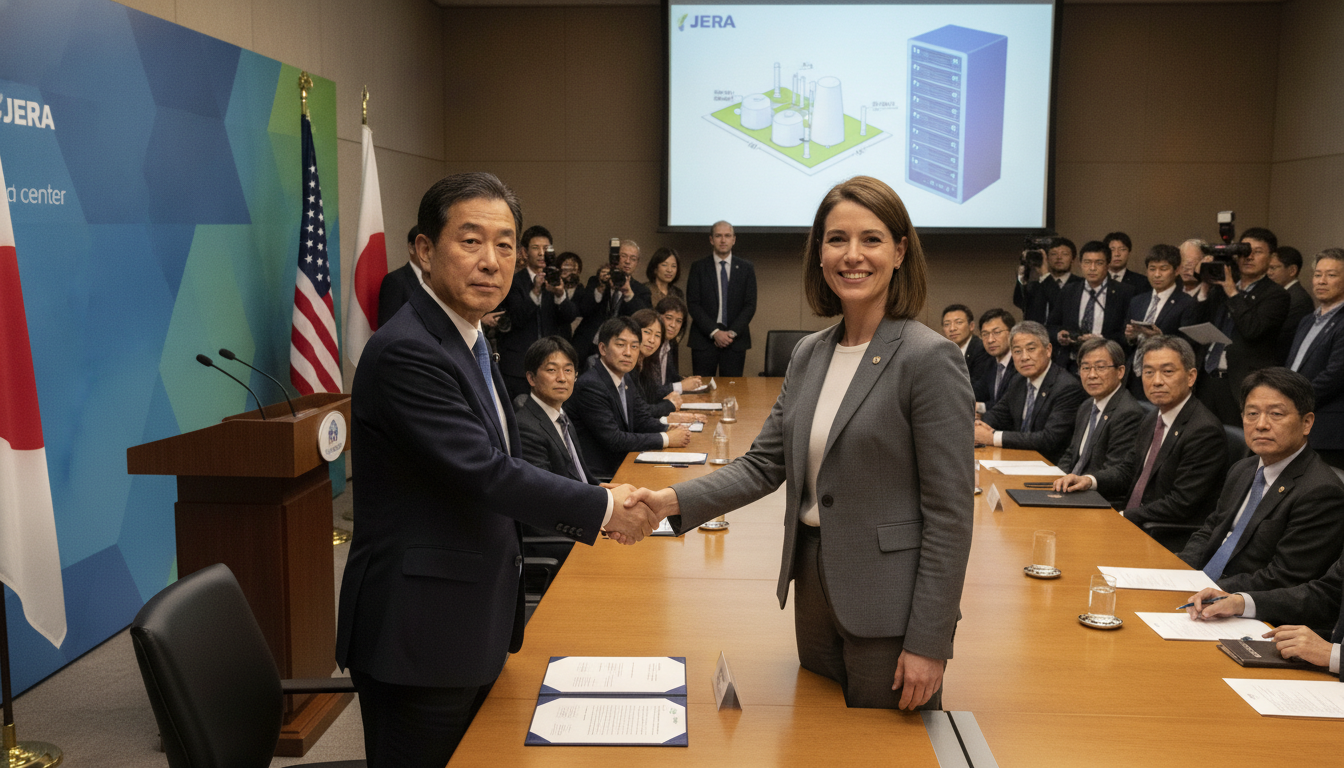
JERA to invest ¥500 billion in U.S. gas-fired power plant to feed AI data center
JERA will build a ¥500 billion U.S. gas-fired power plant to supply a co-located AI data center, aiming to capture surging demand for power infrastructure from major tech firms.
Japan’s largest power producer, JERA, announced plans to develop a large gas-fired power plant in the United States to provide dedicated electricity for a co-located data center, Nikkei reported on Monday, June 22, 2026. The company plans to invest roughly ¥500 billion (about $3 billion) in the project as demand for AI power infrastructure expands rapidly across U.S. cloud and hyperscale operations. JERA’s move marks a strategic pivot toward meeting the intensive, round‑the‑clock electricity needs driven by recent investments in artificial intelligence by U.S. tech giants.
Project scope and cost
JERA’s planned facility is described as a sizable combined‑cycle gas plant purpose-built to serve a data center on the same site. The company estimates the total capital expenditure at around ¥500 billion, a figure that reflects both generation capacity and on‑site grid upgrades needed to guarantee supply reliability. Executives say the configuration will prioritize steady baseload output with fast ramp capabilities to match data center load fluctuations.
The investment covers plant construction, interconnection works and initial operational readiness, with allowances for redundant systems to ensure uptime. Officials cited the necessity of colocated generation to provide predictable, low‑latency power for high‑performance computing workloads that underpin large AI models.
Demand driven by AI data centers
The decision follows a wave of unprecedented spending on AI hardware and data center expansion by U.S. technology companies, which has put new strains on local grids. JERA’s proposal targets that market by offering a portfolio solution: generation capacity, local grid resilience and a direct supply route into a hyperscale data center. Market analysts have pointed to AI training clusters as some of the most power‑intensive facilities in recent history, often requiring continuous, high‑quality electricity.
By anchoring generation next to compute facilities, JERA aims to reduce curtailment risk and provide a contractual foundation for long‑term power purchase agreements. The model anticipates multi‑year contracts with operators or cloud providers seeking predictable pricing and guaranteed capacity for peak training cycles.
Why the United States and co‑location
The United States remains the focal point for hyperscale data center growth and AI infrastructure deployment, driven by capital availability and concentration of AI research and operations. JERA’s choice of a U.S. site reflects proximity to major customers and existing transmission corridors where large data hubs are expanding. Co‑location of power generation and data centers shortens delivery paths and can reduce transmission losses while simplifying regulatory and contractual arrangements.
Company representatives told reporters the U.S. market offers the scale and partner ecosystem needed to justify the sizable upfront investment. Local permitting and interconnection processes remain key determinants of the final site selection and timetable, officials said.
Financing, timeline and partners
JERA has not disclosed a final financing package, but industry observers expect a mix of corporate funding, project finance and possible partner equity from data center operators or institutional investors. The company has indicated it will seek long‑term commercial contracts to underpin debt financing and to manage merchant risk. Early planning documents and stakeholder outreach will focus on securing interconnection agreements and environmental approvals.
A preliminary timeline presented internally suggests multi‑year development, with construction likely to span two to three years once all permits and contracts are in place. JERA emphasized that final investment decisions will be contingent on site choice, negotiated offtake agreements and regulatory clearances.
Environmental and regulatory considerations
A large gas-fired plant intended to serve data centers raises environmental and permitting questions, especially in jurisdictions with aggressive decarbonization targets. JERA has signaled interest in deploying modern combined‑cycle technology to maximize efficiency and reduce emissions intensity relative to older units. The company may also explore options for carbon management and fuel switching over time to align with customer net‑zero commitments.
Permitting processes in the United States will require environmental impact assessments, public consultations and compliance with federal and state standards. Local stakeholders and regulators are expected to scrutinize emissions profiles, water use and community impacts as the project advances.
JERA’s U.S. track record
JERA has previously invested in U.S. generation assets, including coal‑fired plants and other thermal projects, giving it operational experience in the American energy market. That track record provides institutional knowledge of permitting, operations and stakeholder engagement that the company says will help streamline the new project. However, the shift toward purpose‑built gas generation for data centers represents a strategic recalibration toward serving digital infrastructure demand rather than merchant power markets.
The company’s move aligns with broader industry trends where energy producers are increasingly structuring bespoke solutions for large technology customers, combining capital investments with contractual certainty.
JERA’s proposal underscores how the energy landscape is evolving in response to the rise of AI compute demand, with utilities and power producers repositioning to capture a new class of long‑term customers. The outcome will hinge on final site selection, regulatory approvals and the ability to secure binding supply contracts with data center operators. The project’s progression will be watched closely by industry stakeholders and local communities as development moves from planning toward execution.

