
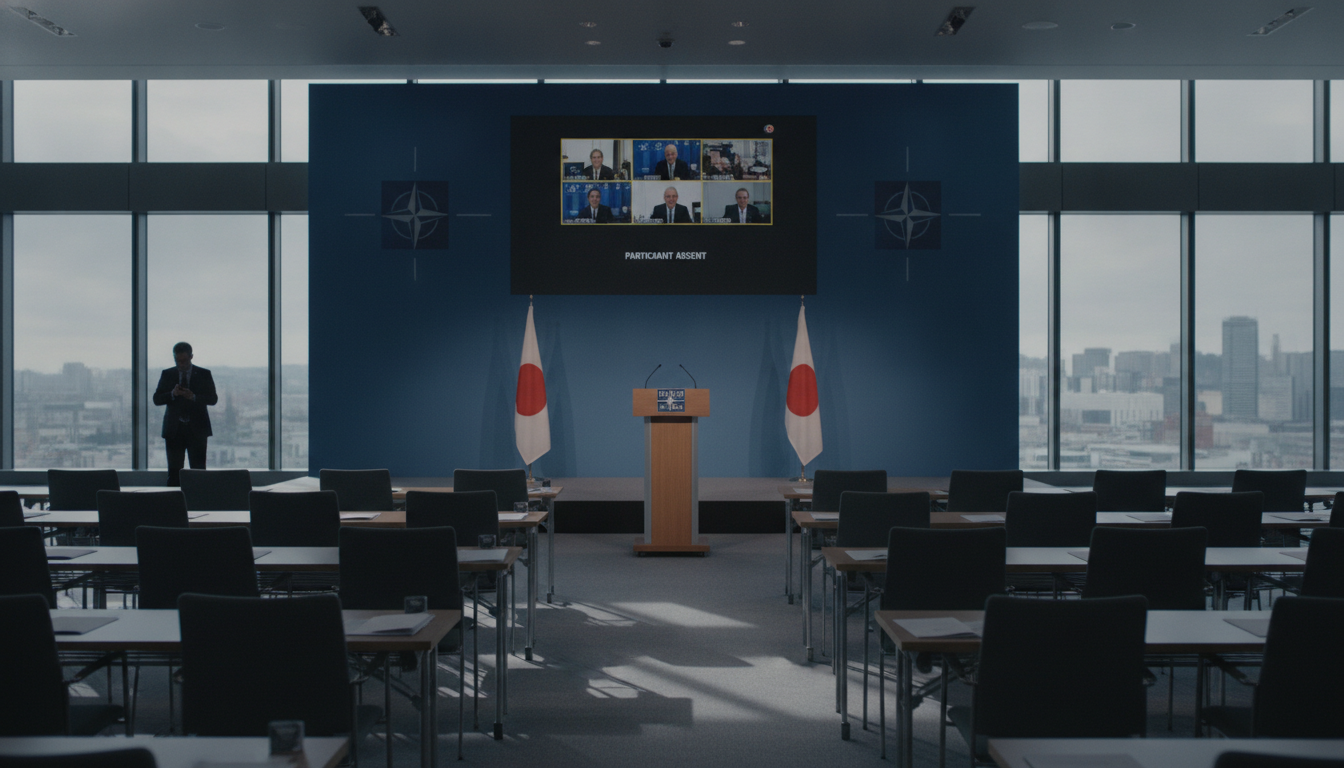
Takaichi to Skip NATO Summit in Turkey; Motegi to Represent Japan
Japan’s Prime Minister Takaichi will not attend the NATO summit in Turkey on July 7–8, 2026, opting to send Foreign Minister Toshimitsu Motegi as her representative amid parliamentary obligations.
Takaichi announces absence from July summit
Prime Minister Sanae Takaichi has decided not to attend the NATO leaders’ meeting scheduled for July 7–8, 2026, in Turkey, government sources said. The decision, formally framed around Diet responsibilities, means Foreign Minister Toshimitsu Motegi will attend the gathering as Japan’s representative.
This marks the second consecutive year a Japanese prime minister will be absent from the NATO leaders’ meeting, raising questions about Tokyo’s visibility within the alliance. Officials told reporters the move was taken after weighing domestic legislative priorities against international travel demands.
Government cites Diet schedule and domestic duties
Multiple officials said parliamentary business during the diet session was the principal reason for Takaichi’s decision. Lawmakers are preparing for a packed calendar in late June and early July, officials said, and the prime minister is expected to remain in Tokyo to oversee party and legislative strategy.
The government confirmed Motegi, the foreign minister, will attend in his capacity as Japan’s IP4 partner representative. Motegi’s attendance is intended to maintain Japan’s formal engagement while allowing the prime minister to focus on domestic political responsibilities.
Diplomatic implications for Japan at NATO
Analysts and diplomats warn that a prime ministerial absence could blunt Japan’s influence at high-level NATO discussions. Tokyo has sought to position itself as a bridge between Indo-Pacific security concerns and Euro-Atlantic defense coordination, and direct leader-to-leader engagement is seen as a key tool for that effort.
Without the prime minister, Japan may have fewer opportunities for bilateral meetings with NATO heads of government on the sidelines of the summit. That reduced access risks limiting Tokyo’s ability to press for specific language or commitments on Indo-Pacific security within summit communiqués.
Japan-NATO ties since Russia’s 2022 invasion
Since Russia’s full-scale invasion of Ukraine in 2022, Tokyo has intensified cooperation with NATO on intelligence sharing, sanctions coordination, and logistical support. Successive administrations framed the relationship as part of a broader shift that links Indo-Pacific stability to European security.
Former Prime Minister Fumio Kishida attended NATO summits in consecutive years, reflecting that policy continuity. Japan’s participation as an Indo-Pacific partner (IP4) became a fixture of Tokyo’s diplomatic outreach at recent NATO gatherings.
Domestic politics and timing considerations
Takaichi’s decision comes amid a charged domestic political environment that includes legislative negotiations and intra-party discussions. Officials said the prime minister weighed the domestic calendar heavily, signaling that immediate domestic duties took precedence over the diplomatic optics of attending NATO in person.
Opposition politicians and some commentators criticized the timing, arguing that a leader-level presence at NATO would better serve Japan’s strategic interests. Supporters within the ruling party countered that a senior cabinet minister attending can safeguard Japan’s substantive input while the prime minister addresses pressing domestic business.
What to expect from Motegi at the summit
Foreign Minister Motegi is expected to press Japan’s priorities in bilateral meetings and in scheduled IP4 sessions alongside other Indo-Pacific partners. Delegation officials said Motegi will focus on cooperation on Ukraine, deterrence issues, and expanding practical security ties between NATO and Indo-Pacific democracies.
Observers will closely watch whether Motegi secures concrete references to the Indo-Pacific in any summit communiqués and how NATO leaders respond to Japan’s concerns. The outcomes of those engagements will be scrutinized in Tokyo for indications of whether a ministerial-level presence can fully substitute for the prime minister.
Japan’s absence at the leader level for a second straight year underscores the tension between domestic political rhythms and the demands of global diplomacy. As July 7–8, 2026 approaches, Tokyo’s government will seek to balance those pressures while aiming to protect its strategic foothold within NATO deliberations.

