
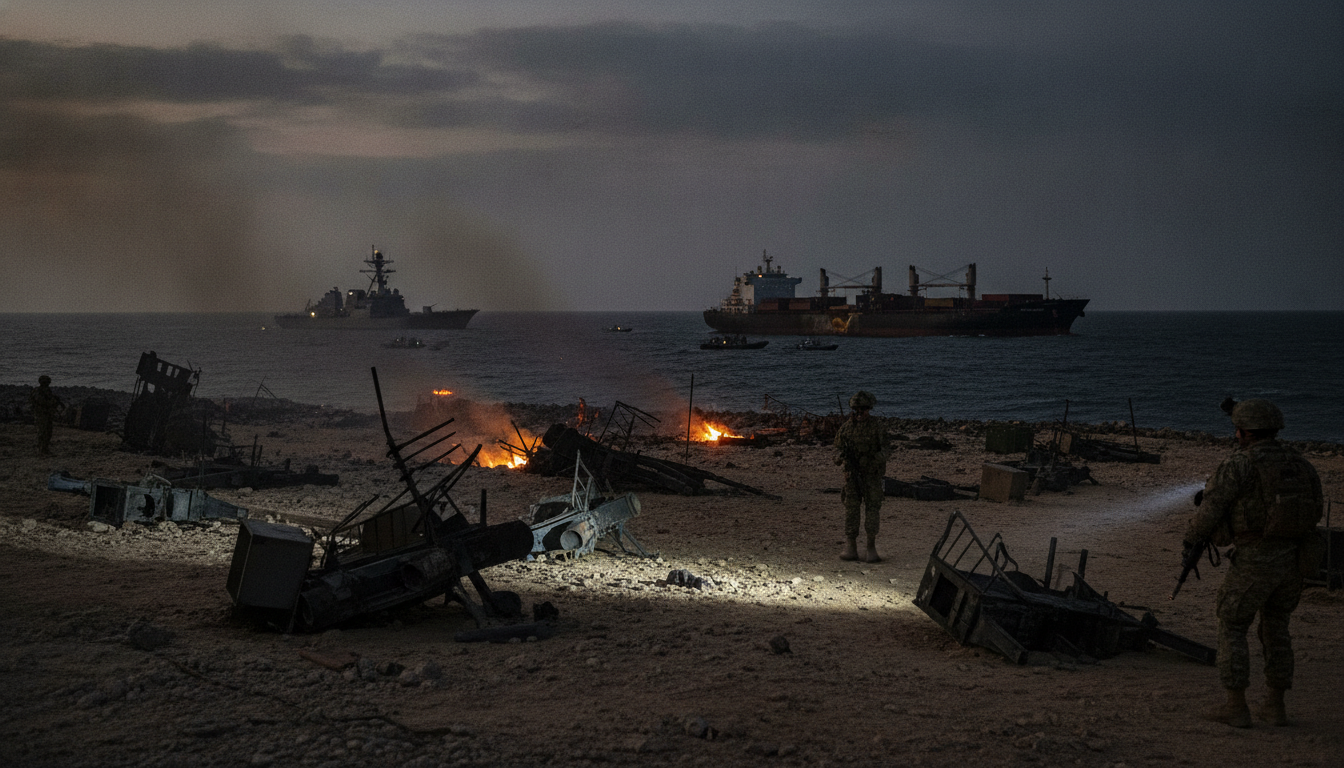
U.S. Strikes Iran After Drone Attack on Singapore-Flagged Cargo Ship Near Oman
U.S. strikes Iran struck missile and drone storage sites and a coastal radar facility on June 26 in response to an Iranian drone attack on a Singapore-flagged cargo ship the previous day. The action, announced by U.S. Central Command, marks the first U.S. military strike on Iranian territory since a ceasefire memorandum was signed earlier this month and has renewed concerns about the stability of the agreement. (apnews.com)
CENTCOM says strikes targeted missile and drone storage and coastal radar
CENTCOM said U.S. aircraft struck facilities used to store missiles and unmanned aerial vehicles, and a coastal radar installation, describing the operation as a measured response to “unwarranted aggression.” The command characterized the strikes as aimed at degrading Iran’s ability to conduct similar attacks in the near term. Military officials framed the action as limited in scope and intended to deter further attacks on commercial shipping. (theguardian.com)
Cargo ship Ever Lovely was reportedly hit by a one-way attack drone off Oman
U.S. and maritime officials said the Singapore-flagged vessel, identified in reports as the Ever Lovely, was struck while exiting the Strait of Hormuz along the Omani coast on June 25. The U.K. Maritime Trade Operations center reported damage to the ship’s bridge after an impact roughly 7.5 nautical miles southeast of Dahit, Oman, and several Western sources attributed the strike to an Iranian-launched drone. No multinational force has issued a single unified public attribution, but multiple news outlets and U.S. officials linked the incident to Iran’s Islamic Revolutionary Guard Corps. (washingtonpost.com)
Strike follows pause in U.N. evacuation and increased maritime concern
The attack on the cargo ship prompted the U.N. International Maritime Organization to pause a planned evacuation and transit operation for vessels in and around the Strait of Hormuz, citing safety concerns. The suspension reflected heightened risks to commercial traffic along a corridor that normally carries a significant share of global oil shipments. Shipping firms and insurers have already adjusted routes and advisories in recent days, complicating efforts to restore reliable movement through the chokepoint. (apnews.com)
Action tests the ceasefire memorandum signed earlier this month
The U.S. strike is the first known kinetic response by American forces against Iran since both sides signed a memorandum earlier in June that included provisions for a ceasefire and resumption of limited shipping through designated corridors. U.S. officials and analysts said the attack exposed fissures in the deal, with Washington calling the vessel strike a breach of the agreement and Tehran framing its own maritime posture as a sovereign security measure. Observers warned that reciprocal steps by both sides could quickly erode the fragile provisions that diplomats had hoped would reduce direct confrontation. (apnews.com)
Regional reactions and risks of further escalation
Political leaders and security officials across the Gulf and beyond monitored the strikes closely, with public comments highlighting divergent interpretations of the incident and the broader agreement. In Washington, senior officials framed the response as necessary to deter attacks on neutral commercial shipping and to uphold commitments under the ceasefire framework. Tehran’s state-aligned outlets and some regional partners portrayed the episode as tied to competing claims over control and oversight of traffic through the strait. Analysts cautioned that miscalculation by either side could produce a wider exchange of strikes or further disruption to energy and trade flows. (axios.com)
The strikes underscore how fragile gains on diplomacy can be when military incidents occur at sea, where attribution and rapid operational decisions can amplify tensions. Shipping operators and diplomatic channels will now face urgent pressure to de-escalate and re-establish clear rules of transit to prevent a repeat of attacks that threaten both commercial vessels and fragile regional stability.

