
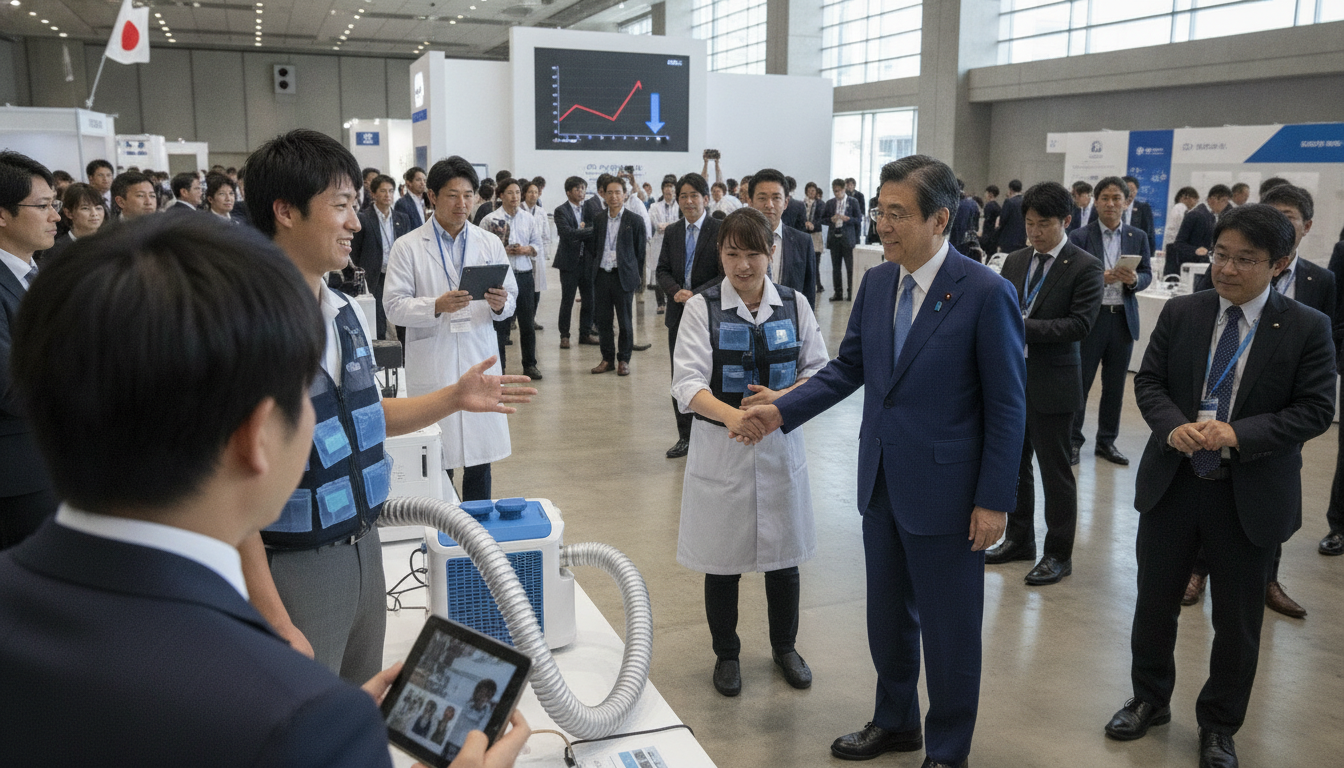
Cooling technology on show: air showers and radiant cooling premiered at Japanese tech expo
Japanese firms unveiled cooling technology innovations — air showers, radiant cooling and low-energy systems — at a tech expo as cities brace for hotter summers and rising heat risks.
Expo highlights push for alternatives to conventional air conditioning
Osaka and Fukuoka hosted demonstrations of next-generation cooling technology as companies seek to reduce reliance on conventional air conditioning. Exhibitors emphasized systems designed to lower indoor temperatures while cutting energy consumption and easing strain on power grids during heatwaves. Officials and industry representatives framed the displays as part of broader efforts to prevent heat-related illness while meeting climate and energy goals.
Air showers presented for dense urban and transit environments
Several firms showcased air shower units intended for use in crowded public spaces and transport hubs. These devices direct targeted flows of cooler air over people to produce a perceptible cooling effect without lowering room temperature substantially. Manufacturers argue air showers can provide immediate comfort in stations, retail environments and event venues while using a fraction of the electricity required by whole-space air conditioning.
Radiant cooling aimed at buildings and outdoor sheltered spaces
Radiant cooling systems drew attention for their potential to cool surfaces and occupants by absorbing infrared heat rather than forcing cold air through a room. Exhibitors demonstrated panels and ceiling modules that can be integrated into existing structures, and noted the systems can be combined with night-time cooling strategies to reduce daytime loads. Proponents say radiant approaches are particularly suited to office floors, museums and sheltered public areas where air movement is limited.
Hybrid and low-energy approaches gain commercial interest
Beyond air showers and radiant panels, the expo included hybrid solutions that pair passive design, smart ventilation and humidity control with small-scale mechanical cooling. Companies displayed evaporative cooling attachments, phase-change materials for temporary heat buffering, and sensor-driven controls that adjust output based on occupancy and outdoor conditions. Presenters highlighted how layered systems can preserve occupant comfort while lowering peak electricity demand during heat events.
Local pilots and corporate trials expand in Osaka and Fukuoka
Organizers reported growing interest from municipal bodies and private operators in trialing the new cooling technology across public facilities and workplaces. Early pilot projects in the region are testing performance under real-world conditions, measuring not only temperature changes but also energy use, maintenance needs and user acceptance. City planners and facility managers at the expo emphasized the importance of evaluating systems over a full summer cycle to understand benefits and trade-offs.
Manufacturers position cooling technology for domestic and export markets
Japanese suppliers attending the expo framed the innovations as commercial opportunities both at home and abroad, citing rising demand in countries confronting more frequent extreme heat. Several firms said they are refining designs to meet stricter energy-efficiency standards and to integrate with smart building platforms. Industry representatives also noted logistical and regulatory hurdles—such as installation standards and building codes—that must be addressed to scale adoption.
Japan’s ageing population and concentrated urban centers were cited by presenters as drivers for rapid deployment of occupant-focused cooling measures. At the same time, vendors stressed that affordability and clear performance data will determine uptake among smaller businesses and local governments. Some firms are offering modular packages and maintenance contracts to lower upfront barriers and ensure long-term operation.
Safety, standards and the role of public guidance
Health professionals and safety officials at the event underscored that any new cooling technology must be deployed with clear guidance to reduce heatstroke risk. They recommended combining personal and localized cooling with public advisories, hydration stations and shaded rest areas to protect vulnerable groups. Regulators and industry groups are under pressure to develop testing protocols that allow objective comparison of cooling technology effectiveness and energy performance.
The expo also fostered discussion about integrating monitoring systems to track indoor temperatures and identify when supplemental cooling is needed. Attendees highlighted the value of data-sharing between device manufacturers, building managers and municipal emergency services so responses can be timed to heat warnings and peak demand periods.
Local communities and businesses will play a key role in shaping which cooling technologies become mainstream. Demonstrations at the expo reflected an industry pivot toward systems that prioritize occupant comfort, lower carbon footprints, and resilience during heatwaves.
As Japan prepares for hotter summers, the suite of cooling technology on display pointed to a shift in strategy: supplementing, not simply replacing, conventional air conditioning. The next phase will depend on pilot results, cost reductions, and regulatory frameworks that can validate claims about energy savings and health benefits.

