
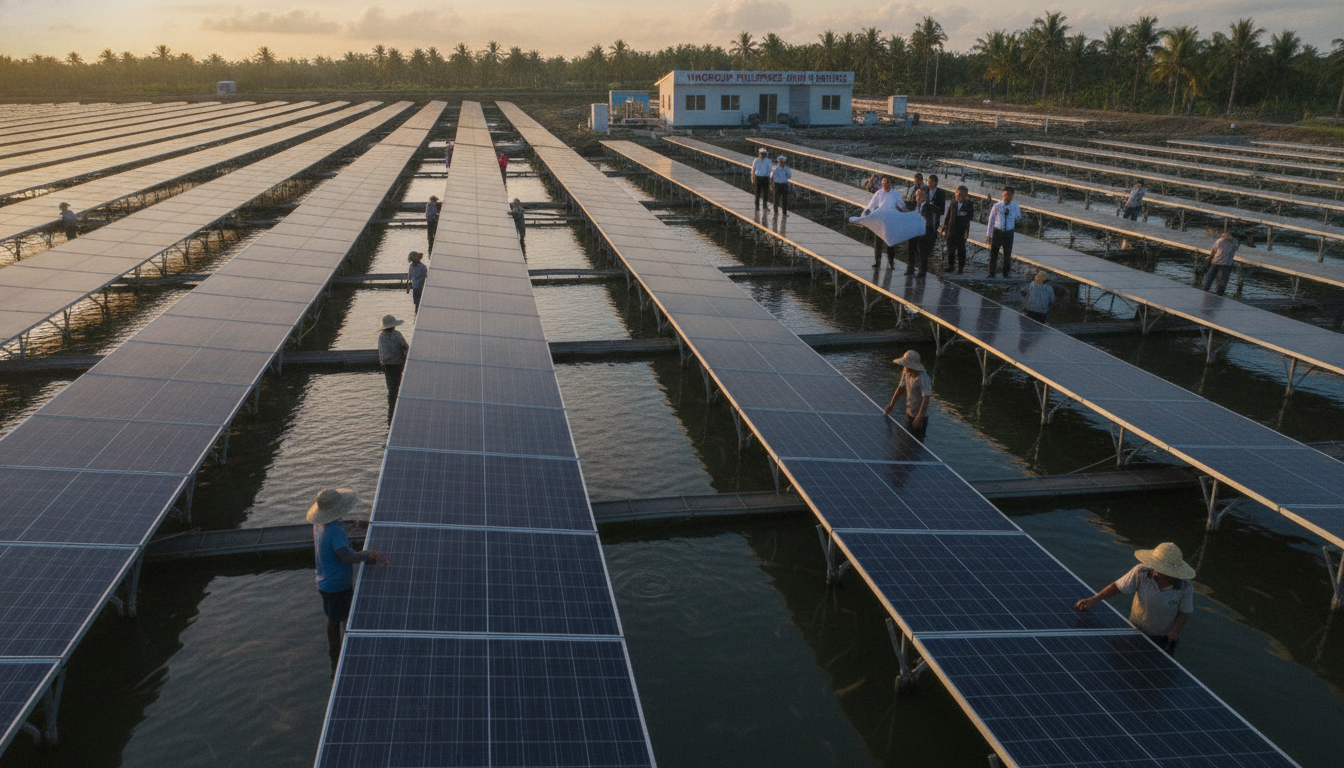
Vingroup Advances Solar Aquaculture in Philippines with Stilted Solar Farms Above Fish Ponds
Vingroup launches solar aquaculture projects in the Philippines, installing stilted solar panels above fish farms to generate clean power and boost local incomes.
Vingroup, the Vietnamese conglomerate, has announced investments in solar aquaculture projects in the Philippines that place solar panels on stilts above aquaculture farms. The initiative, described by company representatives, aims to combine photovoltaic power generation with fish and shrimp farming to increase land-use efficiency. Executives from Vingroup’s energy arm VinEnergo and Philippine developer SunAsia formalized a partnership in Manila on June 17, signaling the start of pilot installations.
Vingroup Signs Deal in Manila
The agreement signed in Manila on June 17 brought together VinEnergo and SunAsia to deploy stilted solar panels above water-based farms in the Philippines. Company officials say the arrangement is intended to advance renewable energy capacity while providing supplemental benefits to aquaculture operators. The signing underscores growing investor interest in dual-use projects that seek both energy output and local economic benefits.
Project Uses Stilted Solar Panels Over Fish Ponds
The core design places photovoltaic arrays on elevated frames over ponds and coastal aquaculture pens, allowing farming activities to continue beneath the modules. This solar aquaculture approach is presented as a way to maximize limited coastal and inland water space while producing electricity for local grids or onsite consumption. Developers highlight that shaded water surfaces could reduce evaporation and moderate temperatures, though they acknowledge the need to monitor ecological effects closely.
Pilot Sites and Scale-Up Plans
Initial works will focus on pilot sites to test technical and operational performance before wider rollout, company sources indicate. Those trials are expected to evaluate panel durability in marine or brackish environments, access for farm workers and equipment, and the actual energy yield under shaded conditions. Vingroup has not released detailed capacity targets for the Philippines, saying the pilots will inform any large-scale deployment decisions.
Partnerships with Local Developers
Vingroup’s collaboration with SunAsia links Vietnamese capital and engineering with a Philippine developer familiar with local permitting and grid interconnection. Local partnerships are central to project planning and community engagement, company representatives say, as aquaculture operators and municipal authorities will need to approve site-specific arrangements. The involvement of domestic firms is also intended to accelerate approvals and adapt designs to local tidal, weather and operational conditions.
Environment and Resource Efficiency
Proponents of solar aquaculture argue the model reduces pressure on land and can offer environmental upsides such as lower freshwater loss from evaporation. The shading effect may reduce water temperature spikes that stress farmed species, potentially improving yields in some settings. Environmental groups and regulators, however, typically call for baseline studies to assess impacts on water quality, light-dependent species and the broader coastal ecosystem before projects expand.
Operational and Regulatory Challenges
Installing and maintaining solar arrays over water presents technical challenges including corrosion from salt, storm resilience and safe access for farm workers. The Philippines’ exposure to typhoons and strong monsoon winds will require engineering standards that account for extreme weather events and rapid recovery protocols. Regulatory issues such as aquaculture licensing, environmental clearances and grid connection rules add layers of complexity that project teams must navigate.
Vingroup’s announcement is part of a wider trend in Southeast Asia toward innovative uses of solar to meet rising electricity demand without converting additional land. As the Philippines balances energy needs with food production and coastal livelihoods, solar aquaculture is being evaluated for its potential to deliver multiple benefits. The coming months of pilot monitoring and stakeholder consultations will determine whether the approach can scale reliably and sustainably in the country’s varied coastal and inland aquaculture zones.

