
Japan to Subsidize Ammonia Production in India as IHI and ACME Join $3 Billion Hydrogen Initiative
Japan and India will back a $3bn hydrogen-ammonia project led by IHI and ACME; Prime Minister Sanae Takaichi visits New Delhi this week to meet Narendra Modi.
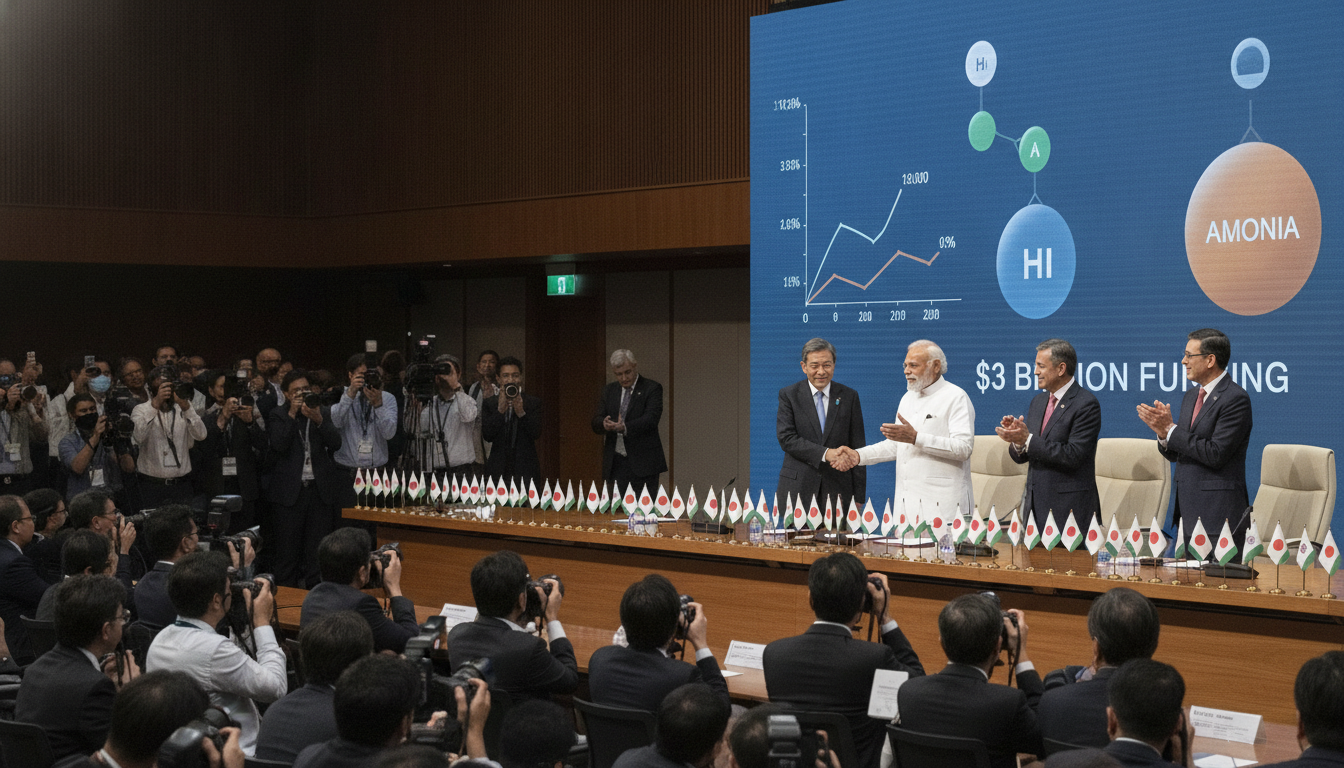
Japan and India have agreed to move forward on funding a hydrogen and ammonia production project that will see Japan’s IHI and India’s ACME Group collaborate on large-scale fuel manufacturing. The leaders’ pact includes targeted support for ammonia production in India, with Tokyo set to provide subsidies and financing to accelerate plant construction and early operations. Japanese Prime Minister Sanae Takaichi will travel to New Delhi this week for talks with Prime Minister Narendra Modi, where the initiative is expected to be formalized.
Leaders to Finalize $3 Billion Energy Pact
Japan and India are poised to sign a package of measures worth roughly $3 billion to support low-carbon fuel production and related infrastructure. Officials say the agreement will combine public backing from Japan with private-sector investment led by IHI and ACME, aimed at producing hydrogen and ammonia for domestic use and export. The financial envelope is intended to de-risk initial capital outlays and attract additional commercial lenders to the project.
IHI and ACME Partnership Structure
Under the plan, IHI will provide engineering, procurement and construction expertise while ACME Group will manage site development, local permitting and operations. The collaboration targets integrated ammonia synthesis using hydrogen produced from low-carbon sources, with technology transfer and joint procurement expected to reduce costs. Project partners have outlined phased construction to bring initial production online quickly and scale up capacity as export markets develop.
Financial Mechanism and Japanese Subsidies
Tokyo’s contribution will include direct subsidies to lower the cost of ammonia production in India alongside concessional loans and export credit support for Japanese contractors and equipment suppliers. Officials involved in the negotiations emphasize that public funds will be structured to leverage private investment rather than be the sole source of capital. The subsidy model is designed to bridge the gap between current production costs and the market price for low-carbon ammonia while supply chains and demand signals mature.
Energy Security and Strategic Calculation
Japanese and Indian decision-makers view the project as a way to bolster energy security while accelerating decarbonization goals. For Japan, securing stable supplies of hydrogen-derived fuels reduces dependence on volatile fossil fuel markets and strengthens strategic ties in Asia. For India, the initiative supports industrial growth, creates jobs in green manufacturing, and builds infrastructure for domestic and regional fuel trade.
Impacts on India’s Clean Energy Transition
India stands to gain increased domestic capacity for ammonia, a commodity used in fertilizer production and emerging as a low-carbon carrier for hydrogen. The injection of capital and technology could lower production costs and make cleaner ammonia more competitive with conventional supplies. Analysts say the project could also catalyze ancillary investments in port logistics, storage and shipping, enabling India to become a regional exporter of green fuels.
Diplomatic Timing and Talks in New Delhi
Prime Minister Takaichi’s visit comes amid deeper bilateral engagement on energy and infrastructure, with both governments seeking visible outcomes from high-level meetings. The pact is expected to be signed or jointly announced during talks with Prime Minister Narendra Modi, signaling a step-change in Japan-India cooperation on strategic industries. Diplomats on both sides have said the timing reflects shared urgency to move from pilot projects to commercially viable supply chains.
The announcement is likely to attract scrutiny from domestic industry groups and investors assessing the risks and returns of large-scale low-carbon fuel projects, and response from global buyers watching for reliable volumes and certification standards. As implementation details are finalized, market participants will look for timelines for construction, off-take agreements and certification protocols that govern low-carbon fuel claims.
Japan and India now face the operational challenge of translating political commitment into a functioning supply chain that meets cost and emissions targets, and doing so in a way that delivers tangible industrial and environmental benefits. The coming weeks of negotiations in New Delhi will be closely watched by energy firms, finance houses and governments as the partners move from announcement to execution.

