
Ruling parties move to finalize Imperial Household Law amendment as Cabinet considers same-day decision
LDP and Nippon Ishin finalize talks on the Imperial Household Law amendment June 30 as government readies a same-day Cabinet decision amid intra-party disputes.
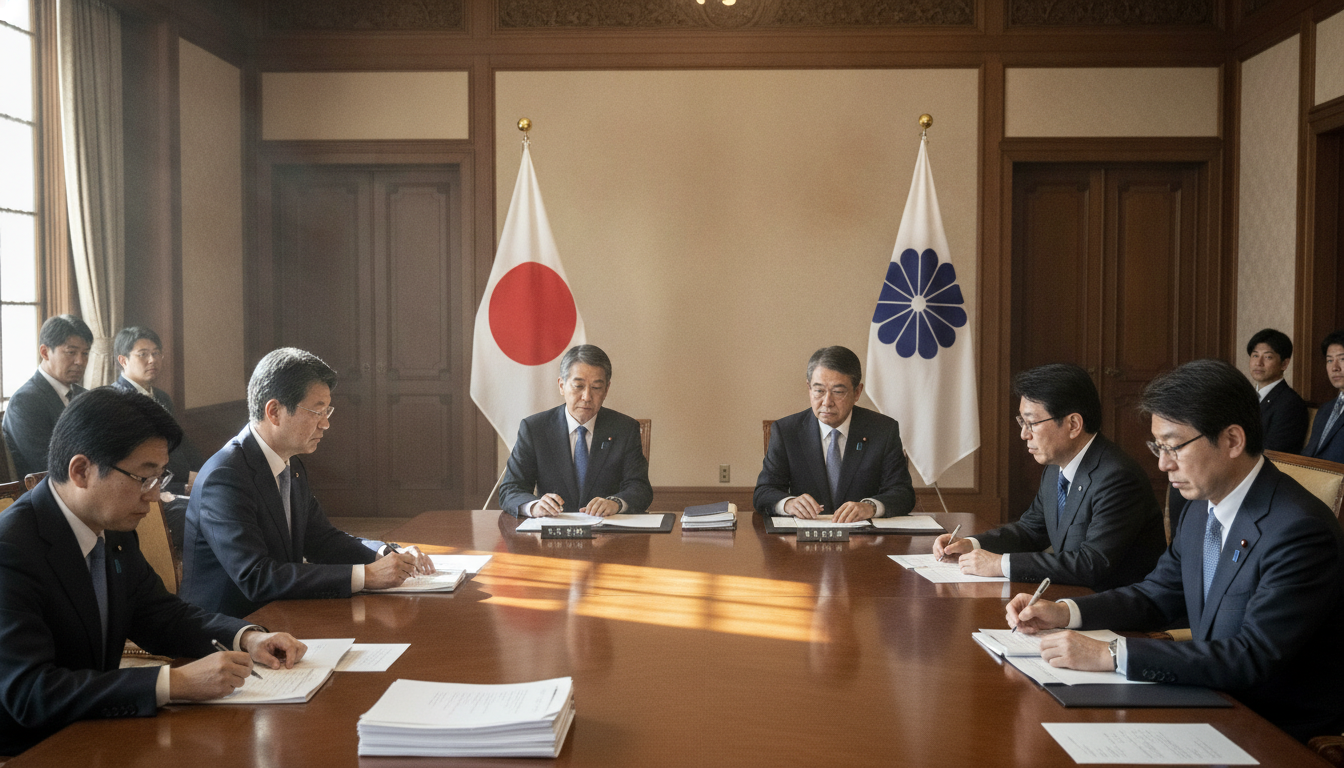
The Liberal Democratic Party and Nippon Ishin held final talks on the Imperial Household Law amendment on the morning of June 30 as the government prepared to decide whether to convene an extraordinary Cabinet meeting the same day. If agreement is reached, officials said the Cabinet would move swiftly to adopt the bill for submission to the Diet. Cabinet Secretary Minoru Kihara said the proposal had not been attached to the morning Cabinet agenda but indicated a prompt decision would follow party coordination.
Senior party leaders meet for final negotiation
Senior LDP figures Taro Aso and Takayuki Kobayashi met with Nippon Ishin co-leader Fumitake Fujita inside the Diet to discuss remaining differences over the Imperial Household Law amendment. The talks were described by party sources as the last stage of negotiation before the government determines whether to place the bill before an extraordinary Cabinet meeting. Participants emphasized a desire to conclude deliberations quickly to keep the reform on track in the current session.
Key provisions under consideration
The draft amendment under discussion would permit two principal measures to secure the number of imperial family members. One measure would allow female members of the imperial family to retain imperial status after marriage, while the other would enable male-line males from former princely houses to be brought into the imperial family as adopted sons. Lawmakers framing the package have presented both options as complementary ways to bolster the succession pool.
Legislative consensus formed earlier this month
Presiding officers of both chambers earlier compiled what they termed a “legislative consensus” endorsing both measures, and those conclusions have guided the government’s drafting of concrete legislative language. Within the LDP, the party’s general council approved the proposal at a meeting on June 29, clearing the way for final coordination with coalition partners. Government sources say that prior cross-party consultations were intended to present a unified course for rapid action in the Diet.
Intra-party objections focus on adoption age
Debate within Nippon Ishin centered on the proposed age threshold for candidates to be adopted from former princely houses, with the party divided over a provision setting a minimum age of 15. Some members argued a 15-year cutoff would ensure candidates are mature; others, including Fujita, countered that younger adoptees would more easily adapt to imperial life and receive necessary education within the household. That disagreement led Nippon Ishin to withhold formal approval in a June 29 session of policy leaders, prompting the government to delay including the bill on the morning Cabinet agenda.
Cabinet timing and procedural steps
Cabinet Secretary Kihara said the amendment was not listed for the early Cabinet meeting but that the government would add the bill once party-level coordination was complete. If the ruling parties reach a final accord, officials indicated an extraordinary Cabinet meeting could be summoned later on June 30 to approve the draft for Diet submission. After a Cabinet decision, the bill would be formally presented to the Diet, where further debate and potential amendments by the legislature would follow.
Implications for imperial succession and public debate
If enacted, the measures would mark a significant shift in the legal framework governing the imperial household and succession eligibility. Allowing women to retain imperial status after marriage would keep an expanded circle of family members within the household and could ease ceremonial and day-to-day burdens associated with scarce personnel. Bringing male-line descendants of former princely houses into the imperial family would restore a traditional avenue for male succession, though it raises practical and constitutional questions about adoption and dynastic continuity.
The proposals are likely to trigger sustained public and political debate over tradition, gender roles, and the interpretation of the Imperial Household Law. Legal scholars and political observers note that any change will require careful drafting to reconcile constitutional principles, the symbolic role of the imperial family, and societal expectations. Lawmakers will face the task of articulating safeguards and implementation details should the Cabinet approve the bill.
Negotiations were ongoing through the afternoon, and ruling party officials said they would announce the outcome of talks and any Cabinet action later on June 30. The pace of consultations reflects both the urgency expressed by proponents and the sensitivity of altering long-standing rules governing the imperial household.

