
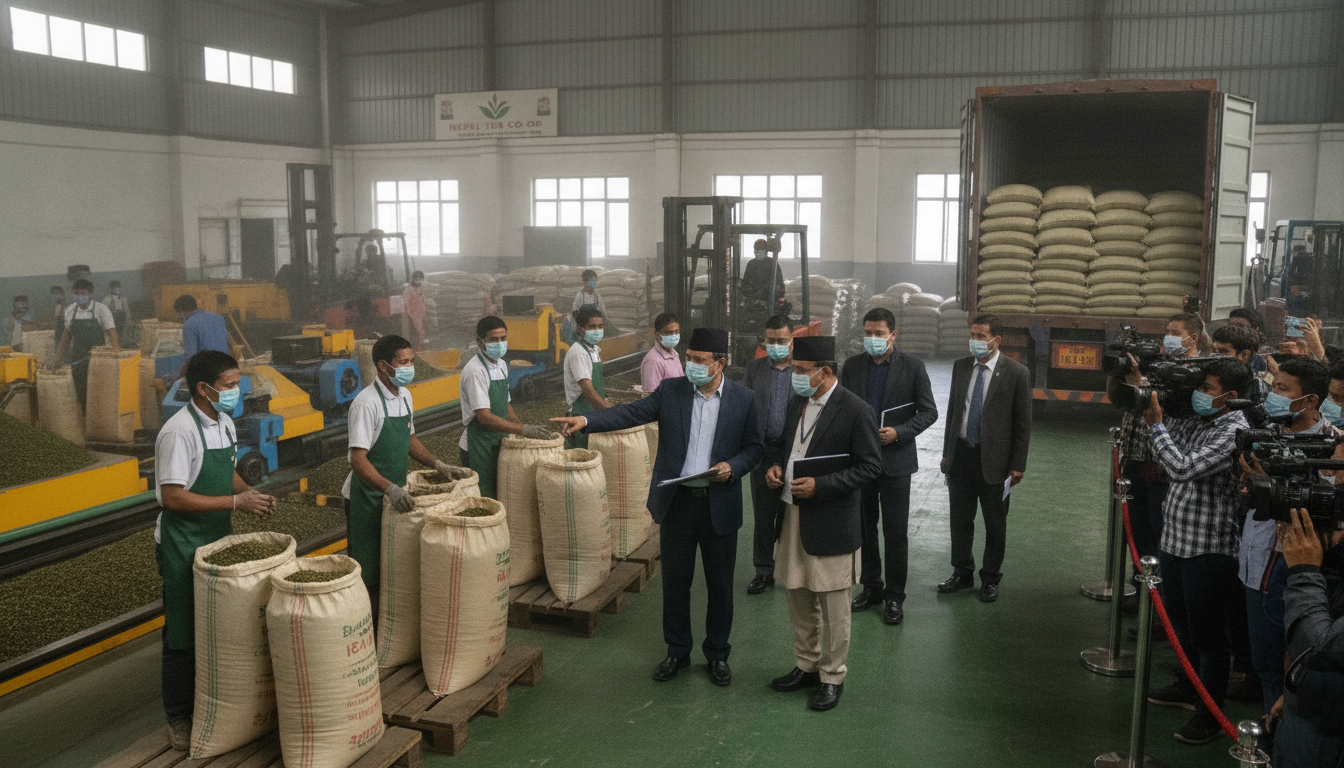
Nepal tea exports resume but India testing dispute leaves growers and factories vulnerable
Nepal tea exports restarted after New Delhi revised a testing requirement, but eastern growers and tea factories remain cash-strapped and uncertain as inspection rules continue to affect shipments. (kathmandupost.com)
Factories reopen after India eases testing requirement
After weeks of halted production, many tea factories across Nepal’s eastern belt restarted operations following a government assurance and a partial relaxation of India’s testing protocol. (kathmandupost.com)
Factory owners said containers that were stranded at border points began moving again once Indian authorities amended the requirement that had required laboratory approval for every consignment. The restart brought cautious relief to estates that had halted processing to avoid further losses.
Widespread shutdowns and economic impact
Earlier in June, dozens of orthodox and CTC processing units suspended operations as the sudden testing policy raised costs and delayed shipments. Industry groups warned that the stoppages left thousands of workers idle and placed smallholder incomes at risk. (fiscalnepal.com)
Local officials and trade federations estimated that tens of thousands of livelihoods linked to tea production were affected, with some factories reporting acute cash-flow shortages that impeded wage payments and raw-leaf purchases. The interruption compounded pressure on producers already operating on thin margins.
Regulatory changes and the testing timeline
India initially tightened its quality-testing regime in May, prompting a requirement for laboratory reports that exporters said prolonged clearance times. New guidance issued later allowed for more flexible sampling and faster upload of results, easing—but not eliminating—the administrative burden on exporters. (fiscalnepal.com)
Exporters noted that while the procedural change shortened report turnaround, ambiguity remained over which consignments would face full testing and how costs would be allocated between Nepali suppliers and Indian importers. That uncertainty continues to complicate planning for the current harvest season.
Dependence on India and trade exposure
Nepal exports a large share of its orthodox tea to India, a dependence that leaves producers uniquely exposed when import rules change. Market concentration means that any disruption in cross-border inspection protocols can quickly cascade through the supply chain and inventory cycles. (kathmandupost.com)
Producers in Ilam, Jhapa and other eastern districts said they have limited immediate alternatives for bulk shipments, a fact that has accelerated calls for diversification of markets and product upgrading to reach higher-value niches abroad.
Diplomatic pressure and calls for domestic testing capacity
Business groups and chambers of commerce urged Kathmandu to take urgent diplomatic steps to resolve the dispute and to press for predictable, transparent procedures at border crossings. The Federation of Nepalese Chambers of Commerce and Industry and exporters called for official negotiations and technical discussions with Indian authorities. (b360nepal.com)
Meanwhile, industry representatives have renewed demands for accredited testing laboratories within Nepal to reduce dependence on cross-border approvals and to lower per-consignment costs. Establishing domestic capacity, they say, would be a longer-term safeguard against future non-tariff shocks.
Producers look for new buyers and certification routes
Faced with repeated disruptions, some estates and cooperatives have accelerated efforts to reach markets beyond India, exploring buyers in the UAE, Europe and Southeast Asia and pursuing organic and specialty certifications. These moves aim to lift margins and reduce vulnerability to a single-destination policy. (asiafoundation.org)
Producers also reported stepping up direct marketing initiatives and partnerships with exporters who can navigate complex regulatory regimes, hoping to secure contractual commitments that would absorb short-term testing costs.
The restart of operations brings temporary relief, but growers and factory owners said what they need now are binding procedural guarantees and faster dispute-resolution mechanisms at the border. Continued uncertainty over inspection protocols and cost allocation threatens to hamper harvest and processing schedules in the coming weeks, keeping the sector on alert as it navigates a fragile recovery.

