
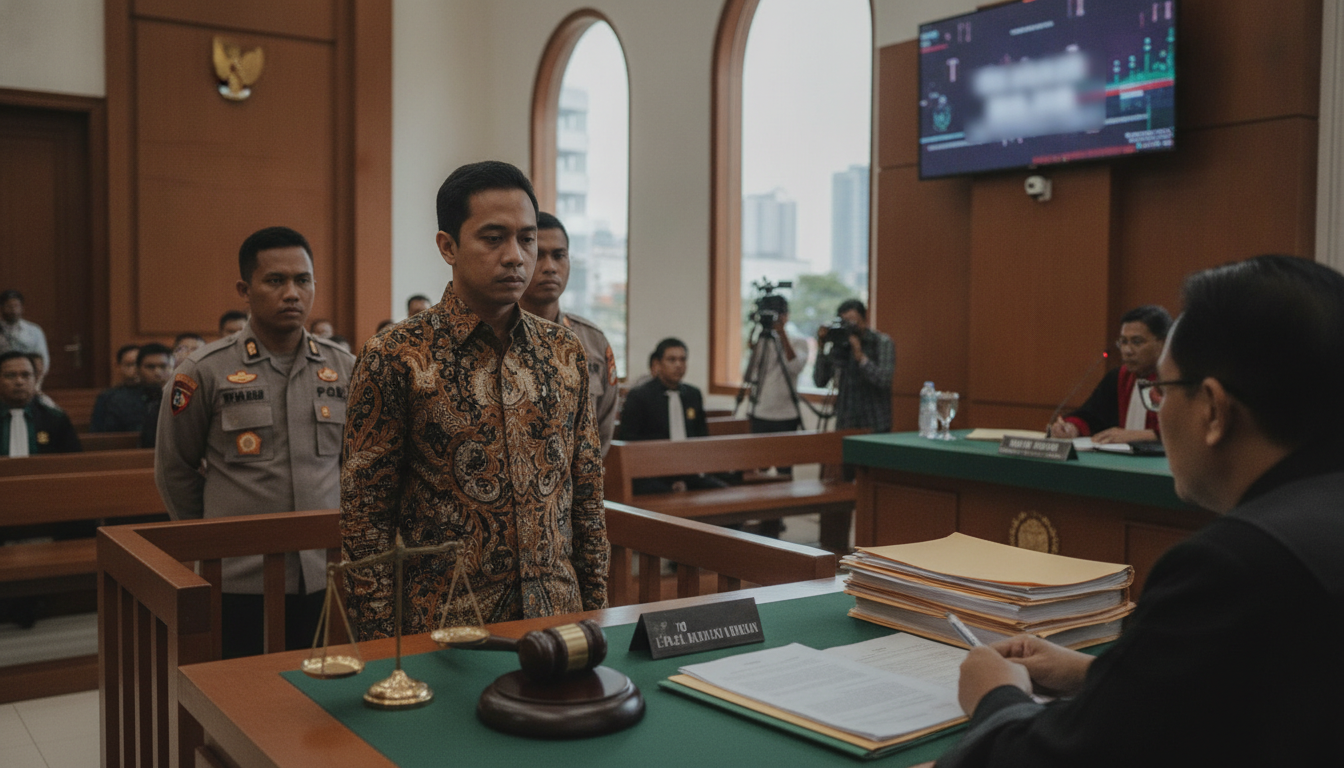
Nadiem Makarim Sentenced to 10 Years, Fined 810 Billion Rupiah in Laptop Procurement Case
Former education minister Nadiem Makarim was sentenced to 10 years in prison and fined 810 billion rupiah ($45.3 million) after a Jakarta court convicted him in a corruption case tied to a national education digitalization program. The verdict on June 30, 2026, has intensified debate over political influence in prosecutions and raised questions about investor confidence in Indonesia.
Court Issues Prison Term and Record Fine
A Jakarta district court on June 30 handed Nadiem Makarim a 10-year prison sentence and ordered a fine of 810 billion rupiah, equivalent to roughly $45.3 million. The sentence follows a conviction over alleged bribery and irregularities in the procurement of laptops for a government education digitalization initiative. Court documents presented at the hearing detailed the penalty, which also includes potential asset forfeiture linked to the procurement contracts.
Prosecutors maintained the penalties reflect the scale of the alleged wrongdoing and the public funds involved in the program. Defense lawyers immediately signaled plans to appeal the decision, saying they will challenge both the facts and the severity of the punishment at higher judicial levels. Observers noted the fine is among the largest levied in recent high-profile corruption cases in the country.
Charges Focused on Laptop Procurement Contracts
The case centers on procurement contracts for laptops procured under a national education digitalization program intended to expand access to digital learning. Prosecutors argued that contract awards and pricing arrangements involved kickbacks and improper influence that inflated costs and diverted state resources. Evidence presented at trial included procurement records, testimony from procurement officials, and financial trail analyses.
Defence counsel contested the interpretation of procurement procedures and disputed claims about intent to defraud the state. Government statements accompanying the indictment characterized the scheme as a misuse of public funds intended for schools and students, while denials from the defendant highlighted procedural ambiguities and contested facts. The court concluded the available evidence met the threshold for conviction in this instance.
Defense Alleges Political Motivation, Critics Warn of Selective Justice
Nadiem’s legal team and some political allies described the prosecution as politically motivated, arguing the trial targeted a high-profile reformer and sent a chilling signal to technocratic ministers. The defence framed the case as part of a broader trend of selective prosecutions that complicate governance and discourage policy innovation. Supporters gathered outside the courthouse, and images showed a supporter giving Nadiem a rose as he arrived for the verdict, underscoring the polarised response.
Legal analysts noted such claims are common in politicised prosecutions but said courts must be allowed to adjudicate evidence independently. Critics of the verdict cautioned against conflating judicial outcomes with political vendettas without clear proof. Meanwhile, some anti-corruption advocates welcomed the sentence as a demonstration that senior officials can be held accountable.
Market and Investor Reactions to the Verdict
The verdict has reverberated beyond politics, with economists and market watchers warning it could weigh on investor sentiment toward Indonesia. Analysts cited concerns that high-profile convictions of reform-minded officials might signal instability in policymaking and raise perceived political risk for foreign and domestic investors. Business groups urged clarity from government and judicial institutions to prevent a broader erosion of confidence.
Officials from financial institutions and trade bodies are expected to monitor developments closely, particularly any indications the case will affect ongoing economic reforms or implementation of digital initiatives. Observers said transparent legal processes and timely appeals would be important to reassure markets and maintain routine investment flows.
Nadiem Makarim’s Career and Public Profile
Nadiem Makarim rose to prominence as the co-founder of Gojek, a ride-hailing and technology platform that grew into one of Indonesia’s most notable tech companies. He later left the private sector to serve as education minister, where he promoted digital learning programs and administrative reforms. His dual profile as an entrepreneur-turned-minister made him a polarising figure in both business and political circles.
Supporters credited him with pushing modernization efforts in education and streamlining bureaucratic practices, while critics questioned elements of program rollout and procurement oversight under his watch. The conviction marks a dramatic turn in a public career that blended private-sector innovation with high-level public service.
Appeal Prospects and Potential Political Fallout
Legal teams for Nadiem Makarim have indicated they will pursue appeals in the higher courts, setting the stage for an extended legal battle. Appeals could focus on procedural errors, reinterpretation of evidence, and questions about sentencing proportionality. The appellate process may take months and will be closely watched by domestic and international observers.
Politically, the verdict may influence upcoming debates over governance, anti-corruption enforcement, and the management of state procurement. Parties and civil society groups are likely to use the outcome to press for reforms in transparency and oversight, while political allies may mobilise to defend reformist agendas. The ultimate effect on policy and public trust will depend in part on the appellate courts and the government’s response.
The Jakarta court’s decision on June 30 has created an immediate legal and political challenge that will play out in higher courts and in public debates over governance, transparency, and investor confidence. Observers inside and outside Indonesia said the case will be a key test of the country’s ability to balance accountability with stable policymaking as it navigates a period of economic and digital transformation.

