
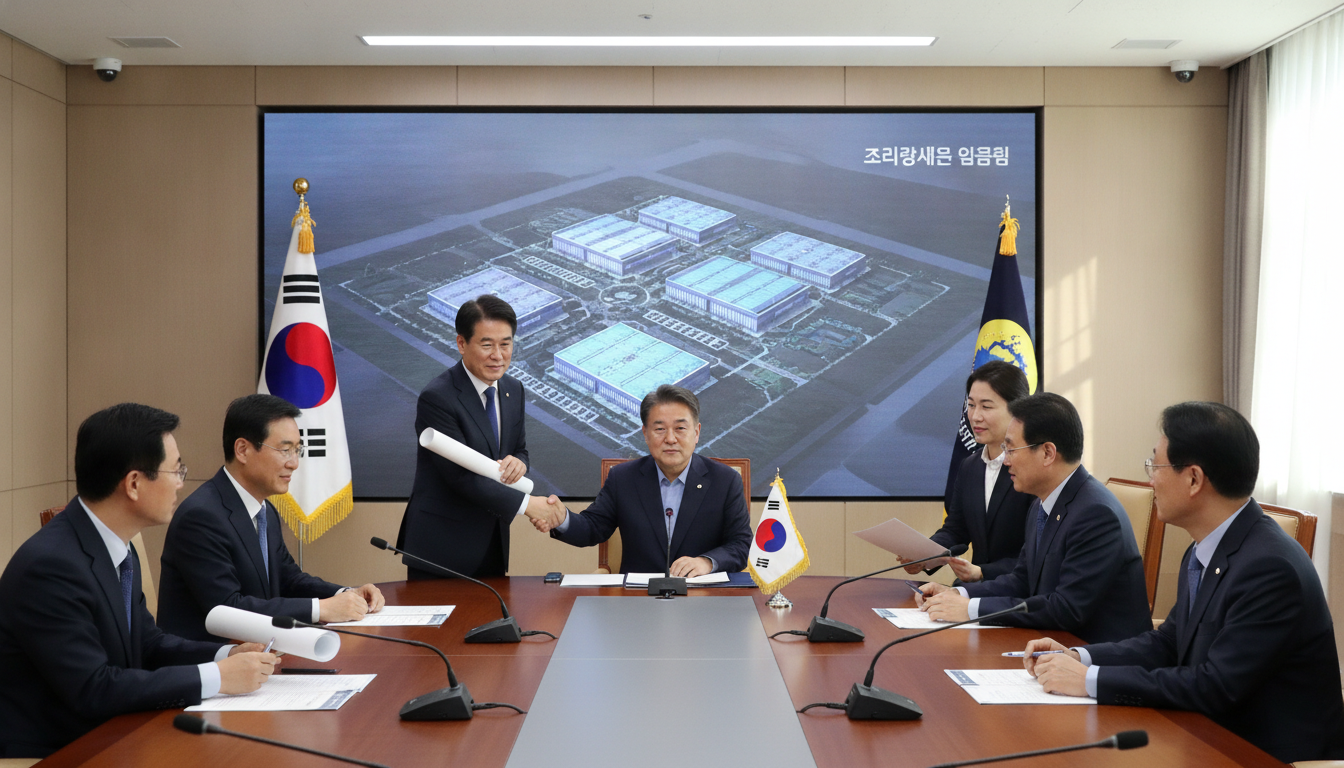
South Korea Pledges Support for Samsung, SK Hynix Chipmaking Project
President Lee pledges support for Samsung and SK Hynix chipmaking project while companies use cautious language on site plans amid surging AI memory demand.
South Korean President Lee Jae Myung on Tuesday pledged comprehensive government support for a chipmaking project involving Samsung Electronics and SK Hynix, calling the initiative crucial to the nation’s semiconductor ambitions. The announcement underscored the government’s intent to accelerate investment and regulatory backing for facilities that would expand capacity for memory chips used in AI computing. Both companies, however, described the factory location as a planned site rather than a finalized decision, signalling caution as negotiations and assessments continue.
Presidential Commitment and Government Support
President Lee said the government would provide wide-ranging assistance to the project, indicating priority treatment for approvals, infrastructure, and potential incentives. The statement framed the chipmaking project as a strategic move to reinforce South Korea’s position in the global semiconductor supply chain. Officials indicated that ministries will coordinate to streamline land, power and logistics arrangements if the companies confirm specific sites.
The pledge reflects an effort to respond quickly to surging demand for memory chips driven by AI workloads, where South Korean firms play a dominant role. Government support is intended to reduce uncertainty for investors and local authorities while enhancing the country’s competitiveness against other major chip-producing nations.
Companies Use Cautious Language on Site Plans
Samsung Electronics and SK Hynix referred to the proposed facility location in more cautious terms, describing it as a “planned” or “potential” site rather than a completed commitment. That calibrated language suggests both companies are proceeding with technical, environmental and financial evaluations before finalizing land purchases or construction. Company representatives reiterated that site selection depends on a range of factors including supply chain logistics and workforce availability.
Industry analysts say such caution is typical for multi-billion-dollar semiconductor projects, which require long lead times and detailed feasibility studies. The firms’ phrasing may also reflect ongoing discussions with municipal governments and the need to secure utility and transport capacity at the intended location.
Economic and Strategic Implications for South Korea
If realized, the chipmaking project would bolster South Korea’s dominance in memory semiconductors and support broader national goals to lead advances in AI hardware. Expansion in production capacity could attract related suppliers and downstream industries, generating jobs and regional economic activity. Officials have highlighted potential gains in tax revenue and technology spillovers that could strengthen domestic R&D ecosystems.
Strategically, additional memory production capacity would reduce exposure to external bottlenecks and sustain South Korea’s bargaining power in global chip markets. The government’s public endorsement signals a desire to keep critical manufacturing capabilities within national control amid intensifying technological competition between major economies.
Local Impact and Infrastructure Requirements
Local governments near the proposed site are preparing to engage with the companies to address zoning, housing and infrastructure needs that typically accompany large semiconductor fabs. Chip plants demand significant power, water and transport networks, and municipalities often must upgrade utilities and logistics to meet those requirements. Officials said they are ready to coordinate land use and workforce training programs to accelerate project timelines if site plans are confirmed.
Communities are also weighing potential environmental and social impacts, including construction disruption and long-term land use changes. Public consultations and environmental assessments are expected to form parts of the approval process before any definitive construction permits are issued.
Industry Reaction and Market Implications
Market observers noted that a government-backed chipmaking project by Samsung and SK Hynix would be closely watched by competitors and customers worldwide. Increased capacity in memory chips could temper supply shortages that have driven price volatility for DRAM and NAND products used in AI servers and consumer electronics. Customers in cloud services and data centers welcome potential supply relief but will monitor how ramp timing aligns with demand cycles.
Analysts cautioned that building and ramping advanced memory fabs takes years, and near-term market tightness may persist despite announcements. Capital expenditure, equipment procurement and workforce training are complex steps that influence when new capacity begins contributing to global supply.
Timeline, Approvals, and Next Steps
Officials and company spokespeople indicated that while the state’s commitment is firm, concrete milestones remain subject to feasibility studies and regulatory review. The immediate next steps include completing environmental impact assessments, finalizing land agreements, and negotiating detailed incentive packages. Observers expect the companies to set out more specific timelines once internal approvals are complete and site readiness is confirmed.
If approvals proceed smoothly, construction of advanced memory facilities typically spans several years before full-volume production begins. The pace will depend on equipment delivery schedules and the availability of skilled technicians and engineers to operate next-generation fab processes.
The government’s public endorsement of the chipmaking project underscores the high priority South Korea places on semiconductor leadership as AI reshapes computing demand. While Samsung and SK Hynix have signalled caution about final site commitments, the combination of state support and corporate investment could accelerate plans if technical and regulatory conditions are met.

