
Markets Jolt: Iran and AI Drive Volatility in Global Stocks
Global markets saw sharp swings in the first half of 2026 as Iran and AI unsettled investors while central banks and energy supply shifts remained focal points for traders.
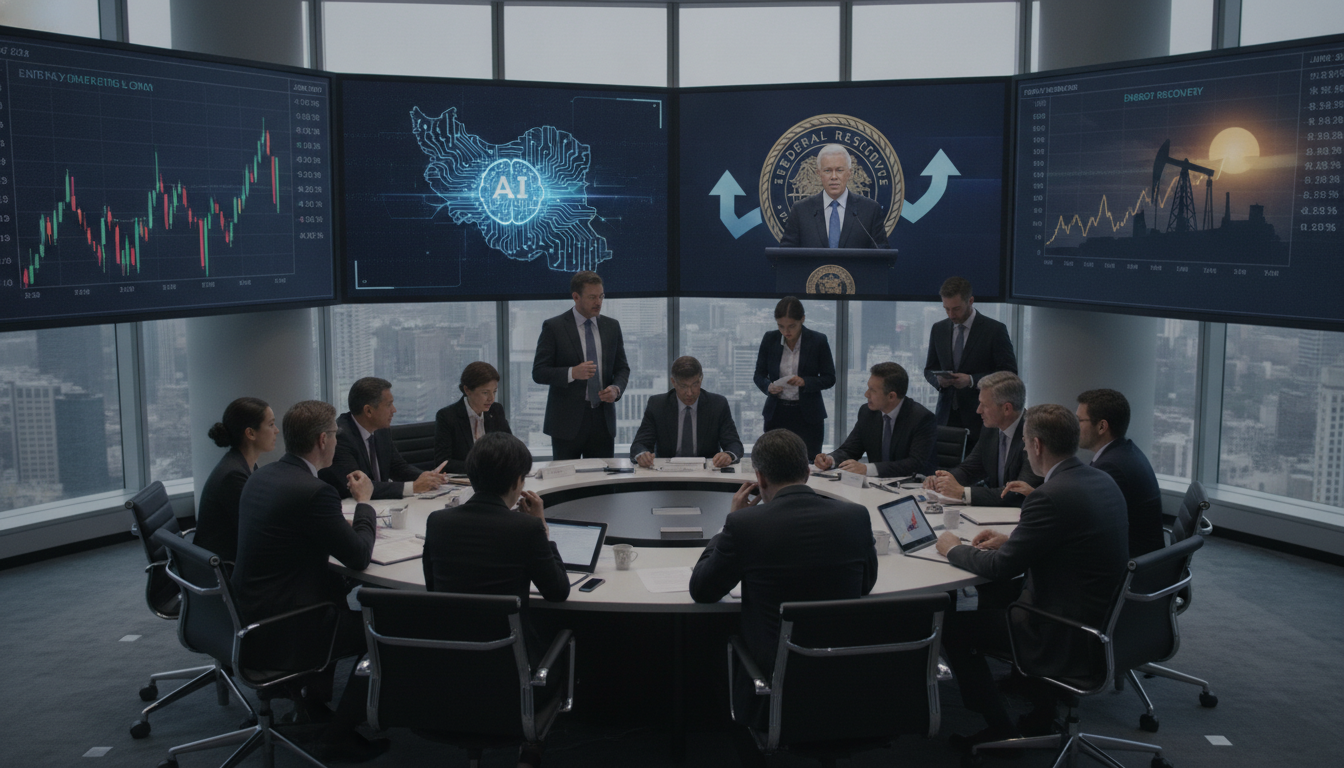
The first half of 2026 was dominated by Iran and AI, a combination that pushed volatility across equity, bond and commodity markets. Investors reacted to disruptions around the Strait of Hormuz at the same time technology stocks surged on renewed interest in artificial intelligence. Market participants said the twin forces reshaped risk appetites and forced portfolio adjustments ahead of key central bank decisions.
Market Reaction to Strait of Hormuz Disruption
The blockade and related tensions in the Strait of Hormuz prompted a swift risk-off response in global markets. Shipping routes and insurance costs became immediate concerns for commodity traders, and energy-linked assets saw heightened price swings.
Equity markets experienced bouts of selling in cyclical sectors while commodity-sensitive stocks outperformed at times. Portfolio managers told traders they raised cash and trimmed exposure to assets with the largest geopolitical sensitivity.
AI Rally Lifts Technology and Chip Stocks
Artificial intelligence drove a broad rotation back into megacap technology names and chipmakers, lifting indices that track the sector. Investor interest centered on companies supplying AI hardware, software and cloud infrastructure, pushing valuations higher in several pockets.
At the same time, the AI rally amplified market concentration, with gains concentrated among a relatively small group of firms. Analysts cautioned that earnings expectations would need to be met for the rally to sustain beyond optimism about future productivity gains.
Bond Markets Adjust to Mixed Economic Signals
Fixed-income markets absorbed competing signals as investors weighed the economic impact of geopolitical disruption against resilient demand for AI-related goods and services. Yields moved with risk sentiment, and traders monitored inflation indicators closely for signs of persistent price pressures.
Central banks were placed under a spotlight as participants tried to anticipate policy responses to mixed data. The balance between growth and inflation expectations became a key determinant of rate-sensitive asset performance.
Energy Supply Recovery and Pressure on Oil Markets
As immediate disruptions eased, market attention shifted to the pace of energy supply recovery and inventory rebuilding. Restoration of shipping routes and increased output from alternative sources helped calm some near-term concerns about tight supplies.
Nonetheless, oil markets remained sensitive to any renewed regional tensions, and energy companies continued to adjust production plans in response to shifting demand forecasts. Market watchers noted that a full normalization of logistics and contracts would take time and could create episodic price volatility.
Investor Strategies and Hedging Trends
Investors recalibrated strategies to balance exposure to high-growth AI themes with protection against geopolitical shocks. Many funds increased allocations to defensive sectors and safe-haven assets while using derivatives to hedge concentrated positions in technology names.
Portfolio managers also emphasized liquidity management, preferring instruments that could be traded quickly during spikes in volatility. The broad message from the investment community was one of active risk control rather than passive buy-and-hold approaches.
Liquidity and Market Structure Under Strain
Heightened trading volumes and rapid price moves revealed stress points in market structure, particularly in less liquid segments. Market makers and exchanges faced surges in order flow that tested existing liquidity provision mechanisms.
This environment prompted regulators and participants to review contingency mechanisms and the resilience of trading systems. Some institutional investors said they were reassessing execution strategies to avoid price impact during sudden market swings.
Sentiment into the second half of 2026 will hinge on developments around Iran and AI as well as signals from central banks on policy direction. Investors will be closely watching regional dynamics, corporate earnings tied to AI investment, and macroeconomic data that could influence rates and growth expectations.
Market participants say the path ahead is likely to combine episodic geopolitical shocks with continued structural change from AI, requiring disciplined risk management and selective positioning. The coming months should clarify whether the market settles into a new regime shaped by technology-driven growth or remains prone to intermittent volatility driven by external shocks.

