
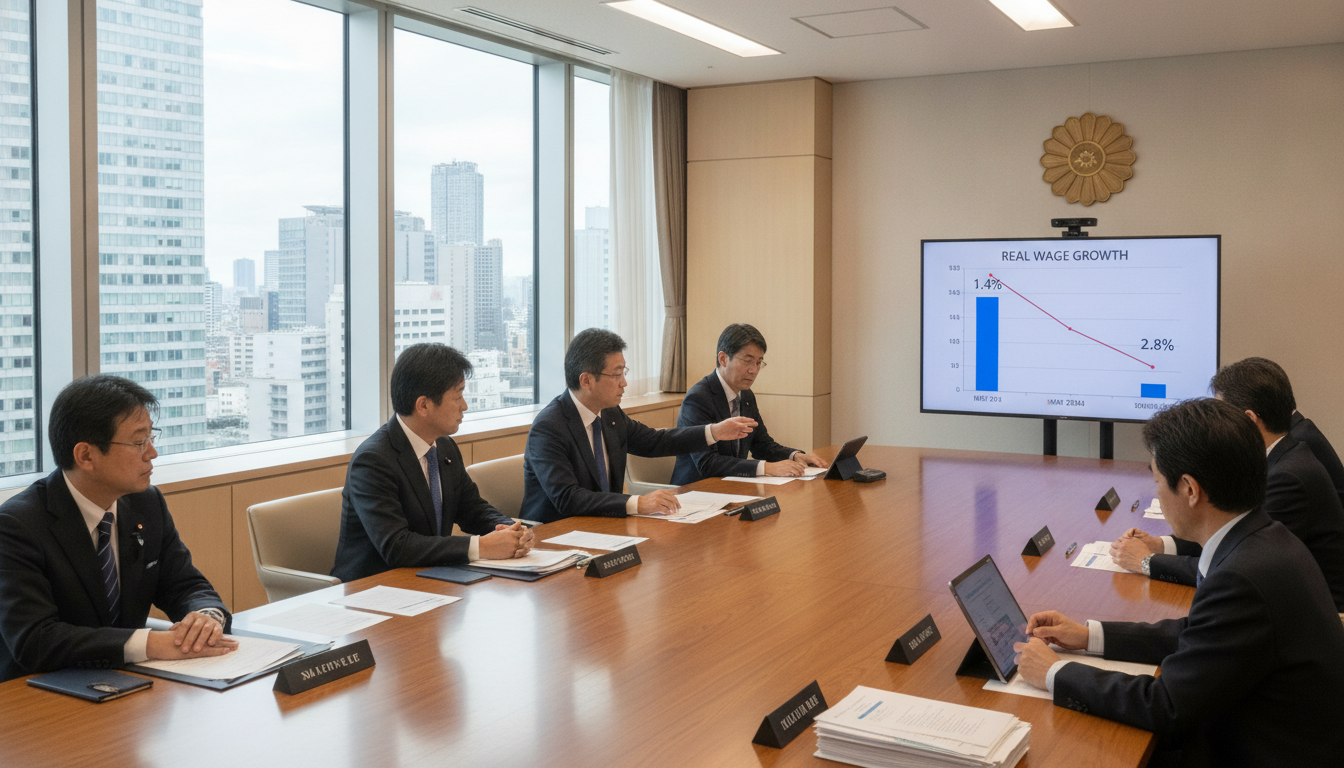
May real wages rise 1.4% as inflation cools, marking fifth consecutive monthly gain
May real wages rose 1.4% year-on-year, sustaining a five-month positive streak as nominal pay increases and slower inflation improved purchasing power.
Real wages climb for fifth straight month
The Ministry of Health, Labour and Welfare on July 7, 2026 released preliminary results of the Monthly Labour Survey showing May real wages for a representative worker increased 1.4% from the same month a year earlier. This marks the fifth consecutive month of year-on-year gains in real wages, a trend the ministry attributed to stronger base pay growth and a moderation in consumer price rises. Policymakers and households alike are watching whether the combination of wage gains and easing inflation will sustain improvements in living standards.
The report measures real wages by adjusting nominal earnings for changes in consumer prices and focuses on per-worker figures. Officials noted that the persistence of positive real wage growth contrasts with periods of weaker purchasing power earlier in the recovery from the pandemic-era disruptions.
Nominal cash earnings jump above 3% for fourth consecutive month
May nominal cash earnings, reported as total cash earnings received by workers, rose 3.2% year-on-year to ¥311,165. The increase continued a run in which the monthly growth rate exceeded 3% for four straight months — a pattern last seen in March 1992, according to the ministry. That stretch, spanning 34 years and two months, highlights an unusually broad uptick in pay pressures across the economy.
Scheduled cash earnings, which capture regular monthly pay such as base wages, climbed 3.0% to ¥275,942 in May. The rise in scheduled pay suggests employers are raising base compensation rather than relying solely on temporary or bonus payments to lift aggregate pay metrics.
Spring labour talks and corporate pay decisions
The labour ministry and several labour economists pointed to this year’s spring collective bargaining round, known in Japan as shuntō, as a key driver behind the wage increases. Many large firms reported planned base-pay hikes during negotiations, and those commitments have filtered down through payrolls in recent months. Companies that raised wages cited labour shortages, the need to retain skilled staff, and a broader push to boost domestic demand as motivating factors.
At the same time, the extent to which pay rounds translate into sustained income gains for households depends on firm-specific decisions about hiring, overtime, and performance-linked pay. Smaller firms and sectors with tighter profit margins may lag the large-company trend, creating a mixed picture beneath the headline figures.
Slower inflation bolsters purchasing power
A notable factor supporting the rise in real wages was a slowdown in inflation in May, which reduced the rate at which nominal earnings were eroded by higher prices. With consumer price growth easing, even moderate nominal pay rises translated into tangible increases in real incomes for many workers. The ministry emphasized that the interplay between pay and prices will determine whether real wages remain positive in coming months.
Analysts cautioned that the durability of inflation moderation is uncertain and that shifts in energy costs, import prices, or global commodity markets could rekindle faster price growth. If inflation accelerates again, the gains in purchasing power recorded in May could be partly or wholly reversed.
Implications for households and economic policy
Rising real wages have immediate implications for household spending, savings, and the outlook for domestic demand. Stronger purchasing power typically supports consumption, which can help sustain economic growth without reliance on monetary stimulus. For policymakers, the current combination of wage increases and moderating inflation presents an opportunity to assess the effectiveness of recent corporate pay-setting and labour-market dynamics.
At the same time, the government and the Bank of Japan face a delicate balance: supporting a durable recovery in incomes while monitoring inflationary risks. Fiscal measures targeting low-income households and efforts to encourage wage growth among small and medium-sized enterprises could shape how broadly the recent improvements in real wages are distributed across society.
May real wages rose 1.4% year-on-year, reflecting a confluence of rising base pay and slower consumer price growth that lifted workers’ purchasing power in the short term. Continued monitoring of pay rounds, corporate hiring, and inflation trends will determine whether these gains become entrenched for Japanese households.

