
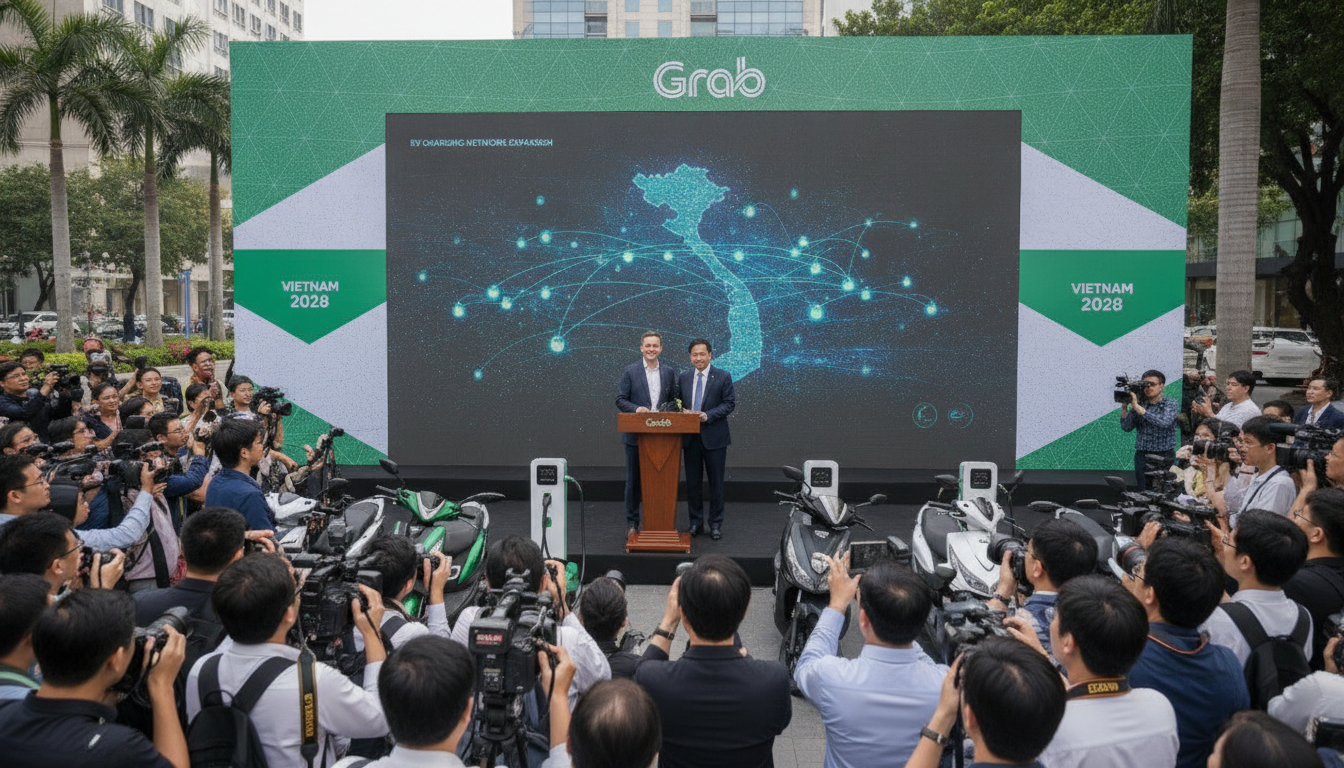
Grab expands EV charging network in Vietnam to 6,000+ ports by 2028
Grab expands EV charging network in Vietnam from ~400 ports to 6,000+ by 2028, supporting a brand-neutral alternative to VinFast’s proprietary charging system.
Southeast Asian ride-hailing company Grab has announced plans to scale its EV charging network in Vietnam from roughly 400 ports today to more than 6,000 by 2028, pursuing a brand-neutral alternative to the proprietary infrastructure led by local automaker VinFast. The expansion, intended to serve ride-hailing and delivery drivers as well as private owners, underscores Grab’s push to accelerate electrification while improving charging access across urban and regional routes. The move is framed as pragmatic: wider charging availability for multiple vehicle makes should reduce downtime for drivers and lower barriers to EV adoption in Vietnam.
Grab’s capacity and timeline
Grab’s target represents roughly a fifteenfold increase in installed charging ports over the next two years, scaling deployment aggressively between now and the end of 2028. The company says the buildout will focus on fast and semi-fast stations that can support high-utilization fleets, aiming to cut charging time and queuing for drivers. While precise annual installation schedules and investment figures were not disclosed, the timeline indicates a rapid rollout that will require close coordination with local operators, landlords and energy providers.
Brand-neutral strategy versus proprietary networks
Grab is positioning its network as brand-neutral, explicitly designed to be interoperable across EV makes and models rather than tied to a single manufacturer’s plugs or payment system. That approach stands in contrast to VinFast’s proprietary charging ecosystem, which has been expanding in parallel and is closely integrated with its own vehicle lineup. By enabling multiple brands to access the same stations, Grab aims to attract both third-party drivers and private owners who might otherwise be constrained by manufacturer-specific infrastructure.
Partnerships and local rollout plans
The company plans to expand through partnerships with local charging operators and service providers, deploying stations in high-demand zones such as urban centers, commuter corridors and logistics hubs. Local firms, including the network operators that already serve scooter and small vehicle segments, will be key to installing and operating sites at scale. Grab’s pilot sites and early rollouts in Vietnamese cities have showcased partner-branded hardware and shared payment platforms, a model the company intends to replicate nationwide.
Impact on drivers and fleet electrification
For ride-hailing and delivery drivers, a larger public charging footprint can translate into lower operating costs and higher uptime, both critical to earnings. Grab’s network expansion is likely to be paired with incentives for drivers to transition to EVs, including financing, battery leasing or discounted access to charging during off-peak hours. Wider charger availability also supports fleet operators seeking predictable refueling schedules, which is essential for the commercial viability of electrified services.
Infrastructure, grid and operational challenges
Rapid station deployment will place new demands on the electricity grid and require investments in distribution upgrades, substations and smart charging management to avoid congestion at peak times. Developers will need to secure real estate, obtain permits, and invest in power capacity, particularly for fast-charging sites that draw significant load. Interoperability and payment standardization present further operational hurdles; ensuring a seamless user experience across different vehicle models and operator apps will be necessary to attract drivers away from established, proprietary networks.
Policy context and market competition
Vietnam has signaled policy support for cleaner transport, with incentives and regulatory moves to encourage EV uptake in both two- and four-wheeled segments. That regulatory backdrop, combined with rising fuel costs and urban congestion, creates a favorable market for charging expansion. But competition is intensifying: VinFast and other carmakers are building closed and open networks, and global charging companies are eyeing Southeast Asian opportunities. Grab’s approach seeks to carve out a neutral middle ground, leveraging its large driver base and platform reach to scale infrastructure quickly.
The success of the plan will hinge on execution: timely partnerships, smooth permitting processes, and investments in grid resilience will determine whether Grab’s brand-neutral charging network can function at scale and truly broaden EV access. If the rollout meets its 2028 target, Vietnam could see a meaningful shift in where and how drivers refuel electric vehicles, reshaping the competitive landscape for charging services and influencing buyers’ vehicle choices.

