
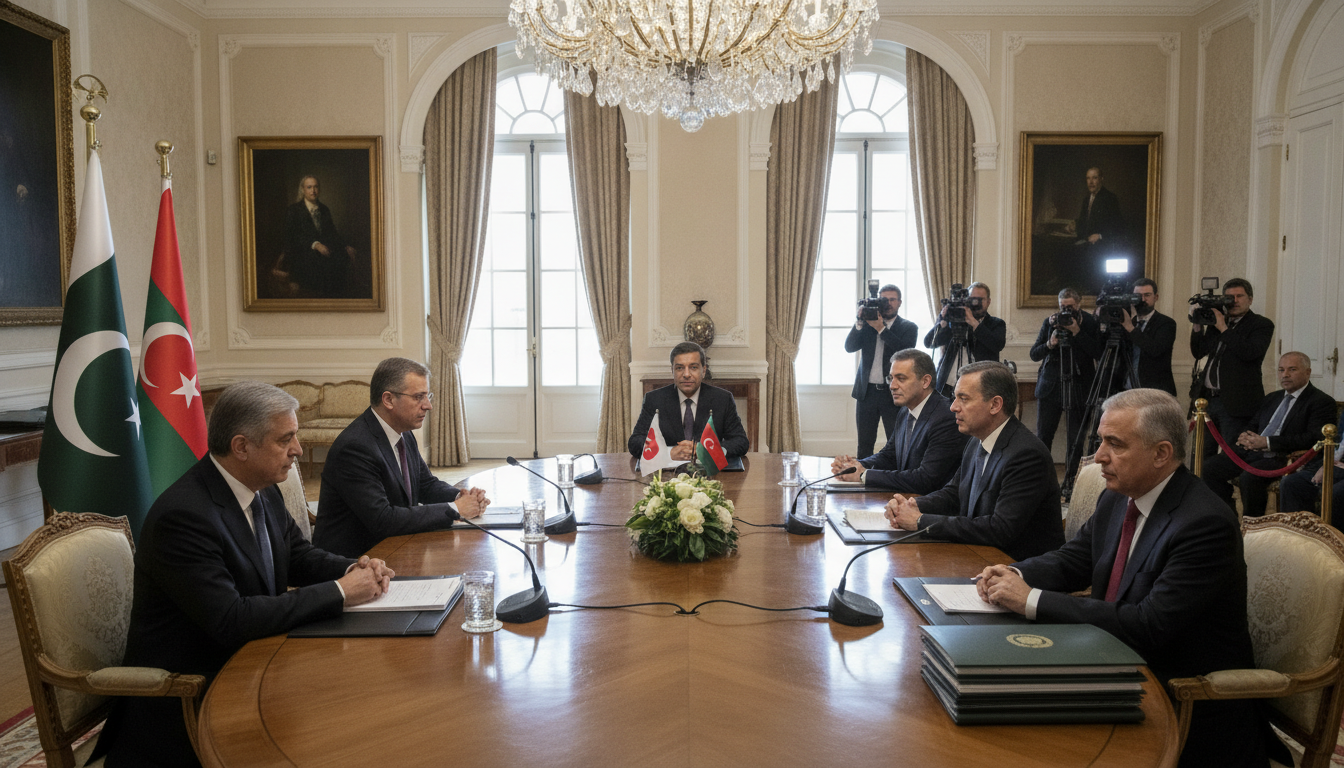
Pakistan mediates Libya talks as Army Chief Asim Munir leads quiet diplomatic push
Pakistan quietly began mediating between Libya’s rival administrations, led by Army Chief Asim Munir, expanding its diplomatic reach beyond Asia. (158 characters)
Pakistan has quietly begun mediating between Libya’s rival eastern and western administrations, marking a notable expansion of Pakistan’s diplomacy beyond Asia. The move comes as Pakistan’s Chief of Army Staff, Field Marshal Asim Munir, takes a direct role in shuttle diplomacy following his participation in recent international talks. Officials and observers describe the effort as discreet, with Islamabad aiming to open dialogue channels between the two Libyan authorities.
Details of Pakistan’s mediation initiative
Pakistan’s mediation in Libya centers on confidential contacts and facilitated meetings rather than public summits. Delegations and envoys linked to both the eastern and western administrations have been reportedly engaged through intermediaries in Islamabad and third countries. The initiative is being carried out with an emphasis on back-channel negotiations designed to reduce tensions and explore areas for practical cooperation.
Asim Munir’s diplomatic involvement
Field Marshal Asim Munir, Pakistan’s Army Chief, has emerged as a prominent figure in the initiative and was visible at a June 21 quadrilateral meeting near Lake Lucerne, Switzerland. That meeting, attended by representatives from the United States, Iran, Pakistan and Qatar, signalled Islamabad’s growing willingness to act as a mediator on complex regional issues. Munir’s participation underscores the Pakistani military’s continuing role in foreign policy and in high-level diplomatic outreach.
Link to Pakistan’s wider diplomatic strategy
The Libya mediation follows Islamabad’s recent engagement in efforts to ease tensions between the United States and Iran, suggesting a deliberate widening of Pakistan’s diplomatic remit. Islamabad appears to be leveraging long-standing bilateral ties and military-to-military channels to position itself as a trusted intermediary. The approach signals a cautious effort to build influence through pragmatic, discreet diplomacy rather than headline-driven initiatives.
Libya’s divided authorities and the challenges ahead
Libya remains divided between rival administrations that control different territories and state institutions, complicating any mediation effort. Political power in the east and west has been contested for years, and security actors, militias and foreign backers all influence the prospect of a durable settlement. Bridging those divisions will require confidence-building measures, clear communication between principals, and sustained international support to convert talks into tangible steps on the ground.
Regional and international dimensions
Any Pakistan-led mediation will need to navigate the interests of regional powers and international organizations that have long been involved in Libya’s politics. Neighbouring countries, the United Nations and other external actors maintain stakes in the Libyan settlement process, and their cooperation or resistance will shape the outcome. Islamabad’s ability to coordinate with these stakeholders and to present itself as an impartial facilitator will be central to the viability of its role.
Practical focus and possible next steps
Observers expect Pakistan’s mediation to concentrate on discrete, achievable objectives such as prisoner exchanges, humanitarian access, or localized ceasefire arrangements rather than immediate political reunification. Small, confidence-building measures can create momentum for broader negotiations if both sides see direct benefits. Islamabad may also seek to host further meetings, appoint special envoys, or work with regional partners to sustain momentum in the weeks ahead.
Pakistan’s quiet outreach to Libya represents a calculated diplomatic gamble, one that shifts the country into a more active facilitator role beyond its traditional sphere. The effort highlights how non-Western states and military-led diplomacies are increasingly visible in mediation landscapes once dominated by established international actors. The success of this Pakistan mediation in Libya will depend on its ability to maintain discretion, win trust from rival Libyan authorities, and coordinate with other international stakeholders to translate dialogue into concrete progress.

