
Suica card updates: what visitors and residents need to know in mid‑2026
Suica card guide: how to buy, use, go digital, and return your balance in Japan
The Suica card remains Japan’s most practical prepaid travel and e‑money solution, and recent service changes have expanded its digital reach and visitor options. Regular Suica cards returned to unrestricted sale in March 2025, Welcome Suica continues to offer short‑stay visitors a no‑deposit option, and Mobile Suica now supports more limited‑express and Green Car purchases. This guide explains how the Suica card works for tourists and residents, outlines buying and refund procedures, and highlights recent and near‑term system changes you should know before you travel.
Regular Suica returned to full sale in March 2025
A new physical Suica card costs ¥1,000, which includes a ¥500 refundable deposit and ¥500 stored value for immediate use. Blank card shortages caused by a global chip shortage were lifted in March 2025, restoring easy access across JR East sales points and airport machines. Visitors can now pick up a regular Suica at Narita and Haneda airports, JR East ticket machines, and JR East Travel Service Centers without special restrictions.
The regular Suica functions as both a transport IC and a contactless payment card across a wide network of retailers and services. It works on JR East trains and many private lines in the Tokyo area, on buses, and at convenience stores and vending machines that accept IC payments. Registering a Suica (MySuica) adds protection and enables balance transfer if the card is lost, which is useful for residents and frequent visitors.
If you prefer not to carry a plastic card, you can create a digital Suica in Apple Wallet or Google Wallet on supported devices. Digital Suica behaves like a physical card for station gates and retail payments, but refund rules differ for visitors, so consider whether you want to keep unused balance or spend it before departure.
Welcome Suica offers a short‑stay, no‑deposit visitor option
The Welcome Suica is a cherry blossom‑themed, short‑term Suica card designed specifically for temporary visitors to Japan. It is sold preloaded with amounts that vary by purchase method: online sales historically offered ¥1,000 or ¥2,000 options, while in‑person machines and counters allow loading from ¥1,000 up to ¥10,000. The card carries no ¥500 deposit, which means no deposit refund but also no need to return the card.
Welcome Suica cards automatically expire after 28 days and cannot be converted into digital Suica or linked to Apple Pay. Because refunds for remaining balance are not available, visitors should plan purchases to minimize unused credit or use a Welcome Suica Mobile issuance option where possible. Welcome Suica ticket machines are available at Narita and Haneda international terminals, and JR EAST Travel Service Centers stock the card as well.
The Welcome Suica Mobile app for iPhone extends the card’s utility by allowing issuance and top‑ups on a phone, and the mobile version is valid for up to 180 days. Availability to issue and top up in advance depends on the issuing country detected by the app, and issuing in Japan on arrival remains an option for most travelers.
Mobile Suica and digital options: device compatibility and new ticketing features
Mobile Suica on Apple devices supports iPhone 8 and later and Apple Watch Series 3 and later, plus Japan‑purchased iPhone 7 models; these devices can add Suica directly to Apple Wallet without an app. Android users can use Suica via Google Pay on phones with FeliCa (おサイフケータイ) hardware, which is common for devices sold in Japan but not guaranteed for overseas models. Confirm device compatibility before travel to avoid surprises.
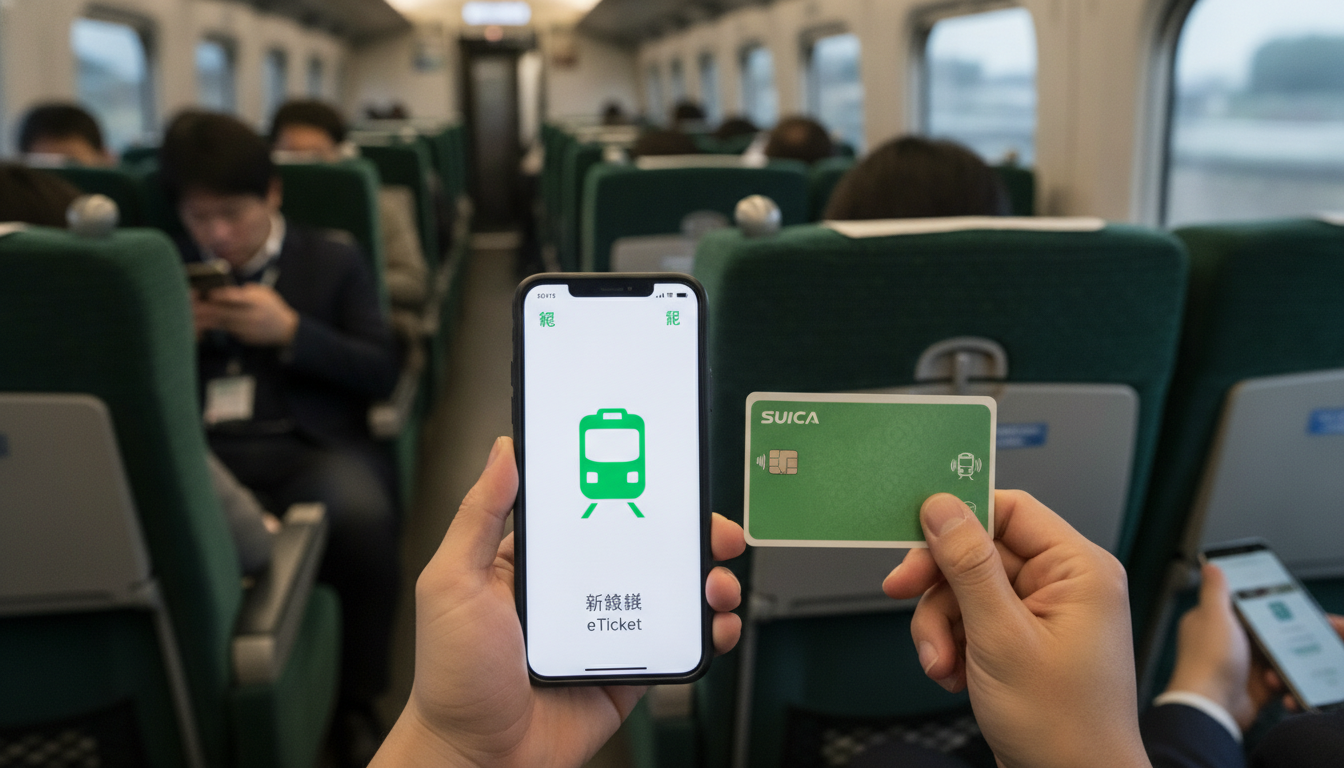
Between November 2025 and March 2026 the Mobile Suica ecosystem expanded to include support for additional limited‑express services and lines, bringing the total to 21 supported trains for e‑ticketing on JR East routes. In March 2026 the app also began offering Suica Green Car ticket purchases for selected commuter lines, with app prices set lower than paper tickets for journeys of up to 50 km. These additions let eligible users buy seat upgrades and some long‑distance tickets directly from their phones and tap through electronic gates.
Mobile Suica purchases such as Green Car tickets typically require Apple Pay or a registered payment method, and certain transactions can only be completed on the day of travel. Note that switching a physical Suica to digital disables the physical card, and visitors without a Japanese bank account face restrictions on refunding digital balances, so plan accordingly.
Where and how to buy a Suica card: airports, stations, and online options
You can buy a regular Suica card at JR East ticket machines, JR EAST Travel Service Centers, and at airport kiosks in Narita and Haneda. New cards are simple to obtain at the station machines, which offer English on screen and accept major credit cards and cash. If you prefer to arrive with a card in hand, check Welcome Suica availability on third‑party sales platforms before you fly, but be aware stock fluctuates.
Welcome Suica is available from dedicated Welcome Suica machines at Narita and Haneda and at major JR EAST counters including Tokyo, Shinjuku, and Shibuya. One Welcome Suica is issued per person in principle, and children’s Welcome Suica options are available at the same sales points with age verification required. For those who want to avoid queues, the Welcome Suica Mobile app allows advance issuance for users in certain countries and issuance on arrival when the app detects Japan.
Registering a regular Suica at purchase creates a MySuica account that prints your name on the physical card and enables reissuance if the card is lost. Registration requires basic personal details and is recommended for residents and long‑stay visitors who want balance protection and refund options.
Using Suica across transport modes and for Shinkansen and limited‑express travel
A Suica card covers base fares on JR East trains and many other IC‑accepted networks, and it is interoperable with regional IC cards across most of Japan. Tap your Suica card or device at IC gates when entering and exiting; on buses you typically tap on boarding and/or alighting depending on the service. If a reader flashes red or beeps, the balance is insufficient and you will need to top up before passing through.
IC cards cover base fares only; surcharges for Shinkansen and limited‑express services must be paid separately unless you purchase an e‑ticket or surcharge within Mobile Suica or linked booking services. Options include buying a paper surcharge ticket at a machine, using Welcome Suica Mobile to issue e‑tickets, registering Shinkansen e‑tickets to your Suica through JR‑East reservation services, or using the Touch de Go! Shinkansen registration that permits tap‑in travel on certain lines with fare deduction from your balance.
Be aware that regional fare zones remain a constraint: a single tap‑on/tap‑off journey cannot cross from one company’s zone to another without re‑tapping at the zone boundary. JR East has signalled plans to merge several internal Suica zones around spring 2027, but trips crossing into other operators’ territory, such as JR Central to Nagoya and beyond, will still require separate handling or a paper ticket.
Topping up, refunds and returning Suica cards at the end of a trip
Topping up a physical Suica is straightforward at station machines and select convenience store registers, and digital Suica can be recharged through Apple Wallet, Google Wallet, or the Suica app using linked payment cards. Some station machines support charging a phone directly via the IC reader, though this capability is less common outside central Tokyo. Always keep a backup payment method as some foreign debit cards may not work reliably for top‑ups.
To return a regular physical Suica and get the ¥500 deposit back, take the card to a staffed ticket office at a JR East station or to airport return counters; a ¥220 handling fee will be deducted from any remaining balance. Refunds for digital Suica require the Suica app and a Japanese bank account to process the transfer, plus the same ¥220 fee, which places practical limits on refunding digital balances for short‑stay visitors.
For Welcome Suica cards there is no deposit and no refund of remaining balance, so visitors should plan to spend down any credit before leaving Japan. Many travelers simply use remaining balance at convenience stores, vending machines, or to buy last‑minute souvenirs and snacks before departure.
Children, fares and family travel with Suica
Children aged six to eleven travel at half fare and a child Suica is the recommended option for families. Child Suica must be purchased at JR ticket offices rather than button machines and requires proof of age, so bring passports or other ID to complete the purchase. Children under six generally travel free when accompanying up to two paying adults, but carrying proof of age can avoid confusion at staffed gates.
The child Suica is not available in digital form, so you will need a physical card for each child unless you plan to buy paper tickets for every journey. This requirement means one adult’s phone cannot be used to pay for multiple children, so plan ahead for gate access and seat reservations on busy services.
If you choose Welcome Suica for children, be prepared to provide age verification and note the same 28‑day expiry applies to the visitor card version. For families staying longer, registering regular Suica cards provides added protection and is advisable for predictable reissue and balance transfer procedures.
Suica’s evolution across physical and digital channels has made moving around Tokyo and greater Japan more convenient, but practical choices still matter: decide early whether you want a no‑deposit Welcome Suica, a refundable regular card, or a fully digital Suica tied to your device. Each option carries different refund, registration and usability rules that affect how you top up, travel on limited‑express services, and retrieve remaining funds at the end of your stay.
Local pricing updates and feature rollouts in late 2025 and early 2026 have shifted some incentives toward digital purchases and app ticketing, but visitors should still carry a small amount of cash and a basic paper ticketing plan for cross‑zone or non‑IC journeys. JR East’s ongoing updates, including the plan to merge regional Suica zones in 2027 and the public consultation around a Suica mascot refresh, make it sensible to check official JR East notices before travel.
If you are arriving at Narita or Haneda, purchasing a Welcome Suica at an airport machine is the fastest way to start using trains and buses immediately, while regular Suica remains the best choice for those who expect to return to Japan or who prefer the option of a deposit refund. Digital Suica is ideal for frequent travelers with compatible devices, but remember the constraints on refunds and the need for Japanese payment infrastructure for certain transactions.
Ultimately, the Suica card’s combination of transport convenience and broad retail acceptance keeps it central to navigating Japan efficiently. Whether you buy a Welcome Suica at the airport, pick up a physical Suica from a station machine, or add a digital Suica to your wallet, understanding the purchase, top‑up, and refund rules will save time and money while ensuring smoother journeys across Japan’s rail and retail networks.

