
‘Lost Land’ Puts Rohingya Refugee Crisis in Focus Through Children’s Journey
Akio Fujimoto’s film "Lost Land" follows Rohingya children fleeing Bangladesh for Malaysia, exposing trafficking, statelessness and the human toll of forced migration.
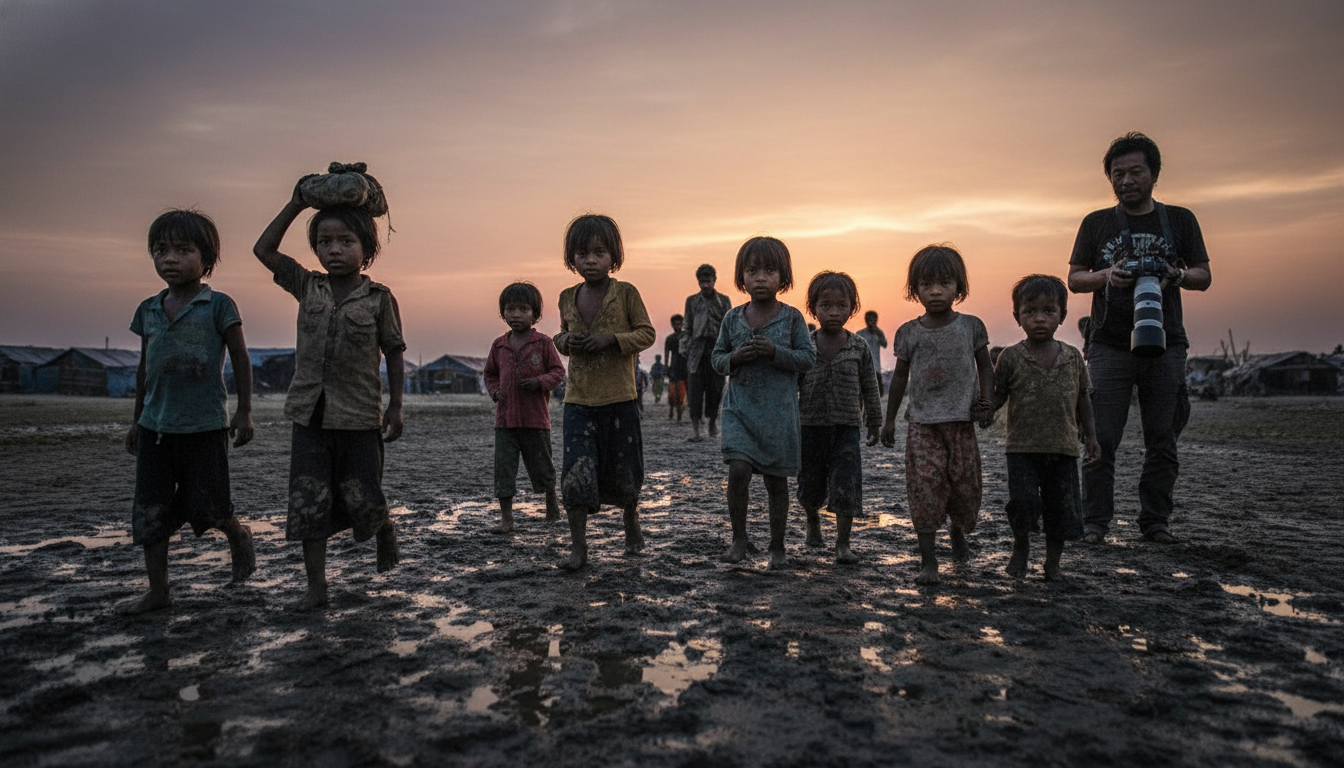
Akio Fujimoto’s new film Lost Land frames the Rohingya refugee crisis through the eyes of two young siblings on a perilous journey from Bangladesh to Malaysia. The film places the viewer alongside Shafi, 5, and his sister Somira, 9, as they navigate borders, camps and the dangers posed by traffickers. By centering children, Lost Land asks audiences to confront the human consequences of statelessness and violence.
Film Depicts Rohingya Children’s Journey
The narrative follows the siblings leaving the relative safety of a refugee camp and stepping into a world of uncertainty and exploitation. Their limited understanding of the 2017 military crackdown in Myanmar is mirrored by the film’s choice to foreground daily survival over historical exposition. This perspective highlights how displacement reshapes childhood and family bonds.
Fujimoto avoids didactic explanation and instead builds tension through small moments: a hand held too tightly, a glance at a border fence, an exchange with an adult who will not be trusted. The result is an intimate portrayal that invites viewers to read the larger crisis through intimate, human-scale scenes.
Director’s Perspective and Intent
Fujimoto, 38, discussed the project at a publicist’s office in central Tokyo, where his own young son played quietly nearby. He explained that the choice to tell the story through children was deliberate, intended to simplify a complex history into the elemental experience of loss and survival. The director said he hoped audiences who know little about the Rohingya would find an entry point into the issue via the children’s journey.
The director also emphasized responsibility in representation, noting the ethical challenges of filming vulnerable subjects and dramatizing real suffering. Fujimoto’s approach seeks to balance respect for the Rohingya community with the urgency of drawing broader public attention to their plight.
Filmmaking Choices and On-Location Work
Lost Land uses visual economy and restrained dialogue to keep the focus on movement and atmosphere rather than lengthy background exposition. Cinematography often lingers on landscapes and transit points, turning geography into a character that shapes the children’s fate. Sound design and occasional silences amplify the uncertainty that accompanies every border crossing.
Casting and child direction required sensitivity and professional safeguards on set, according to Fujimoto’s team, who worked to protect young performers during difficult scenes. The filmmaking choices serve a dual purpose: they preserve the emotional integrity of the story and underscore the universality of a child’s fear and resilience.
Human Trafficking and Border Risks Highlighted
A central thread of the film is the presence of unscrupulous human traffickers who exploit displaced people’s desperation. Lost Land portrays the grim economics behind irregular migration, where families often trade safety for the promise of onward movement. These depictions aim to expose how traffickers profit from the statelessness and legal limbo that many Rohingya face.
By dramatizing these encounters, the film raises questions about international responsibility and the gaps in regional protection frameworks. Audiences are confronted with the immediate human costs of systemic failures that persist in parts of South and Southeast Asia.
Reception and Public Discussion in Japan
Fujimoto’s screening and remarks in Tokyo have already prompted discussions among journalists, human rights advocates and cinema programmers. The film’s child-centered storytelling has been noted as a means to broaden public engagement with a crisis often framed in geopolitical terms. Early viewers described the film as both difficult and essential viewing.
Civic groups and cultural organizations are likely to use Lost Land as a springboard for panels and educational programs that explore refugee policy and humanitarian response. Such community-led events can extend the film’s reach beyond festival screens and stimulate informed debate in local contexts.
Context: Rohingya Crisis and Statelessness
The Rohingya are a predominantly Muslim ethnic group long subjected to discrimination and denied citizenship in Myanmar, a condition that predates the 2017 military offensive. That crackdown forced hundreds of thousands to flee Rakhine State, creating protracted refugee situations in neighboring countries. Statelessness compounds vulnerability by limiting access to services and legal protections.
By centering the experience of two children, Lost Land crystallizes how large-scale policies translate into intimate forms of suffering and endurance. The film does not attempt to solve the crisis, but it insists that viewers recognize the human faces behind news headlines.
Lost Land functions as both a work of art and a call for attention: it invites viewers to witness the Rohingya crisis through the disarming perspective of children and to consider what responses—legal, humanitarian and political—might reduce the need for perilous journeys.

