
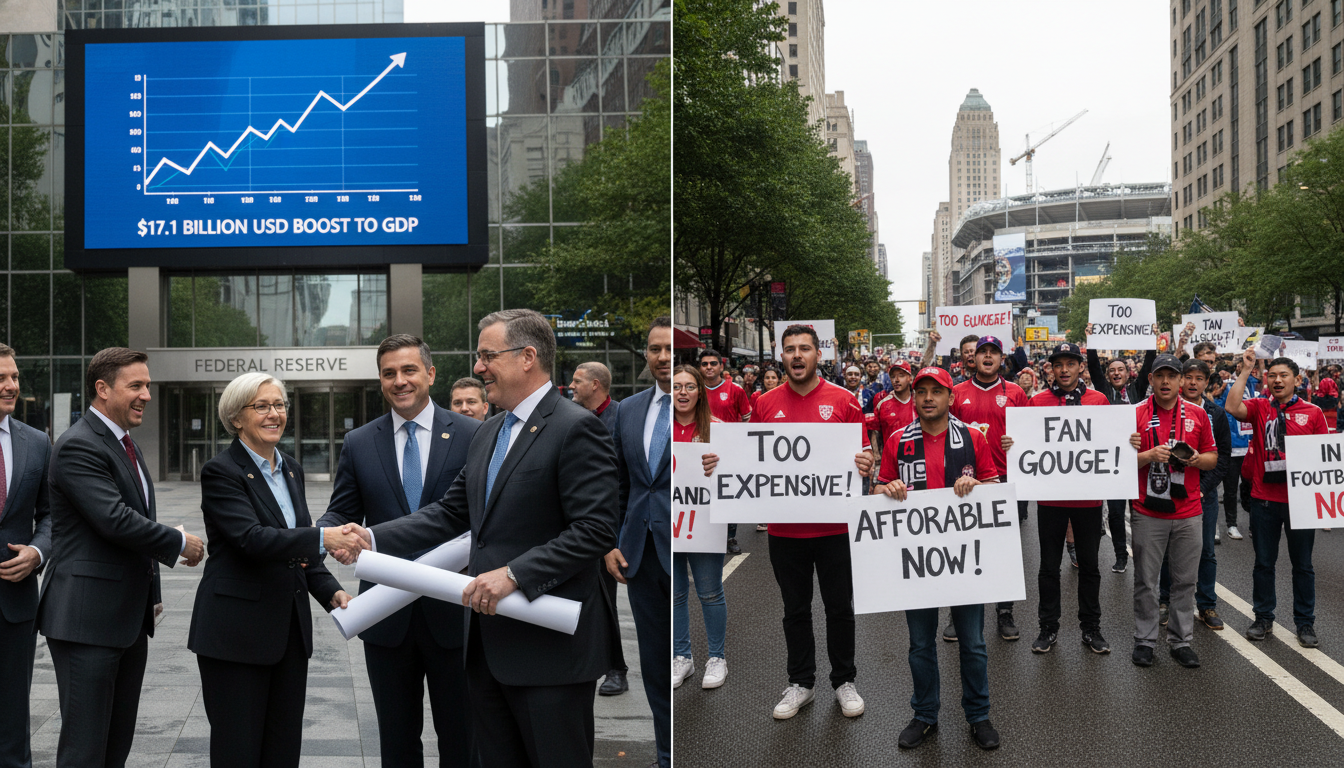
2026 FIFA World Cup: FIFA Forecasts $17.1B U.S. GDP Boost Amid Fan Outcry Over Ticket and Transit Costs
FIFA forecast that the 2026 FIFA World Cup will lift U.S. gross domestic product by roughly $17.1 billion through visitor spending on hotels, food and related services, even as fans and local officials criticize rising ticket and rail fares ahead of the tournament. The three‑nation event runs from June 11 to July 19, 2026, and is expected to draw millions of visitors across 16 host cities in the United States, Canada and Mexico. (fifa.com)
FIFA Projects $17.1 Billion Boost to U.S. GDP
FIFA and partner studies estimate the expanded 48‑team tournament will generate large economic spillovers, with the United States singled out for the largest GDP gain among hosts. The figure — roughly $17.1 billion in added GDP for the U.S. — reflects spending on accommodation, restaurants, local transport and related services during the June–August planning and match period. (football-technology.fifa.com)
FIFA’s economic assessments use input‑output modelling and host‑city data supplied to consultants, and the organisation has highlighted broader joint estimates that place the tournament’s contribution to global GDP in the tens of billions. Those headline numbers are intended to show the scale of spending but economists warn the effect is concentrated and may be short‑lived. (vod.fifa.com)
Ticket Prices and Transport Costs Trigger Fan Backlash
The economic optimism has been overshadowed by complaints from supporters who say attending matches has become prohibitively expensive. Supporters’ groups and media reports note steep ticket resale prices for marquee fixtures and additional costs such as premium parking, hospitality packages and service fees. (tribuna.com)
That backlash has spilled into public debate in host regions, with critics arguing that the event’s commercial model prioritises high‑value tourists and corporate hospitality at the expense of ordinary fans. Organisers and local host committees have defended pricing structures as market‑driven and necessary to cover security and operational costs. (inkl.com)
New Jersey Transit and Boston Fare Controversies
A focal point of the uproar has been match‑day transport pricing in some U.S. host cities. New Jersey Transit initially planned steep special‑event round‑trip fares from Manhattan to MetLife Stadium — reported at up to $150 per person — provoking condemnations from local officials and a public relenting to a lower capped price. The adjustment followed sharp criticism that public transit prices were being used to shift large operational costs onto fans. (bdnews24.com)
In the Boston area, regulators and transit operators faced similar scrutiny after commuter‑rail prices for special trains to Gillette Stadium were set significantly above typical event fares, with round‑trip tickets in planning stages far higher than normal NFL‑game pricing. Some host committees and sponsors have since sought partial mitigation measures, but the episode has underscored tensions between funding complex temporary transport operations and protecting everyday commuters. (thesportsexaminer.com)
Local Economies Expect Gains, But Experts Flag Limitations
Host‑city officials and businesses have emphasised short‑term gains in hospitality, retail and services, pointing to FIFA’s assessments and independent city forecasts showing substantial per‑match and per‑city boosts. Canada’s pre‑tournament analysis, for example, projects several billion Canadian dollars in economic output tied to the event, with local modelling produced by Deloitte for FIFA cited in official statements. (vod.fifa.com)
Yet economists caution that headline GDP gains do not equate to permanent growth or a sustained local legacy. Analyses from banks and regional economists suggest much of the spending simply shifts the timing of consumption and can be outweighed by higher local prices, opportunity costs or the costs of temporary infrastructure. The net benefit therefore depends on how much of the spending is new and how host cities manage capacity and post‑event utilisation. (toronto.citynews.ca)
Infrastructure Strain, Security and Organisers’ Response
Beyond pricing, the scale of the 104‑match tournament has placed pressure on transport networks, policing and fan‑services in multiple time zones. Security planning and 24‑hour coordination among federal, state and local agencies have been ramped up in the lead‑up to the opening, according to reporting on law‑enforcement preparations. Organisers and authorities say contingency plans, enhanced staffing and temporary service schedules are in place to manage demand peaks. (lemonde.fr)
FIFA has urged host agencies to ensure access and affordability for match‑ticket holders, while noting that some transport and venue arrangements are negotiated locally. Where public outcry has been strongest, authorities have adjusted fare structures or announced subsidies and sponsor‑backed programs to reduce the immediate burden on fans. (aljazeera.com)
As the opening whistle approaches on June 11, 2026, the 2026 FIFA World Cup presents a classic mega‑event paradox: enormous aggregated economic figures and clear pockets of local commercial opportunity on one hand, and a real struggle over affordability, transport access and who ultimately benefits on the other. The tournament’s success in creating a lasting economic legacy will depend less on headline dollar estimates than on how host cities translate an intense, short‑term spending surge into durable jobs, infrastructure use and equitable fan access over the months and years that follow.

