
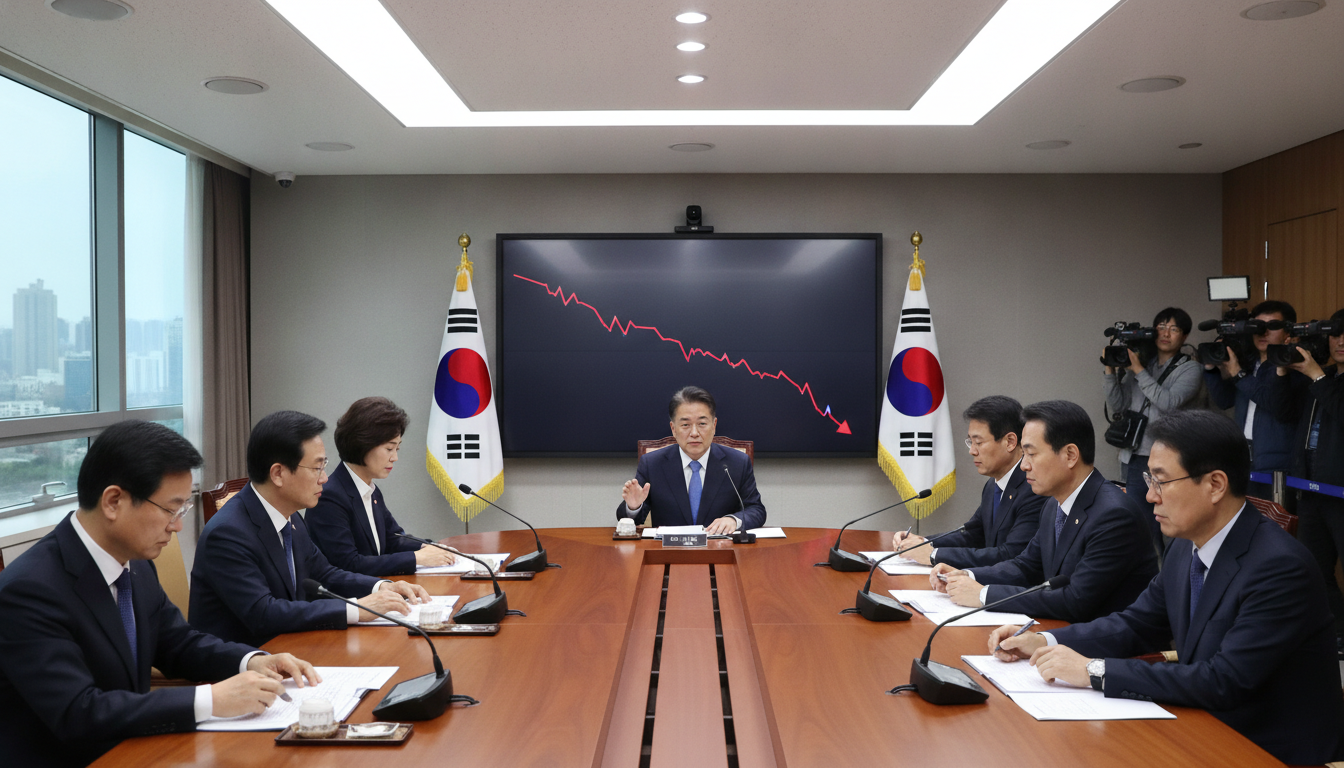
Yen and won under pressure as Asian markets tumble; Seoul held emergency weekend meeting
Yen and won under pressure as tech-led selloff hits Asian markets on June 8, 2026; Seoul held emergency weekend talks amid US rate fears and Mideast tensions.
Asian equities opened sharply lower on June 8, 2026, as a coordinated slump in technology shares and renewed dollar strength pushed the yen and won under pressure, prompting officials in Seoul to hold emergency talks over the weekend. The selloff, which extended across Tokyo, Seoul and Taipei, reflected rising expectations of further US interest-rate increases and growing geopolitical volatility in the Middle East. Market participants said risk appetite waned rapidly in the opening hours, driving steep losses in regional benchmarks and sparking concerns about spillovers into currency and debt markets.
Stocks slide across Tokyo, Seoul and Taipei
Tokyo’s main indices fell at the open, with exporters and chip suppliers among the hardest hit by the early selling. The Topix and Nikkei retreated after overnight gains in US Treasury yields and a stronger dollar increased pressure on cyclical and growth-oriented names.
Seoul’s KOSPI posted one of the widest declines in the region, reflecting both equity weakness and a sharp depreciation in the Korean won. Taipei’s market also sold off, amplifying the sense of a technology-led rout given Taiwan’s central role in the global semiconductor supply chain.
Seoul convened emergency weekend meeting on June 6–7, 2026
South Korean officials held an emergency meeting over the weekend of June 6–7, 2026, to assess market developments and coordinate a policy response, sources familiar with the matter said. The gathering brought together finance ministry officials, central bank representatives and senior market regulators to review currency flows and liquidity conditions.
Officials did not announce any immediate intervention at the close of the meeting, but participants signaled readiness to use available tools if disorderly currency moves persisted. The emergency talks underscored policymakers’ heightened sensitivity to rapid won depreciation and the potential for contagion to domestic financial markets.
Yen and won face renewed selling pressure
Currency dealers reported that the yen slipped sharply versus the dollar on June 8, 2026, undermined by a rebound in US bond yields and lingering expectations of another tightening step from the Federal Reserve. The won moved in parallel, registering outsized losses as export-sensitive assets came under selling pressure.
Analysts said the dual hit to the yen and won reflects a combination of cross-border capital flows, leveraged positions in regional FX markets and an increasingly risk-averse mood among global investors. While central banks have tools to dampen volatility, any intervention would likely be calibrated to avoid escalating market stress.
Tech shares lead declines, weighing on regional indexes
Tech and semiconductor stocks led the rout as investors pared exposure to higher-risk, high-growth names vulnerable to tighter financial conditions. Companies with heavy reliance on global demand and capital spending saw the steepest corrections, pushing benchmark indexes significantly lower.
Market strategists noted that concentrated losses in a handful of large-cap technology firms magnified index moves, making overall market performance look worse than the broader underlying fundamentals. Earnings season and a string of policy events in the United States were cited as catalysts that exacerbated the selloff.
Investors cite US rate expectations and Middle East tensions
Traders pointed to rising US rate expectations as a primary driver of the market reversal, with a pick-up in Treasury yields on Friday raising the probability that the Federal Reserve will maintain restrictive policy for longer than markets previously priced. That repricing heightened concerns about the funding costs for risk assets and emerging-market liabilities.
Compounding the financial factors were reports of escalating tensions in the Middle East, which increased demand for safe-haven assets and further reduced investors’ willingness to hold risk. The combination of tighter policy expectations and geopolitical stress created a powerful headwind for equities and Asian currencies on June 8, 2026.
Outlook: volatility to persist into policy windows and earnings reports
Analysts expect elevated volatility to continue into key policy dates and major corporate earnings announcements, with markets likely to respond sharply to any fresh information on Fed guidance or geopolitical developments. Short-term positioning remains vulnerable, and liquidity could thin during off-hours or in less liquid issues, increasing the probability of outsized moves.
Market participants said they will be watching central bank communication and any official statements from finance ministries closely for signs of coordinated action or backstop measures. For now, traders advised caution as price discovery and risk repricing play out across asset classes.
The rapid move lower in Asian markets on June 8 highlights how quickly shifts in global interest-rate expectations and geopolitical risk can transmit through equities and currencies, leaving policymakers and investors navigating heightened uncertainty.

