
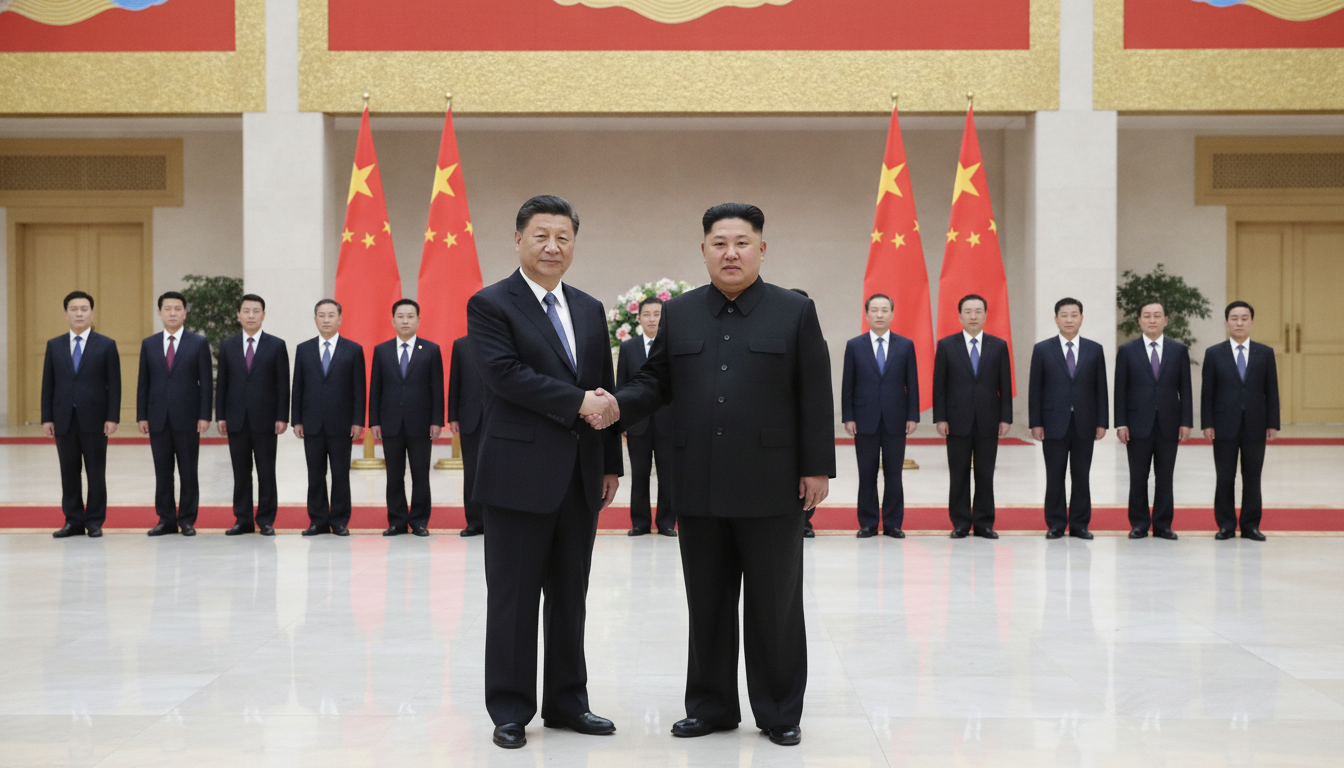
Xi Jinping Visit to Pyongyang Marks First State Trip in Seven Years
Xi Jinping visit to Pyongyang began on June 8, 2026, with the Chinese leader arriving for a two-day state visit that underscores Beijing’s deepening ties with North Korea. The trip, the first since June 2019, brings the anniversary of the 1961 friendship treaty into focus and raises questions about regional security and denuclearization.
Arrival in Pyongyang and State Visit Schedule
Xi Jinping landed in Pyongyang on June 8, 2026 for a state visit scheduled through June 9, Chinese state media reported. The visit is being treated as a formal, high-level engagement intended to showcase bilateral solidarity after a seven-year gap since his last trip in 2019. Chinese and North Korean state outlets framed the itinerary around meetings with leader Kim Jong Un and exchanges at multiple party and government levels.
Published Contribution in North Korean Press
North Korea’s official Rodong Sinmun published a contribution by Xi on June 8, reflecting an unusually public diplomatic preface to the meetings. In the piece, Xi expressed hope to "discuss traditional China–DPRK friendship and consult on grand plans for the development of relations," language that signals intent to reaffirm long-standing ties. The publication of a leader’s contribution in the North Korean party press is a rare public display of mutual messaging and emphasizes the ceremonial weight of the visit.
Anniversary and Treaty Reference
Xi noted that 2026 marks the 65th anniversary of the Treaty of Friendship, Cooperation and Mutual Assistance between Beijing and Pyongyang, framing the visit within that historical milestone. He reiterated that enduring bilateral friendship is "invincible" regardless of changing international circumstances, signaling Beijing’s desire to solidify a narrative of continuity. The emphasis on the treaty highlights both symbolic and strategic dimensions of the visit as China seeks to publicly reaffirm its commitments.
Security Themes and Opposition to “Militarism”
In his published remarks, Xi warned against the "revival of militarism," a phrase widely read as a critique directed at nations perceived to be rearming or escalating tensions in the region. He also called for strengthened strategic communication and cooperation, and for joint defense of an international order anchored by the United Nations and international law. Those elements of his message place security cooperation and normative framing at the center of the bilateral agenda during the state visit.
Denuclearization and International Watch
Analysts and regional governments will be watching closely for any substantive comments on North Korea’s nuclear program during meetings with Kim Jong Un. China’s public messaging so far has emphasized alliance-building and international order, while officials in Tokyo, Seoul and Washington are especially attentive to signals on denuclearization. The visit thus serves both as a platform for bilateral coordination and a moment for broader diplomatic signaling to outside actors.
Implications for Regional Diplomacy and Sanctions
The visit is likely to affect diplomatic calculations across East Asia, where Beijing’s relationship with Pyongyang intersects with concerns about stability, sanctions and arms control. By publicly committing to enhanced party, government and military exchanges, Beijing appears to be expanding channels of coordination that could complicate efforts by other countries to pressure North Korea. At the same time, Chinese statements invoking the UN-centered order may be aimed at balancing support for Pyongyang with assurances to the international community.
Xi Jinping’s trip to Pyongyang on June 8–9, 2026 therefore combines ceremonial commemoration with strategic messaging, and it will be assessed not only for what is agreed between the two capitals but for how those agreements are communicated to neighboring states and global institutions.

