
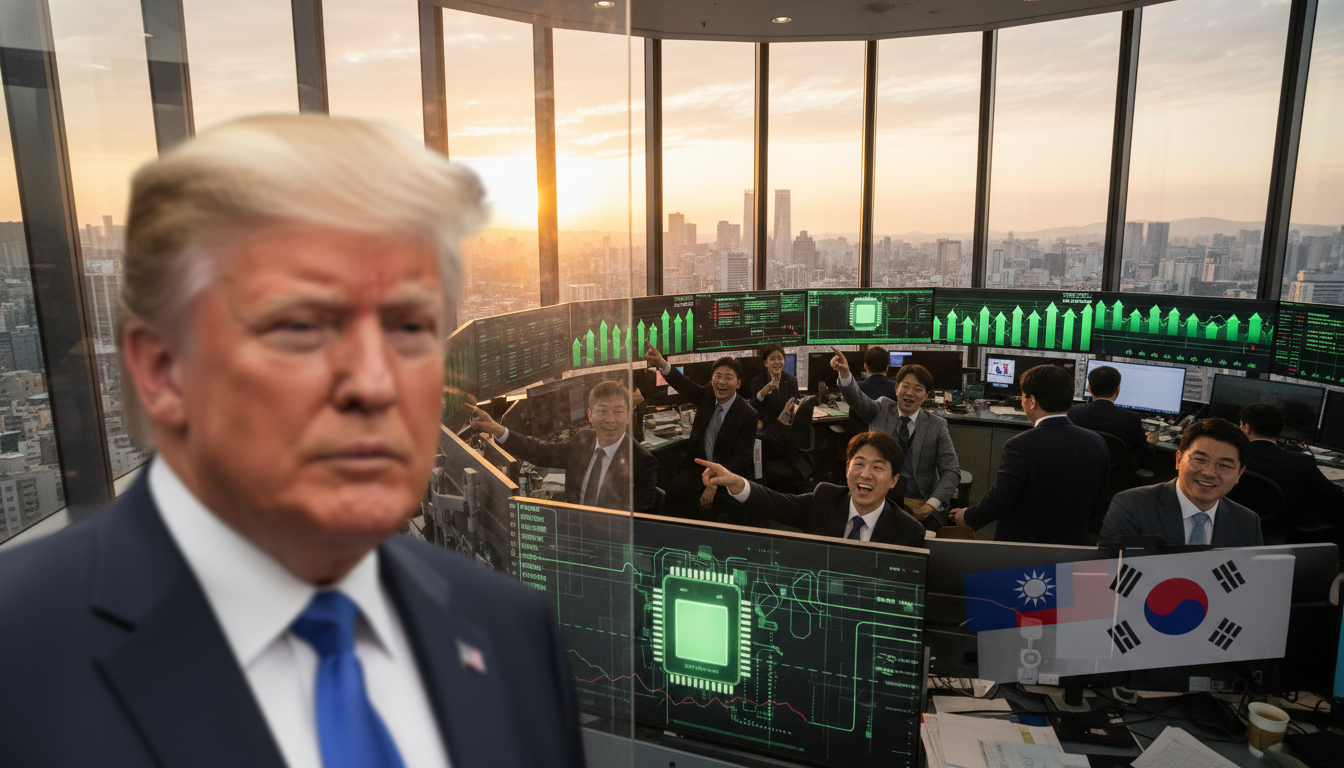
Asia Markets Rally as Trump Signals Iran War Deal May Be Within Reach
Asian stocks rose after President Trump signaled a possible deal to end the Iran war, boosting chip stocks in South Korea and Taiwan and easing oil demand.
Markets across Asia rallied on Wednesday after U.S. President Donald Trump suggested a deal to end the Iran war could be within reach, lifting investor risk appetite and sending semiconductor shares higher in key export markets. The comment reduced near-term geopolitical risk perceptions and helped push benchmark equity indices in South Korea and Taiwan to fresh highs amid intense demand for chipmakers. Traders also registered softer oil prices and reduced flows into traditional safe havens as hopes for de-escalation took hold.
South Korea and Taiwan equities climb to new highs
South Korean and Taiwanese markets led gains as semiconductor-related stocks outperformed the broader market. Companies tied to chip manufacturing and equipment supply chains saw particularly strong buying as investors priced in accelerated orders and higher capital expenditures. The domestic indices reached multi-week or record levels in intraday trading, reflecting a convergence of stronger risk sentiment and sector-specific momentum.
Foreign investors were active in the region, reallocating funds from perceived safe assets into equities that stand to benefit from an easing of Middle East tensions. Local trading desks noted heavier volume in large-cap technology names and index-heavy stocks, which amplified benchmark moves.
Chip sector frenzy reinforces rally
The chip sector served as the primary catalyst for the equity advance, with liquidity chasing names tied to memory, foundry services and advanced packaging. Analysts and portfolio managers pointed to robust demand forecasts for artificial intelligence and data-center applications as an undercurrent supporting valuations. That structural growth narrative combined with lower geopolitical premiums to attract both short-term momentum traders and long-term investors.
Market participants highlighted supply-chain linkages across East Asia, where manufacturers from equipment suppliers to downstream device makers stand to benefit from an upswing in orders. The concentration of semiconductor production in South Korea and Taiwan meant that optimism in the sector had outsized effects on national benchmarks.
Oil, shipping and safe-haven flows respond
Energy markets reacted as traders priced in a reduced likelihood of sustained disruptions to shipping routes such as the Strait of Hormuz. Brent and other benchmark crude contracts eased from earlier risk-driven highs, reflecting a reassessment of supply-risk premiums. Lower oil volatility in turn supported asset classes sensitive to energy costs and corporate margins.
Safe-haven assets, including government bonds and the Japanese yen, saw inflows moderate as global risk sentiment improved. Bond yields in the region ticked higher in response, while currency moves mirrored shifts in cross-border capital flows and yield differentials.
Investor sentiment and trading behavior shift
Short-term positioning adjusted quickly as hedge funds and asset managers rotated out of volatility protection and into cyclically exposed sectors. Derivative markets showed a decline in demand for geopolitical hedges and an uptick in call buying on semiconductor equities. Market strategists cautioned that while sentiment shifts can be rapid, underlying fundamentals and inventories will ultimately determine sector performance.
Risk managers emphasized the need to monitor confirmation of any diplomatic progress, warning that headlines can be volatile and reversals are possible if talks stall. Still, the immediate reaction underscored how powerful a single political signal can be for risk pricing across interconnected markets.
Washington’s signal and regional implications
The U.S. administration’s public comments played a central role in the market move by lowering the perceived probability of prolonged conflict in the Gulf. Officials’ language that a deal could be within reach prompted investors to reassess the timeline for potential economic disruptions and insurance costs for shipping and trade. Regional governments and market regulators watched trading closely for signs of overheating or speculative excess.
For economies heavily exposed to global trade and high-tech manufacturing, a de-escalation scenario could reduce input-cost uncertainty and improve export demand projections. Policymakers may still face challenges managing the domestic implications of rapid capital inflows and sectoral concentration in a few large technology companies.
The rally on Wednesday reflects a market environment where geopolitical signals interact with strong secular trends in technology demand, particularly for semiconductors. While optimism has lifted equities and eased commodity prices in the short term, analysts emphasize that durable gains will depend on verified progress in diplomacy, supply-chain dynamics, and corporate earnings trajectories.

