
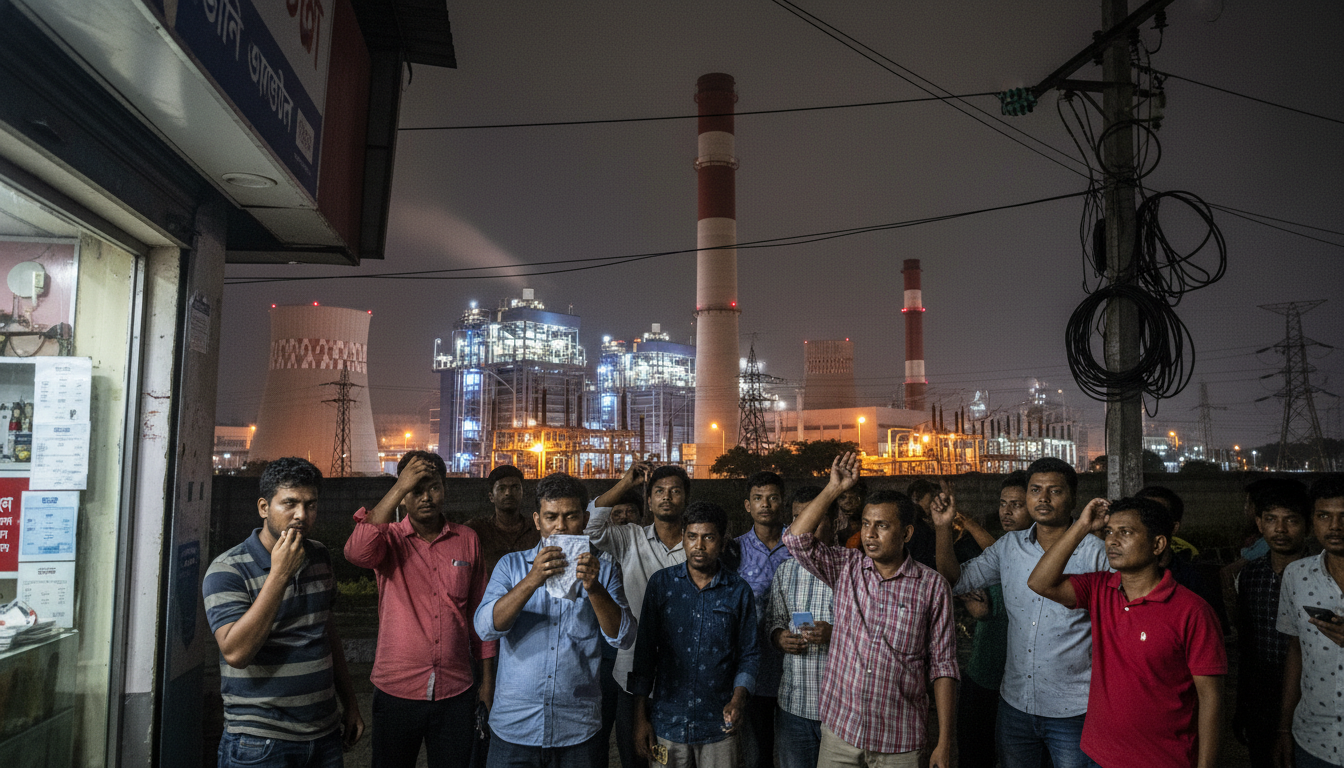
Bangladesh energy overcapacity leaves up to 9.5 GW idle, inflates power bills
Bangladesh energy overcapacity leaves between 7.7 and 9.5 GW idle, driving up annual capacity payments and consumer bills while swelling the state subsidy burden.
Bangladesh is facing a growing electricity cost problem as energy overcapacity forces the government to pay for unused power plants under long-term contracts.
A recent government review found between 7.7 gigawatts and 9.5 GW of stranded or structurally underutilized generation, and estimated that stranded capacity alone could cost up to 165 billion taka a year in capacity payments.
The mismatch between contracted capacity and actual demand is increasing subsidy outlays and contributing to higher retail tariffs for households and businesses.
Government review quantifies idle capacity
A formal review commissioned by Dhaka identified a large tranche of generation that is rarely dispatched or remains unused by design.
The report’s 7.7–9.5 GW estimate covers plants that are stranded due to structural factors and those that are fundamentally underutilized under current market conditions.
Officials told reporters the findings prompted urgent discussions inside the energy ministry about fiscal exposure from guaranteed payments under power purchase agreements.
Capacity payments and the cost to taxpayers
Capacity payments are fixed charges paid to generators to ensure availability regardless of whether a plant is dispatched.
According to the review, capacity payments to idle units could total as much as 165 billion taka (about $1.33 billion) annually, a sum that adds considerably to the state subsidy bill.
That burden sits alongside recent tariff increases that have already pushed up household electricity costs, producing a squeeze between higher consumer bills and persistent government outlays.
Why plants remain underused
Multiple factors help explain why so much capacity sits idle despite ongoing demand growth in other parts of the economy.
Decision-makers point to aggressive capacity procurement over the past decade, often via long-term contracts designed to attract private investment into new generation.
Analysts also highlight forecasting shortfalls, the uneven pace of grid and transmission upgrades, and contractual terms that prioritize availability payments over actual dispatch flexibility.
Impact on consumers and industry
Consumers are feeling the effect as regulators have permitted stepwise tariff increases to reflect higher wholesale costs and currency pressures.
Industry groups warn that inflated power costs reduce competitiveness for energy-intensive manufacturers and could slow investment if relief is not found.
At the same time, poor cost transparency in the capacity-payment regime complicates targeting of subsidies and makes it harder for policymakers to explain price adjustments to voters.
Policy options being discussed
Officials and independent experts are weighing a range of measures to contain the fiscal and consumer impact of overcapacity.
Short-term options include renegotiating least-cost clauses in existing power purchase agreements, offering temporary mothballing or operational pauses for plants with especially poor utilization, and improving dispatch priority rules.
Longer-term reforms under discussion include competitive capacity auctions, clearer demand forecasting, investment in grid flexibility and storage, and designing procurement to align payments more closely with actual generation and system needs.
Risks and trade-offs of reform
Each reform path carries political and financial trade-offs that policymakers must navigate.
Renegotiating contracts could reduce future capacity-payment obligations but may trigger disputes with investors and lenders, potentially affecting Bangladesh’s ability to attract new private capital.
Mothballing plants can lower immediate payments but could leave the system vulnerable if demand recovers faster than expected, forcing emergency procurement at higher short-term cost.
The government faces a constrained set of choices that require balancing fiscal sustainability, investor confidence and the need to keep electricity reliable and affordable for consumers.
Any durable solution will likely combine immediate cost containment with structural changes to procurement, market design and long-term planning to prevent a repeat of the mismatch between contracted capacity and real-system needs.

