
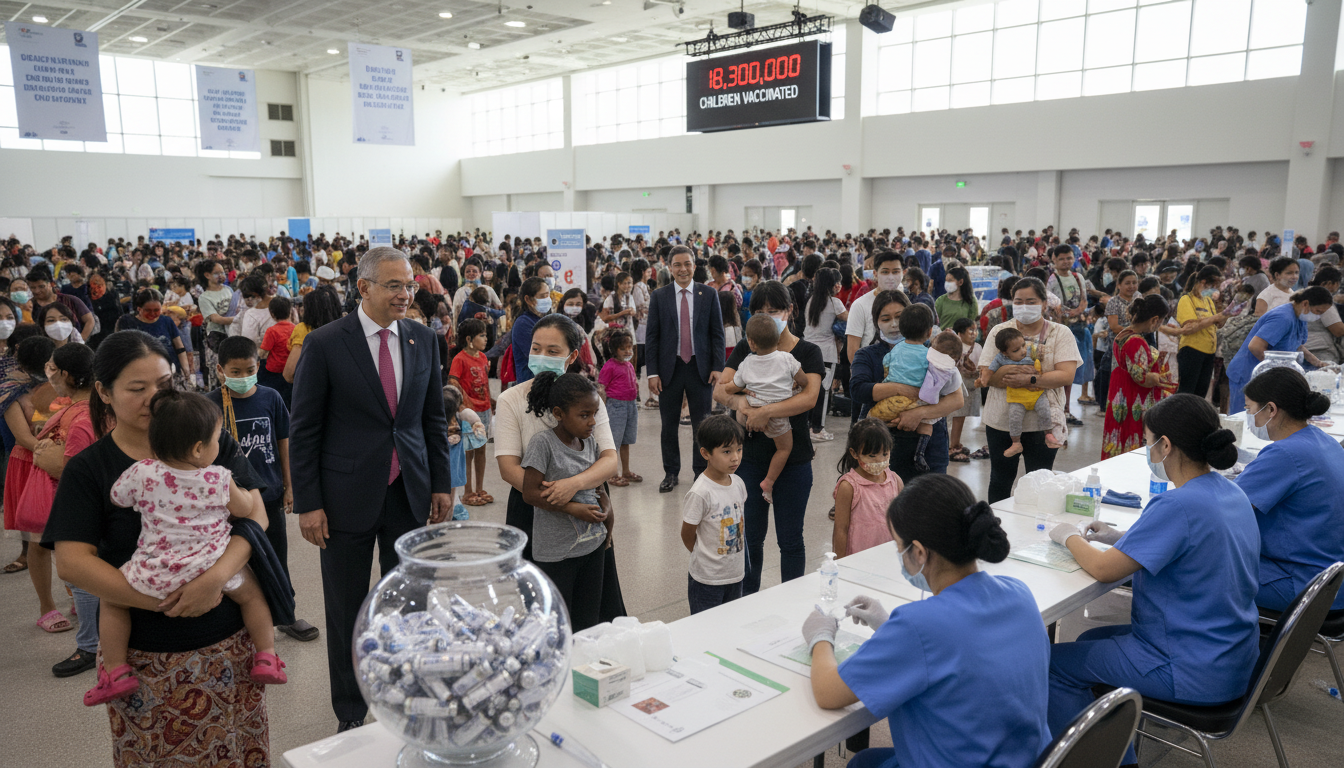
Big Catch-Up reaches 18.3 million children and delivers 100 million vaccine doses across 36 countries
The Big Catch-Up delivered over 100 million vaccine doses to 18.3 million children in 36 countries, targeting zero-dose and measles-missed cohorts while urging stronger routine immunisation.
The Big Catch-Up (BCU) initiative, launched during World Immunization Week 2023, concluded on 31 March 2026 after a multi-year drive to reverse pandemic-era declines in routine vaccinations. Partners led by Gavi, WHO and UNICEF report the campaign reached an estimated 18.3 million children aged 1 to 5 with more than 100 million vaccine doses. The drive focused on closing immunity gaps among older children who missed routine doses, and organisers say the programme is on track to meet its 21 million target once final data are compiled.
Scale and scope of the campaign
BCU operated across 36 countries in Africa and Asia, a group that accounts for roughly 60% of the world’s zero-dose children. Participating countries received Gavi funding and technical support from WHO and UNICEF to identify and vaccinate un- and under-immunized children. In addition to routine vaccine antigens, the initiative delivered 23 million doses of inactivated polio vaccine (IPV) and large volumes of measles and DTP vaccines to reduce immediate outbreak risk.
Reaching zero-dose and measles-missed children
Of the children reached between 2023 and 2025, roughly 12.3 million were classified as zero-dose—children who had never received any routine vaccine—and about 15 million had not previously received measles vaccine. Health officials emphasised that reaching these groups was central to reducing large, recurrent measles outbreaks and strengthening herd immunity in vulnerable communities. Programme leads stressed that catch-up activities are a critical, time-limited measure to fill gaps left by COVID-19 disruptions.
Country-level results and notable examples
Several countries reported substantial gains. Ethiopia recorded more than 2.5 million previously zero-dose children receiving their first DTP dose, alongside nearly 5 million IPV doses and more than 4 million measles vaccine doses. Nigeria reached approximately 2 million zero-dose children with DTP1 and administered 3.4 million doses of IPV. A cohort of 12 countries—including Burkina Faso, Kenya, Madagascar, Niger, Pakistan, Somalia, Tanzania and Zambia—each reported reaching more than 60% of their previously missed DTP1 cohort under age five.
Systems strengthening and workforce training
Beyond mass delivery, BCU prioritised strengthening routine systems by training health workers, updating age-eligibility policies and improving screening and follow-up procedures. Countries introduced processes to identify missed children during routine visits and engaged community groups to boost demand and trust. Programmes also invested in monitoring and data-use improvements so that gains can be sustained within national immunisation schedules rather than relying on periodic campaign-style interventions.
Funding, partners and operational challenges
The campaign was financed through a mix of donor contributions and Gavi support, with WHO and UNICEF providing operational guidance and country-level technical assistance. Partners note that catch-up activities are resource intensive and that long-term success depends on stable domestic financing and sustained donor commitments. Ongoing challenges include rising birth cohorts, conflict and displacement, constrained health budgets, and pockets of declining vaccine confidence that risk undermining coverage gains.
Outbreaks and the urgency of routine immunisation
Public health agencies warned that routine immunisation remains the most sustainable way to prevent outbreaks and protect infants. In 2024 measles cases surged worldwide, with around 11 million reported cases and a near-tripling in large outbreaks since 2021, highlighting persistent gaps in routine vaccine delivery. Officials argue that catch-up campaigns like BCU can reduce immediate vulnerability but cannot replace consistent, universal access to scheduled vaccines for infants.
International response and statements from leaders
Gavi’s leadership described the Big Catch-Up as the largest international effort to reach missed children, underscoring the role of governments and communities in delivering results. WHO officials highlighted the initiative’s contribution to reversing a major pandemic-related setback and noted that national immunisation programmes are now better equipped to find and vaccinate children missed by routine services. UNICEF emphasised that while millions were reached, many more children remain out of reach and urged investments in resilient immunisation systems.
Sustaining the momentum will be central to the midterm ambitions of the Immunisation Agenda 2030 and Gavi’s 2026–2030 strategy, which prioritise zero-dose children and equity in fragile contexts. World Immunization Week 2026 (24–30 April 2026) provides a platform for partners to call for continued domestic investment, predictable donor funding, and stronger community engagement to protect children at every age.
The Big Catch-Up’s results mark a major operational achievement but also a reminder of the scale of work ahead; routine systems must expand to reach the infants and families still missing essential vaccines. Continued political will, financing and local capacity-building will determine whether the temporary gains of the campaign become lasting improvements in global child health.

