
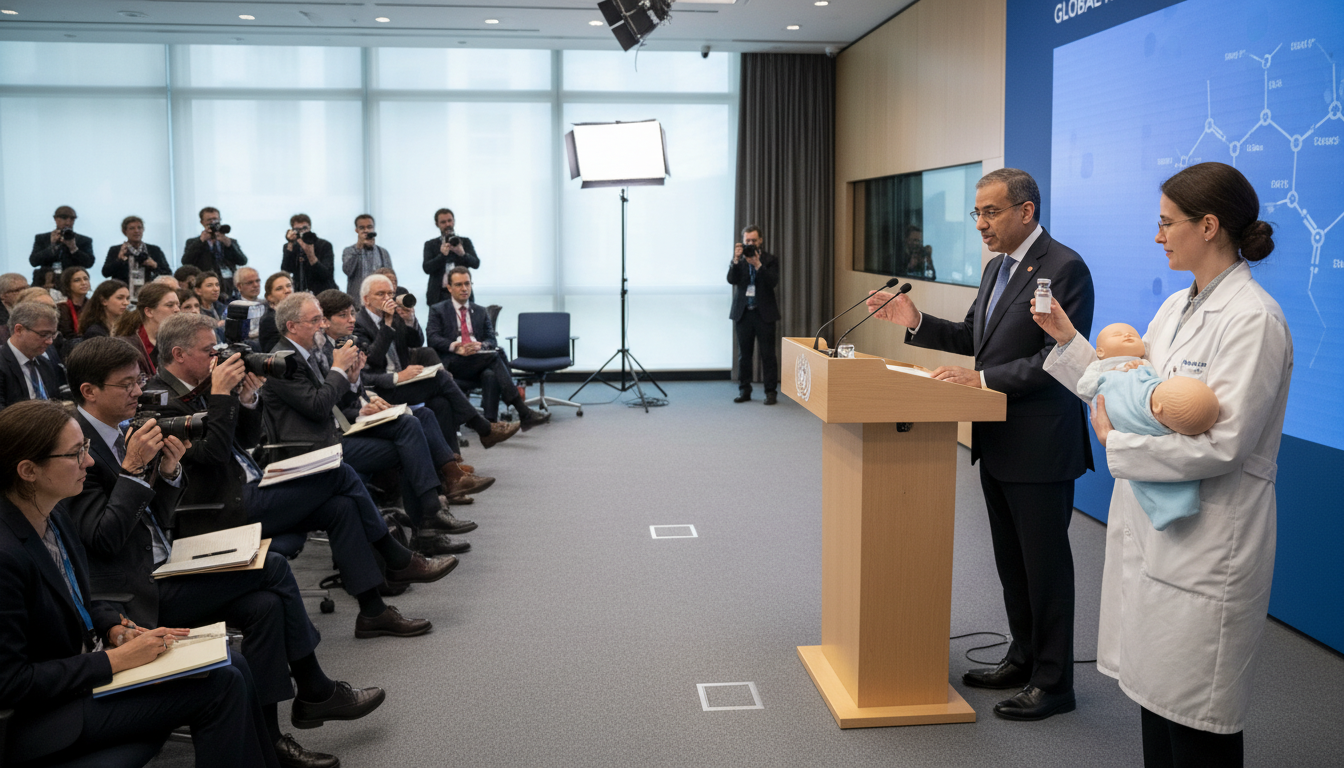
WHO Prequalifies First Malaria Treatment for Newborns and Greenlights New Rapid Tests
WHO prequalifies the first malaria treatment for newborns (2–5 kg) and approves new global rapid tests to tackle HRP2 deletions for World Malaria Day 2026.
The World Health Organization has prequalified the first antimalarial formulation specifically designed as a malaria treatment for newborns and young infants weighing 2–5 kilograms, a move timed ahead of World Malaria Day on 25 April 2026. The medicine, an adapted oral artemether-lumefantrine formulation, meets WHO standards for quality, safety and efficacy and is expected to enable public procurement for a previously underserved age group. WHO officials say the step addresses a critical gap in care for infants in malaria-endemic regions, particularly across sub-Saharan Africa.
WHO prequalifies infant-specific artemether-lumefantrine
The prequalification applies to an artemether-lumefantrine formulation specifically dosed and formulated for neonates and infants from 2 to 5 kg, enabling countries and international purchasers to procure a quality-assured product. Prequalification signals that the medicine conforms to international manufacturing and clinical standards, opening pathways for large-scale distribution through public health programs. Manufacturers and procurement agencies will now be able to include the infant formulation in national treatment protocols and supply chains.
Treatment gap for the youngest patients addressed
Until now, infants with malaria were frequently treated using formulations intended for older children, a practice that increased the risk of dosing errors, adverse reactions and toxicity. Health experts estimate the treatment gap affected millions of babies born each year in malaria-endemic areas, with roughly 30 million births in high-risk regions that require safe infant dosing options. The availability of a purpose-built formulation should reduce medication errors and improve clinical outcomes for the most vulnerable patients.
New rapid diagnostic tests target HRP2 deletion problem
WHO also prequalified three new rapid diagnostic tests that detect a parasite enzyme, pf-LDH, rather than the HRP2 protein targeted by most existing tests. Studies and country surveys have documented pf-hrp2 gene deletions in some Plasmodium falciparum populations, which render HRP2-based tests unable to detect infections and can lead to false negatives. The pf-LDH-targeting tests provide a reliable alternative in areas where HRP2 deletions are causing diagnostic failure, and WHO recommends countries switch when more than 5% of cases are missed due to hrp2 deletions.
Implications for surveillance and supply chains in Africa
The combined approval of an infant-specific treatment and alternative RDTs places new demands on national programs for surveillance, procurement and training. Ministries of health will need to update treatment guidelines, adjust forecasting models, and retrain frontline health workers to use the new infant formulation and the pf-LDH rapid tests. Donor agencies and procurement bodies will also be asked to realign funding and supply contracts to ensure both medicines and diagnostics reach clinics where infant malaria remains a leading cause of morbidity and mortality.
Global trends and the 2025 World Malaria Report
WHO’s action comes against a difficult global backdrop: the World malaria report 2025 estimated 282 million infections and 610,000 deaths in 2024, a rise from the prior year. Progress at the global level has slowed and is threatened by drug resistance, insecticide resistance, diagnostic gaps and reductions in international financing. At the same time, the report highlights enduring gains since 2000, including an estimated 2.3 billion infections averted and about 14 million lives saved, underscoring the stakes of renewed investment.
Vaccines, nets and the campaign to sustain momentum
Despite setbacks, new tools are being rolled out: some 25 countries are implementing malaria vaccines, and next-generation insecticide-treated nets account for the majority of new distributions. WHO and partners have launched the 2026 World Malaria Day campaign, titled “Driven to End Malaria: Now We Can. Now We Must,” calling for sustained political will and financing to translate innovations into sustained reductions in disease burden. Officials stress that diagnostics and child-appropriate medicines are essential complements to vaccines and vector control.
The prequalification of an infant-specific artemether-lumefantrine and the endorsement of pf-LDH rapid tests mark a practical step toward reducing childhood deaths from malaria, but experts caution that impact will depend on rapid policy adoption, reliable supply chains and adequate funding. National programs and international partners will need to act quickly to integrate the new products into clinical guidelines, training curricula and procurement plans to ensure infants in malaria-endemic settings benefit from these advances.

