
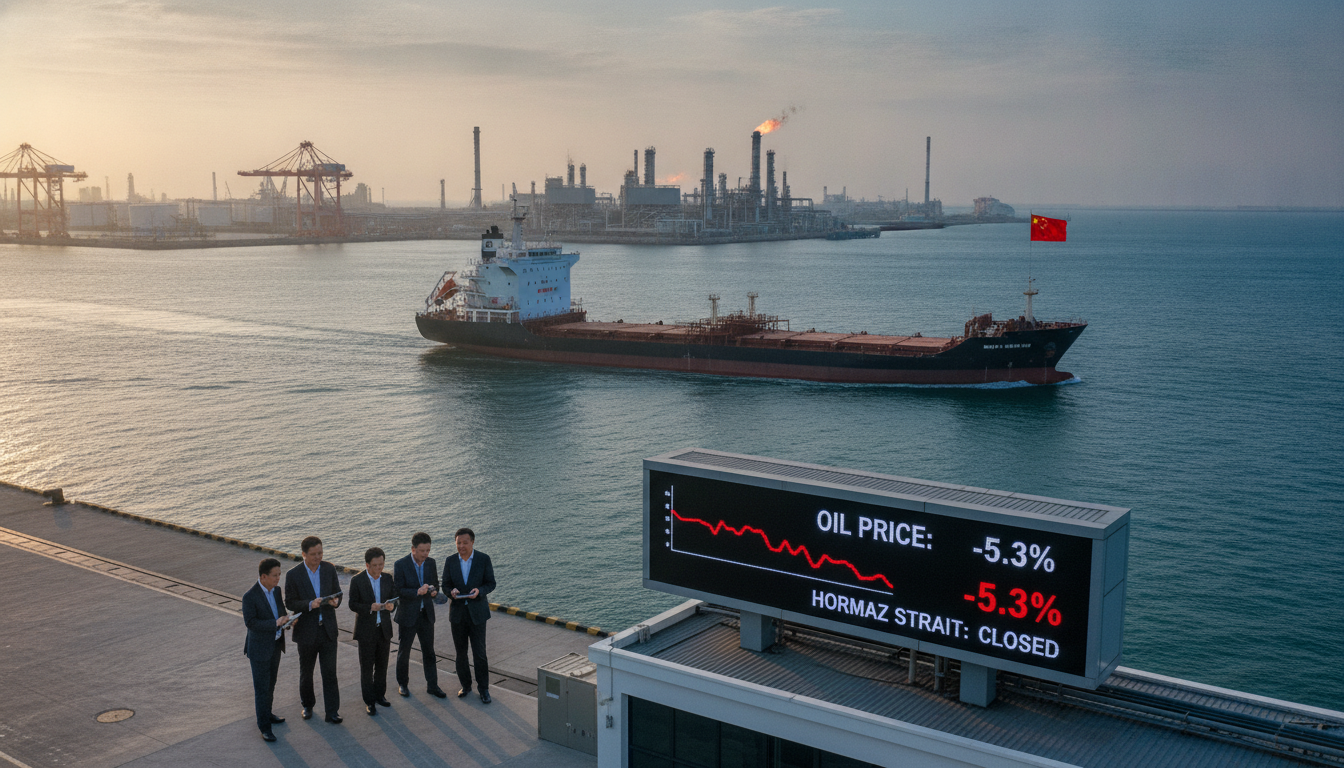
China Rebalances Oil Demand, Easing Global Price Shock from Strait of Hormuz Disruption
China’s rapid rebalancing of oil demand helped temper a potential spike in crude prices after tanker traffic through the Strait of Hormuz was disrupted, analysts say.
Opening market response to Hormuz disruption
China rebalances oil demand after the U.S.-Iran military clash and associated threats to tanker traffic through the Strait of Hormuz, limiting what many expected to be a sharp global price surge. Traders had braced for a substantial supply shock because roughly a fifth of seaborne crude passes the narrow waterway. Instead, benchmark prices rose only modestly as buyers and state actors adjusted procurement and consumption patterns to absorb the shock.
China’s demand adjustments were visible within days, according to market participants, who noted shifts in refinery throughput and crude buying plans. Those measures, together with alternative logistics and inventory draws, helped prevent panic in regional markets and reassured some import-dependent economies in Asia.
Shippers rerouted and voyages extended
With the Hormuz corridor affected, shipping firms moved quickly to reroute tankers around the Cape of Good Hope and other longer passages, increasing voyage times and freight costs. The longer sail times reduced immediate available tonnage and raised shipping premiums, but maintained physical flows of crude to major consuming regions. This logistical response eased the worst-case scenario of an abrupt supply halt by keeping crude moving, albeit at higher transport cost and time.
Some buyers deferred new cargoes while others sought nearer-term shipments from alternative suppliers, softening demand for Gulf crude specifically. The combined effect of rerouting and staggered buying smoothed market adjustments and bought time for refineries and traders to rebalance their inventories.
Refinery operations and inventory management in China
In China, refiners and state-owned buyers played a central role in demand rebalancing by altering runs and reshaping import mixes. Several refiners reduced utilization rates slightly or shifted toward heavier and more readily available crude grades to match existing cargoes. These operational tweaks lowered immediate crude consumption without triggering large-scale fuel shortages domestically.
At the same time, industry sources say some firms drew on commercial and strategic stocks to meet refining needs while assessing replacement cargoes. The availability of inland and coastal inventory helped dampen near-term demand for seaborne crude, supporting the view that China’s flexible approach was a critical factor in limiting price volatility.
Price movements and market sentiment
Although concerns about supply through Hormuz pushed markets higher initially, price increases remained muted relative to earlier forecasts. Market sentiment was shaped by signs that demand could be moderated quickly and that alternative shipping and supply options existed. Oil futures reflected that balance, showing heightened volatility but not the runaway spikes market watchers had feared.
Analysts caution that muted price moves do not eliminate risk; premiums for certain grades and freight rates rose, and insurance costs for tankers increased. These secondary market effects have real economic impacts even when headline crude benchmarks remain relatively stable.
Government and industry measures to reduce risk
Policymakers and industry groups responded with a mix of contingency and communications measures designed to reassure markets. Some governments reiterated commitments to keep strategic reserves available and encouraged refiners to prioritize fuel supply continuity. Industry associations coordinated information sharing on cargo movements and insurance developments to reduce uncertainty among shippers and buyers.
China’s state-linked entities reaffirmed close monitoring of the situation and signaled readiness to use strategic stockpiles if needed to stabilize domestic supply. Such public statements, coupled with visible operational adjustments by refiners and traders, contributed to a more orderly market reaction.
Implications for Asian energy security and near-term outlook
The episode underscores growing resilience in Asian energy markets as buyers, refiners, and shippers employ diversified strategies to manage geopolitical shocks. Longer shipping routes, regional storage capacity, and flexible refinery operations can blunt immediate disruptions, but they come at a cost in freight, insurance, and logistical complexity. For energy-importing economies, the event highlights the importance of maintaining robust inventories and contingency planning.
Looking ahead, the market’s trajectory will hinge on whether transit through the Strait of Hormuz is restored to normal and whether parties to the U.S.-Iran confrontation take steps to de-escalate. If tensions ease, markets may retrace much of the recent risk premium. If disruptions persist or escalate, even the current mitigation measures could prove insufficient, leading to tighter markets and higher prices.
China’s quick decision-making to rebalance oil demand has so far prevented a deeper global shock, but the situation remains fluid and closely watched by traders, refiners, and policymakers across the region.

