
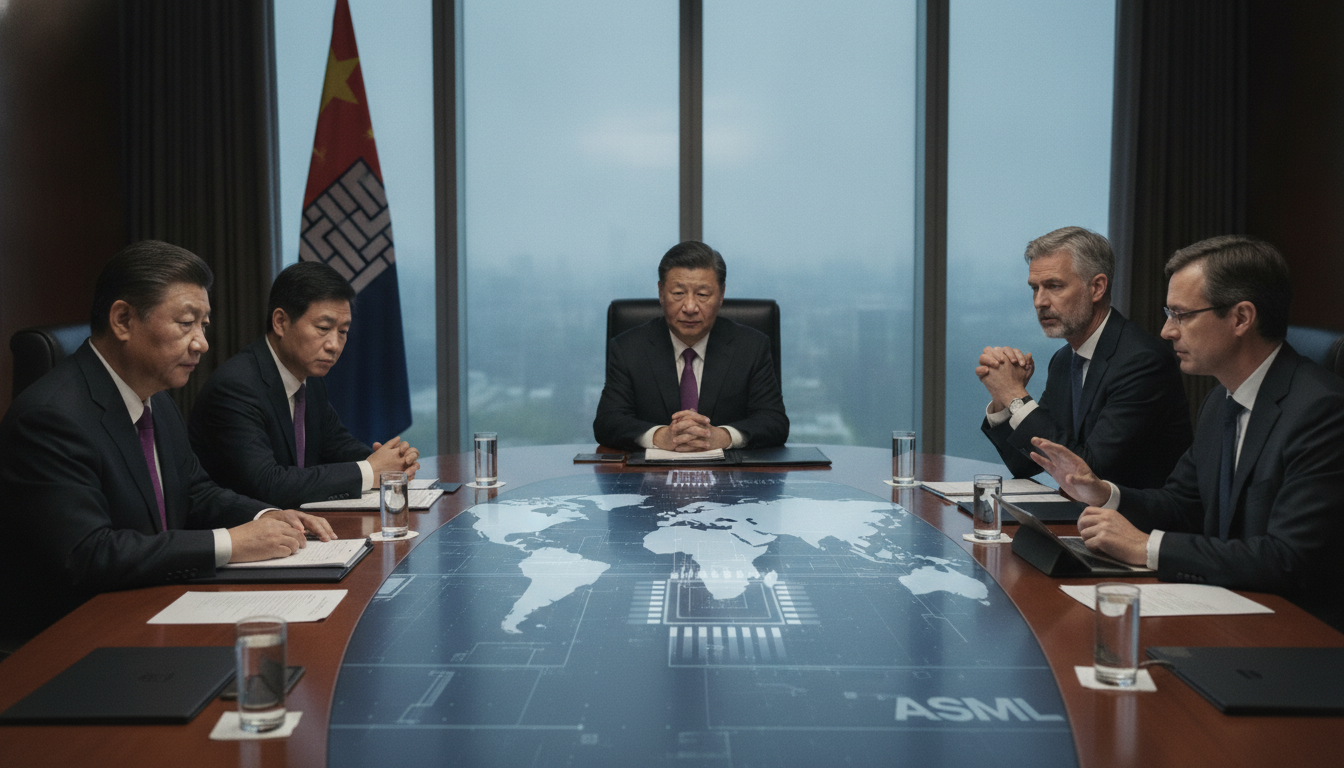
Think-Tank Says China Employed Economic Statecraft and Espionage Targeting ASML
Think-tank report alleges China used economic statecraft and espionage against ASML and Dutch chip firms, prompting concerns over European chip security.
HAMBURG, Germany — Researchers at an influential European think tank say China has applied economic statecraft and espionage against Dutch strategic industries, including targeted pressure on ASML, to build systemic dependency and strengthen its global industrial position. The report, released this month, frames those actions as part of a broader strategy to influence supply chains and secure advanced semiconductor advantages. The allegations have renewed debate over how Europe should protect critical technology without disrupting international trade.
Think Tank Issues Findings on Strategic Influence
The report’s authors argue that Beijing’s approach combines commercial leverage, state-led investment and covert intelligence efforts to weaken rivals’ control over key technologies. They present ASML — the Netherlands-based maker of extreme ultraviolet (EUV) lithography machines vital to advanced chip production — as a case where such pressures have been visible and consequential.
The researchers stop short of alleging a single, coordinated campaign in every instance, but they emphasize patterns of behavior that they say point to intentional efforts to create long-term industrial dependence. The paper calls for closer scrutiny of foreign investments, supply relationships and employee-targeting that could transfer know-how abroad.
Allegations Focus on ASML and Dutch Chip Ecosystem
ASML, as the sole supplier of EUV lithography equipment used in the most advanced semiconductors, occupies an outsized place in global chip manufacturing chains. The think tank reports that this strategic importance makes ASML and its Dutch suppliers particularly attractive targets for influence operations that seek access to technology and privileged information.
While the report explains that ASML has strong export controls and corporate security practices, researchers say state-level economic measures and intelligence activity can nevertheless create vulnerabilities. The paper warns that even indirect pressure on suppliers or partner firms can erode competitive advantages over time.
Described Tactics Include Investment and Espionage Allegations
Researchers detail a range of tactics they attribute to Chinese statecraft, including state-backed investment vehicles, acquisition of minority stakes, and commercial partnerships designed to extract technology or market access. The report also cites instances of espionage and the illicit acquisition of technical data as part of the broader pattern.
Authors caution that proving direct state involvement can be legally and technically difficult, so their analysis relies on a mix of open-source evidence, expert interviews and pattern recognition. They frame the tactics as complementary: overt economic tools used in tandem with covert intelligence collection to accelerate capability gains.
Potential Impact on European and Global Supply Chains
The think tank warns that systemic dependency on a single supplier or on open access to a rival’s market can leave European industry exposed in times of geopolitical tension. ASML’s centrality to advanced-node chip production means disruptions, or the forced transfer of competence, could have ripple effects across sectors from automotive to defense.
The report recommends that governments and companies assess choke points, diversify sourcing where feasible, and reinforce the resilience of research partnerships. It also suggests coordinated approaches across the EU and allied countries to avoid unilateral measures that could fragment supply chains.
Recommendations for Policy and Corporate Safeguards
To address the risks identified, the report urges a mix of tighter screening for strategic investments, enhanced industrial cybersecurity, and strengthened legal frameworks to deter illicit technology transfers. It also calls for greater transparency in state-linked transactions and for closer cooperation between industry and intelligence services on risk assessment.
The authors emphasize that measures should be calibrated to avoid unnecessary decoupling from global markets while protecting critical capabilities. They suggest targeted interventions — such as export controls on specific equipment or clearer guidelines for joint ventures — rather than broad bans that could harm domestic competitiveness.
Industry Voices and Security Experts Respond
Security and industry experts quoted in the report stress the need for pragmatic responses that preserve innovation and market access while reducing vulnerabilities. They argue that manufacturers like ASML must continue investing in internal safeguards and in partnerships that can withstand external pressure.
Analysts also point to the importance of international coordination, saying that fragmented national policies risk leaving gaps that actors seeking technology can exploit. In the view of several experts, balancing openness with protective measures will be central to Europe’s ability to maintain technological leadership.
The think tank’s findings add urgency to an ongoing policy debate in Europe about how to shield critical industries from strategic foreign pressure without undermining the openness that fuels innovation. As governments and companies digest the report, the next steps will likely include policy reviews, industry briefings and further analysis of the specific mechanisms by which technology and know-how are being transferred or compromised.

