
Beijing Crash Spurs Tighter Airspace Rules but Low-altitude Economy Seen Growing
After a small plane struck Beijing’s CITIC Tower on June 26, 2026, industry experts say Chinese cities will tighten airspace approvals while the low-altitude economy continues to expand.
China’s transportation and public safety authorities responded to the collision at the capital’s tallest building, triggering an immediate review of flight permissions for general aviation and large drone operations. Industry analysts predict faster regulatory changes in major cities even as investment and technology-driven services in the low-altitude economy maintain momentum. The incident has focused attention on how cities balance safety with the push to develop new urban air services.
Incident at Beijing’s CITIC Tower
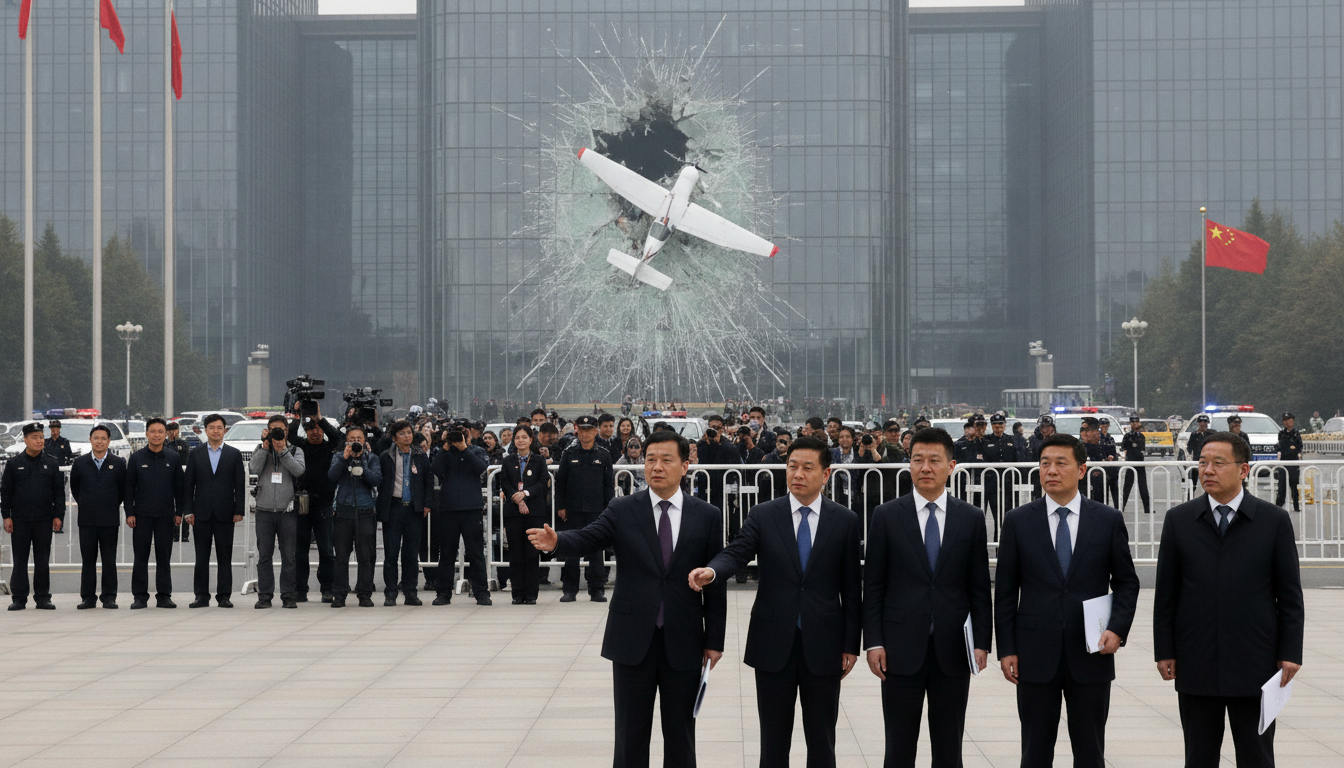
A small aircraft made contact with the exterior of the CITIC Tower on June 26, causing visible damage to the building and prompting an on-site emergency response. Officials cordoned off the area and launched an investigation into flight path, pilot credentials and airspace clearances surrounding the event. Eyewitness images and initial official statements have been used to reconstruct the timeline while investigators secured the scene.
Cities to Tighten Airspace and Approvals
Municipal authorities in several major Chinese cities are expected to tighten approvals for access to low-level airspace following the crash. Planners and regulators will likely impose stricter permit requirements for general aviation flights and more rigorous scrutiny of large drone operations. The short-term changes are aimed at reducing collision risk while regulators reassess existing corridors and approval procedures.
Impact on General Aviation and Drone Operators
Operators of private aircraft and commercial drones can anticipate longer lead times for permissions and closer coordination with air traffic control and local police. Companies that provide aerial filming, air tours, and certain logistics services may face temporary suspensions or modified flight schedules in dense urban areas. For drone fleets used in e-commerce delivery and infrastructure inspection, this could mean new route approvals and mandatory geofencing integration.
Industry Forecast: Low-altitude Economy Remains Intact
Despite the likely tightening of rules, analysts say the broader low-altitude economy is not expected to stall and will continue to attract investment. Demand for intracity logistics, aerial inspection, emergency response platforms and experimental urban air mobility solutions drives long-term growth prospects. Market participants argue that clear, predictable regulation can actually accelerate deployment by reducing operational uncertainty.
Safety Measures and Airspace Controls Under Review
Regulators are weighing a suite of measures that include expanded no-fly zones around critical buildings, enhanced pilot vetting, and mandatory collision-avoidance technologies for specific aircraft classes. For drone operators, officials are likely to require stronger remote identification, remote sensing controls and real-time airspace monitoring to prevent unauthorized incursions. Interagency coordination between civil aviation authorities, municipal governments and security agencies is expected to intensify.
Business and Investment Implications
In the near term, investors may apply a risk premium to urban aviation firms while awaiting clearer regulatory signals from Beijing and other provincial capitals. Start-ups focused on autonomous systems, navigation software and airspace-management platforms could see renewed demand if authorities prioritize technological safety upgrades. Longer-term capital flows are likely to follow where regulators demonstrate a consistent framework for the low-altitude economy.
The public safety review triggered by the CITIC Tower collision underscores the trade-offs between rapid innovation and urban risk management. As Chinese cities move to tighten permissions for general aviation and large drone operations, industry leaders emphasize that well-designed rules and stronger oversight can enable safe expansion of the low-altitude economy without sacrificing public safety.

