
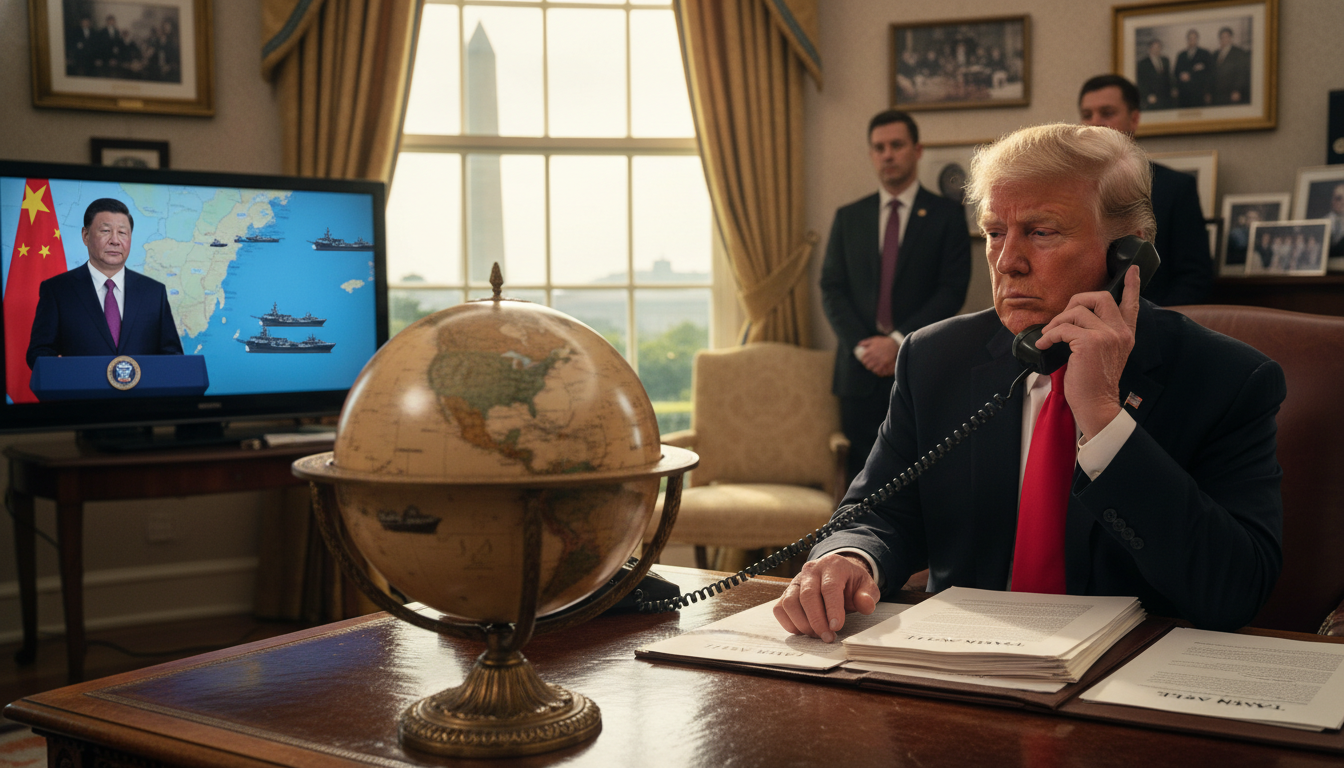
Taiwan tensions rise after Trump signals possible call with President Lai, Beijing demands Washington honor week-old ‘understanding’
Beijing warns Washington to respect a week-old "understanding" after President Trump’s China visit, as talks of a phone call with Taiwan’s Lai and a potential arms sale deepen Taiwan tensions.
One week after President Donald Trump’s visit to China, Taiwan tensions have once again moved to the forefront of U.S.-China diplomatic friction. Beijing on Thursday urged Washington to abide by an "understanding" reportedly reached during the visit, after Mr. Trump indicated he might speak with Taiwan’s President Lai Ching-te while weighing an arms sale to Taipei. The exchange has heightened regional anxieties and prompted rapid diplomatic messaging from all three capitals.
Timeline of the recent diplomatic turn
May 21, 2026 marks a rapid escalation in rhetoric following Mr. Trump’s trip to Beijing roughly seven days earlier on May 14, 2026. Chinese officials described an informal agreement from that meeting as a basis for stable ties and urged the United States not to take actions that would undermine it. U.S. commentary since the visit, including Mr. Trump’s public suggestion of a possible phone call with President Lai, has been framed in Washington as weighing policy options rather than signaling an immediate change.
Beijing’s public warning and the ‘understanding’ reference
Chinese foreign ministry spokespeople and state-run media framed the matter in stark terms, saying Washington must "abide" by the understanding reached during the bilateral talks. Beijing did not publicly detail the contents of the understanding, but officials framed any U.S. contact with Taipei at this moment as provocative. The warning underscores Beijing’s view that even symbolic interactions with Taiwan carry strategic weight and risk destabilizing cross-strait relations.
Washington’s response and Trump’s remarks
U.S. officials have been cautious in characterizing the president’s statements, describing them as exploratory rather than definitive. Mr. Trump said he was considering a conversation with President Lai and weighing potential arms sales to Taiwan, remarks that administration spokespeople said were under review as part of routine policy deliberations. Analysts in Washington noted the administration’s effort to balance domestic political signaling with broader strategic calculations about China and regional allies.
Taipei’s position and domestic reactions
Taiwanese officials declined to confirm any scheduled contact but welcomed what they described as continued U.S. attention to Taipei’s security needs. President Lai Ching-te’s office has historically sought closer international support while reiterating Taiwan’s commitment to peaceful stability across the Taiwan Strait. Within Taiwan, political leaders and security experts expressed both cautious optimism at the prospect of closer high-level communication and concern over the diplomatic risks it could prompt.
Regional security implications for East Asia
Governments across East Asia watched the developments closely, with Tokyo and other U.S. allies emphasizing the need for calm and adherence to existing understandings that have underpinned regional stability. Tokyo’s officials have historically stressed the importance of a peaceful resolution of cross-strait issues and the avoidance of unilateral changes to the status quo. Military planners in the region have noted that public signals, including prospective arms transfers and high-level calls, can prompt rapid operational responses and heightened alert levels.
Arms sale deliberations and next steps
The suggestion that an arms sale to Taipei is under consideration adds a tangible policy lever to the diplomatic standoff. Arms packages to Taiwan have long been part of U.S. policy tools intended to support Taipei’s self-defense, but such moves typically draw swift objections from Beijing. Any decision on sales or direct presidential contact will require coordination within Washington’s foreign policy apparatus and likely prompt immediate diplomatic countermeasures from Beijing.
The pace of statements and countermoves makes the near term likely to be defined by diplomatic shuttling and public signaling, rather than immediate, irreversible steps. Messaging from Beijing that invoked an agreement from last week and the United States’ careful public framing together suggest both sides are testing boundaries while leaving room for back-channel management.
Observers say how each capital manages communications over the coming days will be critical to preventing further escalation. Quiet diplomacy may follow the public signals, but the interplay of presidential statements and formal policy choices will be watched closely across the region.
Longer-term implications for cross-strait relations and broader U.S.-China ties will depend on whether the "understanding" Beijing referenced can be clarified and whether Washington decides to proceed with any formal contact or arms sales. For now, Taipei remains at the center of an acute diplomatic test that could influence strategic calculations well beyond the immediate headlines.

