
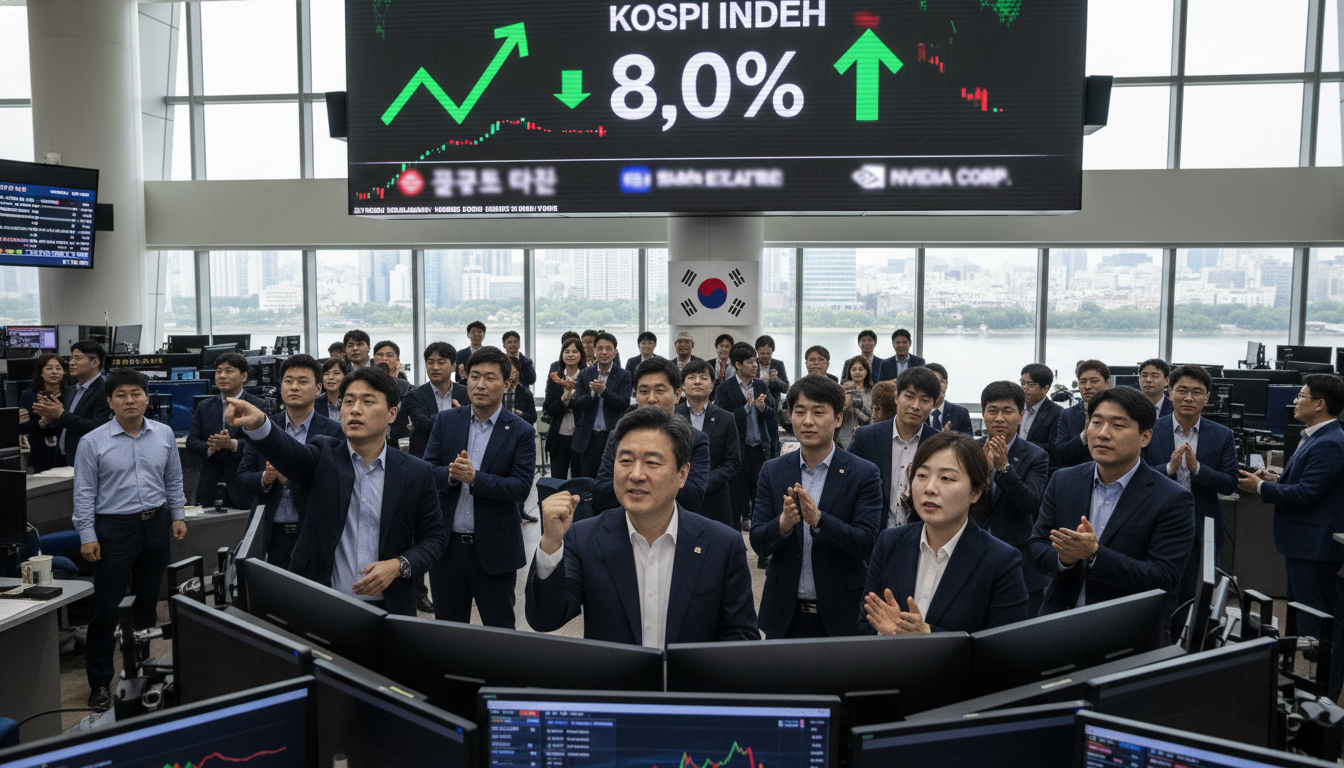
Korean stocks surge as KOSPI jumps over 8% after Samsung labor deal and Nvidia rally
Korean stocks rallied sharply as the KOSPI index rose more than 8% following a last‑minute labor settlement at Samsung and a strong earnings performance by Nvidia in the U.S., lifting chip and electronics names across the market.
South Korea’s benchmark KOSPI staged a dramatic rebound on Thursday after trading opened with heavy relief buying across technology and industrial sectors. Investors responded to news that Samsung’s union suspended a planned strike after reaching a deal with management late on May 20, and to overnight reports of robust results from Nvidia in the United States. The twin developments prompted broad-based demand for exporters and chip-related stocks, propelling the market into a near‑term virtuous cycle.
Samsung union suspends strike after late May 20 deal
Samsung’s worker union announced the suspension of a planned strike after management and labor reached an agreement late on May 20, easing immediate concerns about production disruptions. Market participants said the settlement removed a key domestic tail risk that had clouded investor sentiment toward major conglomerates. That removal of uncertainty was cited by several sell‑side traders as the primary catalyst for the sharp intraday rebound in Korean stocks.
Nvidia’s U.S. performance boosts global chip complex
Nvidia’s stronger‑than‑expected results in the United States overnight amplified the rally, sending ripples through global semiconductor and memory markets. Traders noted that Nvidia’s momentum raised expectations for demand across AI‑related hardware, increasing appetite for suppliers and adjacent technology firms. The combination of improved demand narratives overseas and the domestic labor resolution created a potent mix for risk‑on trading in Seoul.
SK Hynix and LG Electronics lead sector gains
Memory maker SK Hynix and electronics heavyweight LG Electronics were among the most notable beneficiaries as investors rotated into semiconductor and appliance exporters. Market commentary highlighted that gains at these large caps helped lift the overall index, with investors betting on stronger external demand and recovering supply chains. Such moves contributed to analysts describing the market action as moving toward “virtuous‑cycle” territory for Korean technology and industrial stocks.
KOSPI rises as relief buying and foreign flows return
The KOSPI’s advance was driven by a wave of relief buying that included both domestic institutional investors and returning foreign demand, according to trading desk reports. Portfolio managers said that the removal of an imminent Samsung strike reduced hedging pressure and allowed funds to reallocate into high‑beta names. The sudden shift in positioning was reflected in elevated turnover and a broadening of gains beyond the largest megacaps.
Analysts urge caution on sustainability and macro risks
While the immediate market response was unequivocally positive, analysts cautioned that the rally’s durability depends on forthcoming corporate earnings and macroeconomic indicators. Observers pointed to exposure to global demand cycles, foreign investor sentiment, and potential policy shifts that could alter the outlook for exporters and semiconductors. Several research teams recommended monitoring export data and upcoming quarterly results to assess whether the rebound can be sustained.
The market move underscores how quickly sentiment can change when geopolitical, corporate and earnings news converge, and investors will be watching upcoming corporate reports and data releases to determine if the KOSPI’s sharp gains mark the start of a sustained recovery or a short‑lived repricing.

