
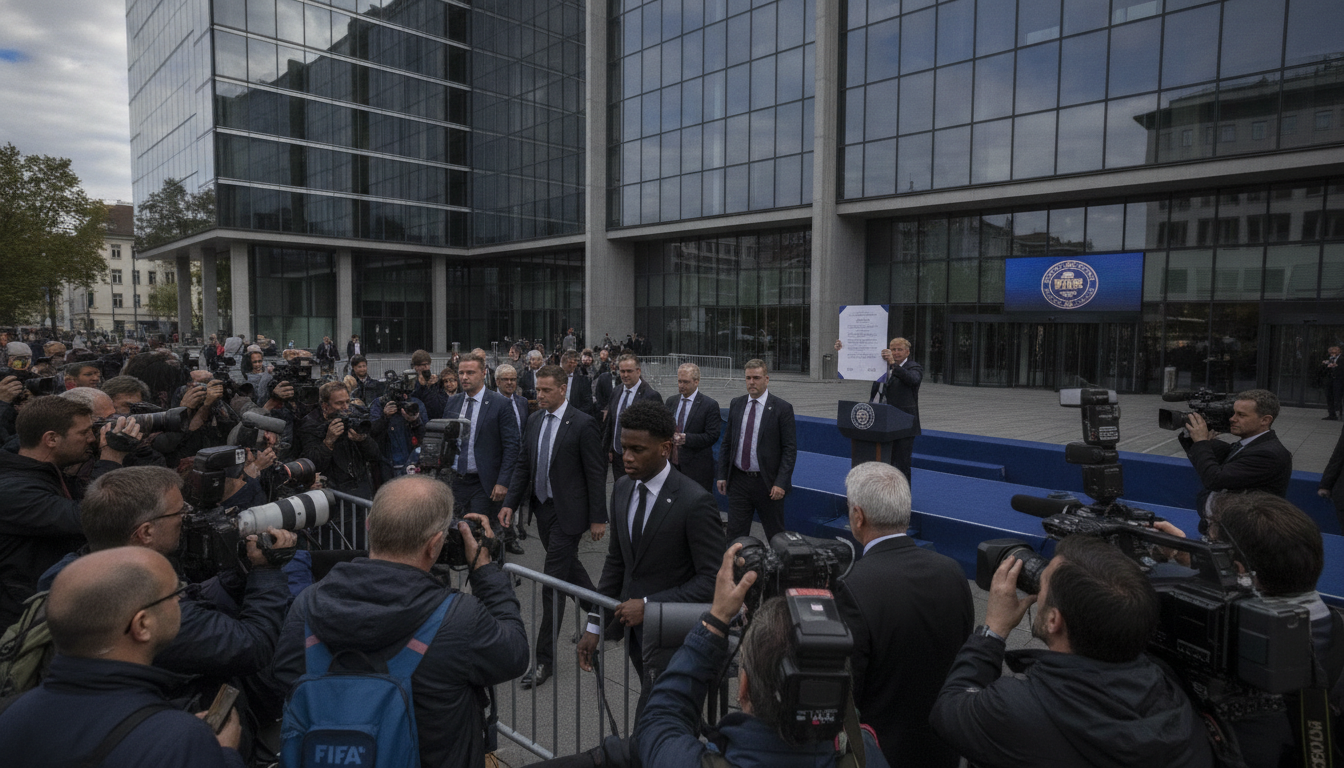
Balogun suspension put on hold by FIFA amid reports of Trump intervention
FIFA suspends enforcement of Balogun suspension after his red card vs Bosnia amid reports of Trump’s intervention, sparking debate over politics in football.
The international governing body FIFA announced on July 5 that the Balogun suspension imposed after a red card in the World Cup knockout match will be put on hold under a disciplinary provision. The move temporarily halts an automatic match ban that would have sidelined the United States forward for the next fixture, a decision that has drawn immediate public and media attention. Tournament organisers said the disciplinary committee applied a one-year deferral of the automatic sanction while the matter remains under its rules.
FIFA’s disciplinary decision and its scope
FIFA said the disciplinary committee invoked regulations that allow an automatic suspension to be deferred for a period of one year, effectively pausing immediate enforcement of the ban. The ruling does not erase the red card, but it removes the automatic, short-term match exclusion that normally follows a straight dismissal in a knockout contest. Officials framed the action as a procedural application of existing rules rather than an overturning of the original disciplinary finding.
The committee’s statement made clear that the deferral is temporary and tied to internal rules governing sanctions and appeals, leaving open the possibility of later review or additional measures. For the United States team, the practical effect is that the player in question can be available for selection while the disciplinary status is administratively suspended. The wording of FIFA’s announcement emphasised a regulatory mechanism, not an exoneration of the conduct that led to the red card.
Circumstances of the red card in the Bosnia match
The dismissal occurred during the Round of 16 match on July 1, when the US forward was shown a straight red after an incident in the second half involving an opponent’s ankle. Match officials ruled the action severe enough to warrant immediate expulsion, triggering an automatic suspension under standard FIFA procedures. The player had been one of the United States’ most important attacking figures in the tournament up to that point.
The imposed ban would have carried through to the team’s scheduled match against Belgium on July 6, depriving the side of a forward who had scored multiple goals in the competition. Coaches and team staff had already been preparing tactical adjustments to compensate for the likely absence, underscoring how a single disciplinary ruling can have outsized effects during the condensed knockout phase of a World Cup.
Allegations of direct political intervention
Within hours of FIFA’s announcement, reports surfaced in US media suggesting that President Donald Trump had made direct contact with FIFA leadership to request reconsideration of the suspension. Those reports say the president is personally acquainted with Confederation officials, and they point to phone calls and social media posts that celebrated the outcome. The White House amplified a statement from the president on official channels, a move that intensified scrutiny of the process.
The reports prompted critics to characterise the sequence of events as possible political interference in a sporting decision, raising questions about where the line should be drawn between private advocacy and undue influence. FIFA has not publicly detailed any private communications between political figures and its president, beyond the disciplinary committee’s formal notice, leaving the precise chain of events opaque.
Media reaction and historical context
Major US newspapers described the rapid reversal of the immediate ban as highly unusual and flagged the broader implications for sporting governance. One analysis noted that World Cup disciplinary decisions are rarely altered in this manner and compared the case to infrequent historical precedents. Commentators argued that the optics of high-level political involvement — whether direct or perceived — risk undermining the appearance of impartiality in the sport’s disciplinary processes.
Legal and sports governance experts interviewed by media outlets said the episode will likely prompt calls for clearer transparency around interactions between national political figures and international sports authorities. They argued that even the appearance of intervention can be damaging to public confidence in tournament administration and could spur proposals for tightened rules about external communications.
Potential effects on the U.S. team and tournament integrity
For the United States squad, the immediate practical effect is the restoration of selection options for the upcoming fixtures, at least until any further disciplinary action is taken. Coaches must balance tactical continuity with public scrutiny and potential distractions around the player’s status. Players and staff face added pressure as opponents and fans digest both the on-field incident and the off-field controversy.
Beyond a single match, the episode raises broader questions about the integrity of competition when high-profile political figures become involved in disciplinary outcomes. Tournament organisers and federations may face increased demand from teams, fans and watchdogs for documented procedures that insulate decisions from external pressure and provide timely, transparent explanations for exceptional rulings.
Balogun’s availability remains provisional while FIFA’s deferral stands and any appeals or internal reviews proceed, leaving uncertainty over the player’s long-term status in the tournament. Observers say the next steps taken by FIFA — including any public disclosure of the committee’s reasoning or a formal appeal process — will be watched closely as an indicator of how the sport balances regulation, fairness and external influence.

