
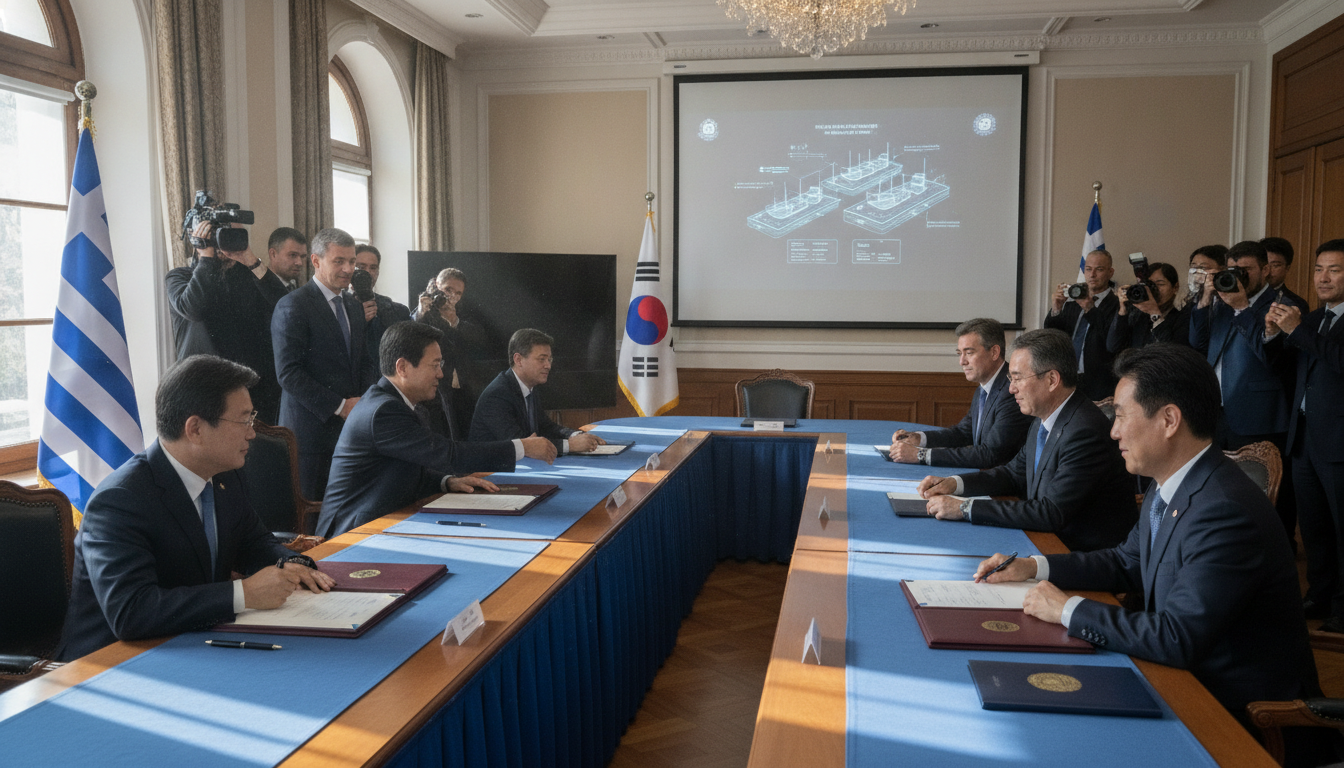
South Korean shipbuilders in Greece: Hanwha and Hyundai sign Athens deals to expand European foothold
South Korean shipbuilders in Greece are accelerating their European push as Hanwha Ocean and Hyundai conclude agreements in Athens to boost shipbuilding and technology transfer across the Mediterranean.
Hanwha and ONEX sign shipyard deal in Elefsina
Hanwha Ocean has signed an agreement with ONEX Shipyards & Technologies Group to expand shipbuilding capabilities at ONEX’s facilities in Elefsina, west of Athens. The deal covers upgrades to ship repair and construction capacity, positioning the Greek yard to handle larger commercial and naval projects.
Company representatives described the arrangement as a strategic partnership that will combine Hanwha’s production speed with ONEX’s local infrastructure. Greek officials welcomed the move as a boost to domestic industrial activity and a potential source of new skilled jobs.
Hyundai reaches parallel agreements in Athens
Hyundai Heavy Industries and related Korean shipbuilding firms have also concluded agreements in the Greek capital aimed at joint ventures, maintenance services, and parts supply. These accords reflect rising interest from European partners in rapid delivery schedules and advanced marine systems.
The Hyundai agreements are structured to facilitate cooperation on both commercial vessels and defence-adjacent platforms, according to briefings provided by involved companies. Local executives signalled an emphasis on long-term collaboration rather than one-off contracts.
Companies cite speed and technology transfer as drivers
South Korean shipbuilders in Greece say their competitive advantage lies in faster construction timelines and transferable production know-how. Faster build times can shorten delivery cycles for European operators facing backlog and supply-chain pressures.
Technology transfer clauses in the deals are designed to upgrade yard capabilities and train Greek workers in advanced modular construction and systems integration. Analysts note that such transfers make Greek partners more attractive for future contracts from EU navies and private shipping firms.
Analysts frame Greece as a European beachhead
Industry analysts view these moves as a deliberate foothold for South Korean firms looking to deepen their presence in Europe. Establishing operations in Greece helps companies bypass logistical hurdles and improves access to Mediterranean and North Sea markets.
Observers say the arrangements also create a local base for aftersales support, retrofitting and lifecycle services — revenue streams that are increasingly important in global shipbuilding. That local presence can shorten response times and reduce costs for European customers.
Security partners and geopolitical implications
The emergence of deeper industrial ties raises questions about geostrategic effects in a region central to NATO and EU maritime activity. Some analysts argue that closer defence-industry links between South Korea and Greece could broaden cooperation on naval platforms and systems integration.
Greek and European officials will likely assess export controls and industrial-security safeguards as technology transfer accelerates. For now, companies involved emphasize commercial benefits and job creation while diplomats monitor broader geopolitical implications.
Market consequences for European shipbuilding and maintenance
The new agreements are expected to intensify competition in Europe’s shipbuilding and repair market, where yards have long sought investment and modernization. South Korean firms bring large-scale production techniques that may pressure local competitors to accelerate upgrades.
At the same time, partnerships could revitalise underused European dockyards, drawing in orders for domestically executed newbuilds and conversions. Local suppliers stand to benefit from greater demand for components, while workforce development initiatives could expand the regional talent pool.
Final paragraph without title
The agreements signed in Athens mark a notable step in the globalization of shipbuilding, blending South Korean speed and technical expertise with Greek infrastructure and access to European markets. As projects move from signed accords to concrete refits and newbuilds, stakeholders across industry and government will be watching how investment, technology transfer and regional security considerations play out in the years ahead.

