
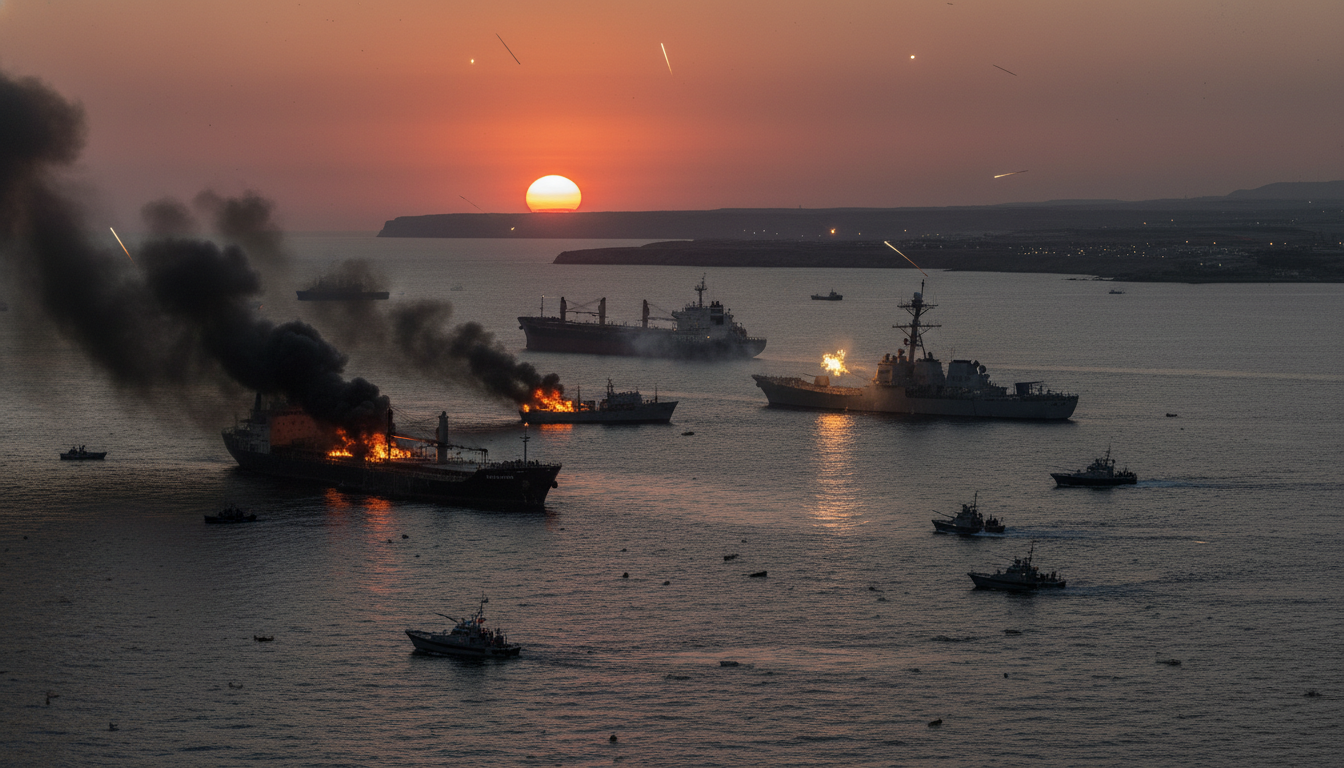
Strait of Hormuz clashes follow U.S. "Project Freedom" launch, raising shipping and energy fears
May 4, 2026 clashes near the Strait of Hormuz after ‘Project Freedom’ launch raise shipping dangers, disrupt energy markets and cause diplomatic uncertainty.
The United States announced a new operation to escort neutral merchant vessels through the Strait of Hormuz, but on May 4, 2026 exchanges of fire between U.S. and Iranian forces near the waterway led to explosions on ships and heightened regional tensions. President Donald Trump described the situation as a “mini-war,” while the confrontations highlighted the immediate risks to commercial navigation through the strategic chokepoint. The clash undercut hopes that the U.S. initiative, called Project Freedom, would reassure shippers and reduce Iran’s leverage over crude transport.
U.S. Launches ‘Project Freedom’ to Escort Vessels
The White House rolled out Project Freedom after President Trump announced on social media that U.S. forces would “guide” neutral ships through the Strait of Hormuz to ensure safe passage. The measure was framed as protective reassurance for international commerce and an effort to deter attacks on civilian shipping. U.S. officials described the operation as an escort and surveillance mission, intended to keep sea lanes open without provoking a broader conflict.
Exchange of Attacks Near the Strait of Hormuz on May 4, 2026
On May 4, multiple reports said Iranian forces fired missiles and launched drones in the vicinity of the strait, and U.S. warships responded with countermeasures, producing blasts on or near commercial vessels. Media and intelligence accounts indicated at least one merchant craft suffered an explosion, though details about casualties and the ship’s flag were initially unclear. The swift sequence of attacks and responses exposed how quickly localized actions can imperil neutral shipping in a narrow and heavily trafficked corridor.
Ceasefire Agreement from April 7, 2026 Put at Risk
Diplomats had pointed to an April 7, 2026 agreement as creating an uneasy but functioning pause in hostilities between Tehran, Washington and allied partners. That fragile standstill has been tested repeatedly, and the May 4 flare-up has made the durability of any ceasefire uncertain. Negotiators have struggled to set a date for the next round of talks, leaving a diplomatic void that analysts say increases the chance of miscalculation at sea.
Economic Impact and Energy Market Disruption
The Strait of Hormuz handles a significant share of global crude shipments, and disruptions there have immediate consequences for energy prices and supply chains. Since a de facto Iranian blockade intensified earlier this year, markets have reacted to shipping delays and elevated risk premiums, contributing to higher fuel costs worldwide. Within the United States, rising gasoline prices have been cited by pollsters and commentators as a factor behind President Trump’s falling approval ratings since the start of his second administration.
Regional Military Posture and Risks to Neutral Parties
Following the clashes, regional militaries and coalition partners increased patrols in surrounding waters, citing the need to protect commerce and deter further strikes. That surge in naval activity raises the danger of accidental confrontations, particularly when missile, drone and small-boat tactics are employed in confined maritime zones. Shipping companies face hard choices about re-routing, sailing at reduced speed, or hiring private security, all of which add cost and complexity to already strained logistics.
Diplomatic Responses and Uncertain Next Steps
Governments and international agencies have urged restraint while calling for renewed diplomacy to prevent further escalation, but concrete mediation plans remain elusive. Some allies have signaled support for the U.S. escorts, while others have expressed concern that military protection could harden Tehran’s posture. With no clear timetable for resumed talks and competing domestic political pressures on the main actors, the prospects for a sustained de-escalation are unclear.
The May 4 confrontations around the Strait of Hormuz underscore how quickly tactical measures intended to secure passage can interact with strategic rivalries to produce broader instability. Until negotiators secure a durable agreement and shipping operations are visibly protected, insurers, shippers and energy markets are likely to price in continued risk, prolonging economic and political uncertainty across the region.

