
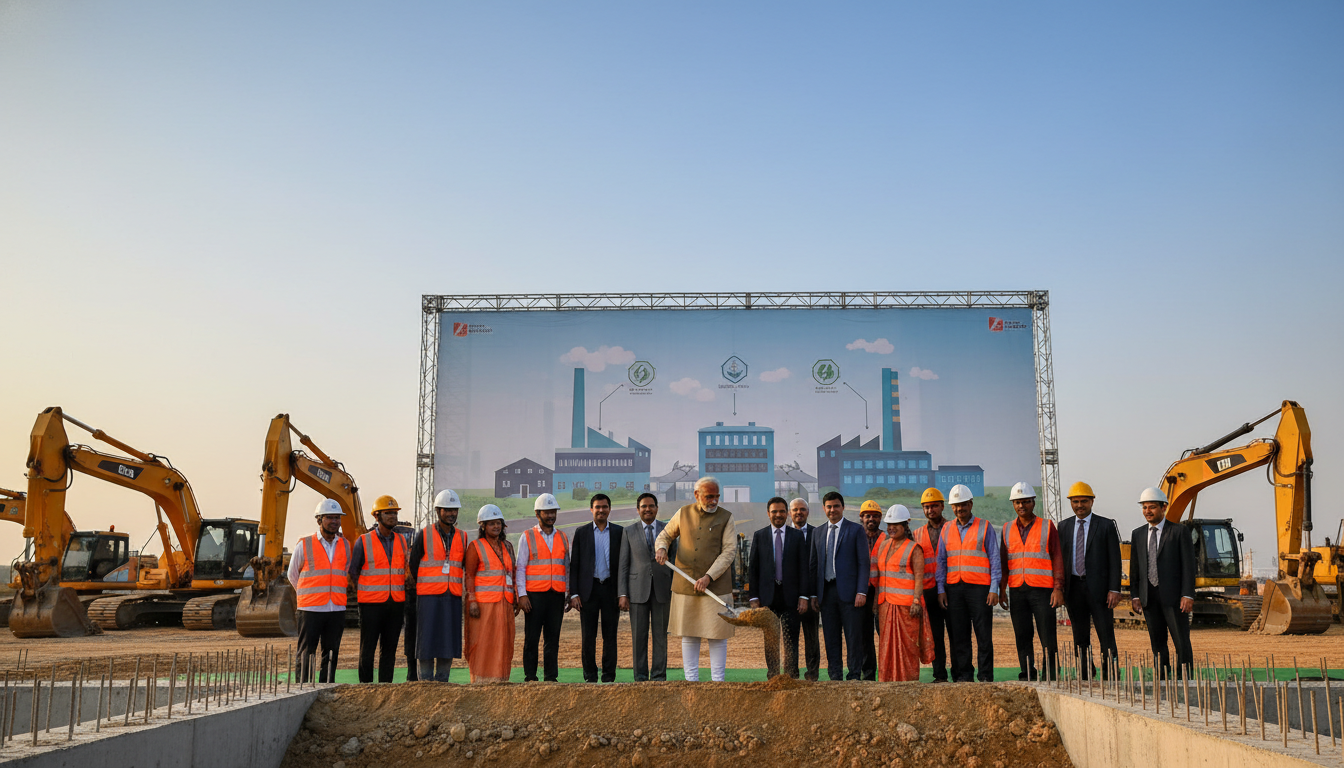
India approves $3.6 billion push for plug-and-play industrial parks to speed factory builds
New 336.6 billion rupee plan funds 100 plug-and-play industrial parks to cut delays and attract global manufacturers amid shifting supply chains.
RAJASTHAN, India — The central government has approved a 336.6 billion rupee ($3.6 billion) package to develop 100 plug-and-play industrial parks aimed at reducing project delays and accelerating factory construction. The move targets persistent bottlenecks that have undermined India’s efforts to capture a larger share of global manufacturing as companies diversify supply chains. Officials say the plug-and-play industrial parks will provide ready infrastructure so investors can begin production faster.
Cabinet approves 336.6 billion rupee package
The federal cabinet signed off on the spending commitment to finance land preparation, core utilities and basic logistics at the new sites. The allocation is intended to create turnkey zones where firms can move quickly without waiting months or years for approvals and connections. Government statements indicate the parks will be distributed across multiple states to balance investment and regional development.
Plan targets 100 ready-to-use industrial parks
Each park will be developed with pre-built roads, power lines, water and wastewater systems, and digital connectivity to allow a rapid start to construction and operations. The plug-and-play industrial parks model packages those services so companies can limit upfront capital expenditures and begin production with minimal delay. Authorities expect the standardised approach to be more attractive to multinational manufacturers seeking predictable timelines.
Delays and supply-chain shifts spurred the move
Policy makers framed the package as a response to repeated project delays that have frustrated potential investors and slowed factory openings. As global supply chains shift away from single-source models, many international firms have looked to India but encountered lengthy land acquisition, permitting and utility connection processes. The new parks are intended to address those specific frictions by centralising and pre-approving critical infrastructure.
Industry observers note that speed to market has become a decisive factor for companies relocating production, and India’s relative underperformance in that metric has cost it opportunities in key sectors. The plug-and-play industrial parks are positioned as a pragmatic tool to translate global interest into on-the-ground investment, reducing the administrative and logistical gap between commitment and operational factories.
Existing sites and state partnerships highlighted
Several states and private developers already operate similar industrial estates, providing templates for the central programme. For example, facilities such as the Greenbase Industrial & Logistics Parks near Chennai have demonstrated how ready infrastructure can attract tenants and accelerate production start-ups. The national plan will rely on cooperation with state governments to identify suitable land, streamline approvals and integrate park operations with local supply chains.
Public-private partnerships are expected to play a major role in construction and management, with the central funds covering foundational infrastructure and state or private partners handling site development and investor services. That division is intended to leverage private-sector expertise while maintaining central oversight of quality and standards.
Projected economic impact and employment outcomes
Officials argue the parks will shorten lead times for industrial projects, which should boost foreign direct investment and create manufacturing jobs across participating states. Faster project delivery could also expand exports, as firms that start production sooner are able to meet international contracts and supply commitments more reliably. The government has tied the parks to broader targets for manufacturing growth and import substitution in key product categories.
Analysts caution that the ultimate employment and investment gains will depend on how quickly the parks are completed and occupied. Early successes in some states could generate momentum, while delays in implementation would blunt the economic benefits the programme aims to deliver.
Implementation timelines and remaining risks
The government has set an ambitious rollout schedule but has not released firm completion dates for all 100 parks. Achieving the programme’s aims will require coordinated action on land acquisition, environmental clearances and utility provisioning, areas that have historically caused delays. Ensuring transparent governance and clear accountability at both central and state levels will be essential to prevent the very bottlenecks the programme seeks to eliminate.
Financing beyond the initial central allocation may be needed for site-specific development and long-term maintenance, and the success of public-private partnerships will hinge on attractive commercial terms for investors. Market reception and tenant demand will ultimately determine how many parks become operational on schedule and how rapidly manufacturing capacity comes online.
The 336.6 billion rupee initiative represents a concerted attempt to convert global supply-chain shifts into concrete industrial capacity, prioritising speed and predictability through plug-and-play industrial parks. If implemented effectively, the scheme could help close the gap between investor interest and actual factory openings, offering a test of India’s ability to scale manufacturing quickly and reliably.

