
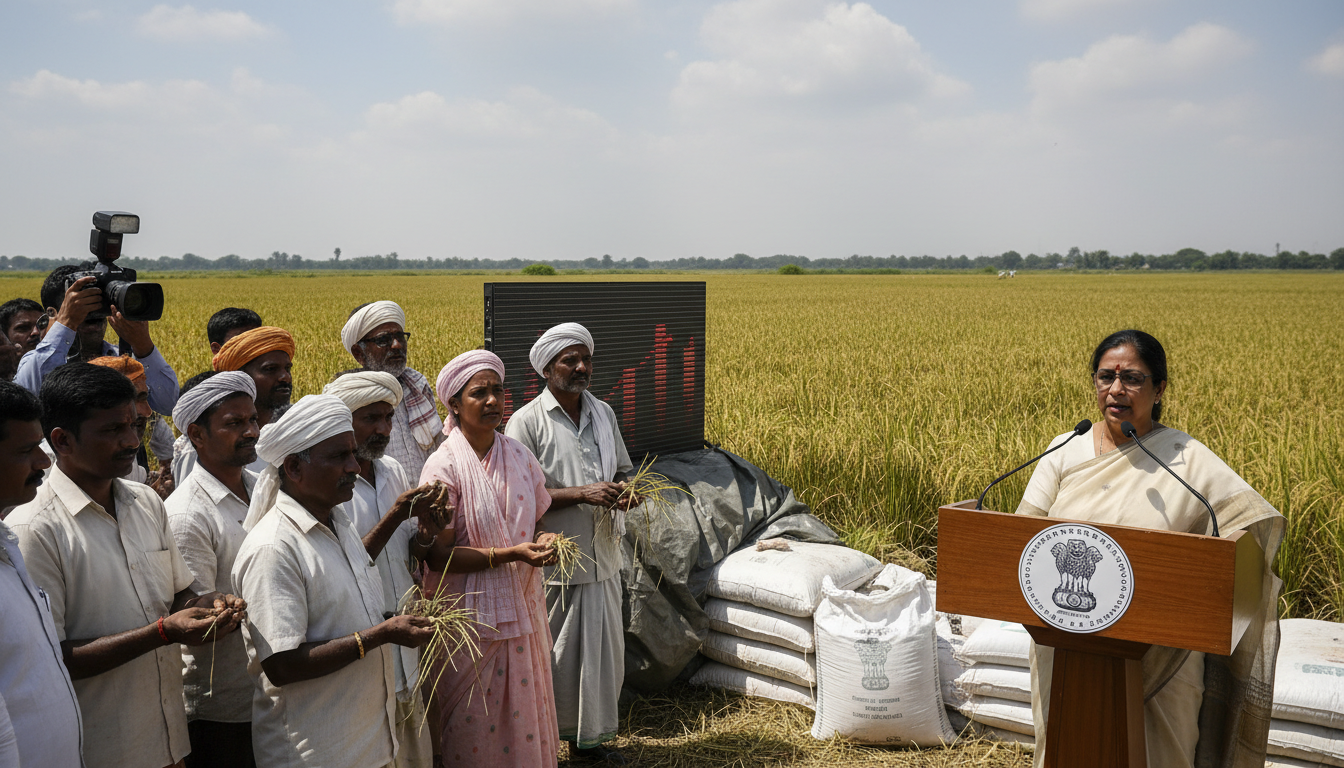
Weak monsoon in India raises prospects of volatile harvests amid fertilizer disruptions
A forecast of a weak monsoon in India and looming fertilizer supply disruptions linked to the Iran war threaten to push crop yields and food prices into volatility this year. The India Meteorological Department’s long-range outlook points to a below-normal southwest monsoon, a development that could intersect with constrained fertilizer shipments and elevated input costs. (business-standard.com)
Monsoon forecast and meteorological drivers
The India Meteorological Department has predicted cumulative southwest monsoon rainfall at around 92% of the long-period average for June–September, signaling a below-normal season and higher risk of deficient spells. Meteorologists attribute the outlook partly to the expected development of El Niño conditions that tend to suppress rainfall over large parts of the subcontinent. (economictimes.indiatimes.com)
Rainfall shortfalls are likely to be spatially uneven, with some regions facing concentrated dry stretches during critical sowing and crop-establishment windows. That pattern raises the chance of localized yield losses for kharif crops such as rice, maize and pulses if timely rains do not materialize.
Fertilizer shipments strained by Gulf conflict
Supply lines for key fertilizer inputs have tightened since the outbreak of the war in Iran, which has disrupted shipping through the Strait of Hormuz and prompted sanctions and trade frictions. Global shipping slowdowns and targeted measures on ammonia and related chemicals have curtailed flows of urea and phosphate feedstocks to importing countries, including India. (apnews.com)
Analysts and industry groups warn that the Middle East remains a major source of nitrogen and phosphate materials, making Asian buyers particularly vulnerable to shipment delays and higher freight and insurance costs. The squeeze comes as seasonal demand for fertilizer typically rises ahead of planting, compounding logistical pressure.
Immediate risks to planting and fertilizer use
Farmers rely on timely delivery of fertilizer to meet crop nutrient requirements at sowing and early growth stages, and any disruption can reduce the efficiency of inputs already applied. Higher fertilizer prices or restricted availability may prompt some growers to cut back on recommended application rates, which can depress yields and accelerate soil nutrient depletion over time. (apnews.com)
Procurement cycles are already being monitored closely by large agribusinesses and state procurement agencies, with some firms exploring alternative sourcing and staggered deliveries to manage short-term shortages. Domestic producers may increase output where gas feedstock and manufacturing capacity permit, but scaling up quickly faces technical and supply constraints.
Market implications for staple prices
A combined shock of weaker monsoon rainfall and tighter fertilizer supplies is likely to lift price volatility for staples such as rice, wheat and coarse cereals. Historical patterns show that deficient monsoon seasons are correlated with regional production shortfalls and inventory draws, which can be transmitted into retail inflation for food. (financialexpress.com)
Traders and market analysts say price movements will hinge on the timing and severity of monsoon deficits as well as how rapidly fertilizer supply chains can be rerouted or compensated by domestic output. Buffer stocks, government procurement and export curbs remain potential tools to moderate extreme price spikes, but these measures also carry economic trade-offs.
Policy and industry responses under way
Central and state governments have convened emergency task forces and monitoring cells to track sowing progress, input availability and buffer stock positions in real time. Officials are reportedly engaging with international suppliers and shipping firms to secure alternative routes and shipments, while exploring temporary rebates or subsidy adjustments to shield farmers from runaway input costs. (business-standard.com)
Private sector players and cooperatives are mobilizing logistics and advising farmers on adaptive practices, including split fertilizer applications and nutrient-efficient formulations. Some agritech providers are offering weather-indexed advisory services to help growers optimize planting windows and input schedules amid uncertain rainfall.
On-the-ground adjustments by farmers
Across rain-fed belts, growers face challenging decisions about sowing dates, crop choices and input mixes as the monsoon onset approaches. In drier tracts, farmers may favor less water-intensive or short-duration varieties to reduce risk exposure, while irrigated regions might push ahead with planned plantings but increase reliance on stored water and groundwater.
Local agricultural extension services are urging incremental management changes—such as soil testing, balanced nutrient use and crop diversification—to sustain productivity if fertilizer supplies are constrained. Those measures can lower vulnerability but require timely information and, in some cases, additional short-term cash outlays.
Weak monsoon in India and the concurrent strain on fertilizer supply chains together represent a compound risk to this year’s farm output and food-price outlook, with consequences that could echo through rural incomes and urban inflation. Policymakers, industry and farmers will need coordinated, adaptive responses in the coming months to prevent localized shortages from becoming broader market disruptions.

