
Ogasawara mayor approves literature survey on Minami-Tori-shima for nuclear waste final disposal site search
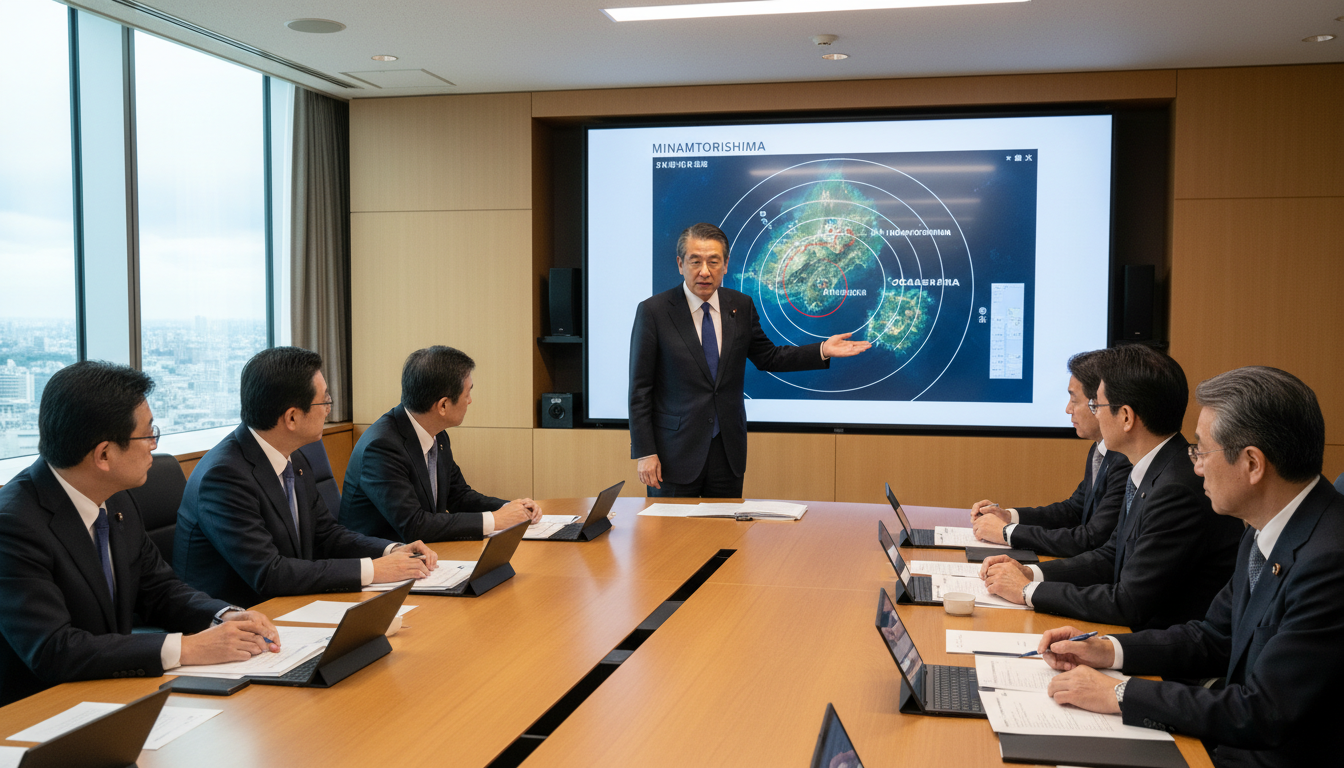
Ogasawara Village will allow a government literature survey on Minami-Tori-shima, a step in the nuclear waste final disposal site selection process that follows a meeting between Mayor Shibuya Masaaki and METI Minister Akazawa. The mayor’s formal acceptance makes a national-government-led study likely to proceed and marks the first time Tokyo has directly advanced such a survey. The decision follows earlier local studies in Hokkaido and Saga and signals a new phase in the search for a long-term strategy for Japan’s nuclear waste final disposal site.
Mayor Shibuya’s formal response after meeting with Minister Akazawa
Mayor Shibuya Masaaki conveyed his acceptance during a face-to-face meeting with Economy, Trade and Industry Minister Akazawa, officials said. The mayor agreed to allow a literature-based survey on Minami-Tori-shima, responding to the national government’s request to assess the island’s suitability for deep geological disposal of high-level radioactive waste.
The acceptance was presented as a conditional approval to proceed with non-intrusive research that reviews existing geological, oceanographic and environmental records. Municipal and prefectural consultations will continue alongside the national study to address administrative and community concerns before any fieldwork or drilling is considered.
Scope and purpose of the literature survey on Minami-Tori-shima
The literature survey will compile and analyze existing academic papers, geological maps, bathymetric charts, and other historical data to evaluate whether Minami-Tori-shima merits further investigation. This stage is intended to screen sites without conducting new invasive field surveys, focusing on whether the island’s geology could, in principle, host a long-term repository for vitrified high-level waste.
Officials emphasize the literature survey is an early, non-binding step in the multi-stage site-selection process for a nuclear waste final disposal site. If the survey uncovers promising indicators, the government would seek further local consent before advancing to on-site investigations, which would require additional approvals and environmental reviews.
National government leads survey for the first time
Unlike previous investigations led by local authorities, the Minami-Tori-shima literature review will be carried out under direct national leadership. Government sources say this approach reflects the central role Tokyo intends to take in moving the national repository program forward after years of stalled progress and local resistance elsewhere.
Ministry officials have framed the central-led survey as a technical, transparent process aimed at narrowing options through science-based screening. They also stressed that any decision to proceed beyond literature review would demand broader consultation and legally mandated procedures, reflecting the sensitivity of siting decisions for a nuclear waste final disposal site.
Past studies in Suttsu, Kamoenai and Genkai recalled
Earlier in the national search for disposal options, literature and preliminary investigations have been carried out by or in cooperation with local governments in Hokkaido’s Suttsu and Kamoenai and Saga Prefecture’s Genkai. Those efforts generated intense local debate and in some instances led to suspensions or re-evaluations after residents and municipal leaders raised concerns about safety, compensation and environmental impacts.
The experience of those municipalities has become a reference point for both the national government and Ogasawara officials, who say lessons learned will inform how consultations are managed and how technical information is communicated. Stakeholders on all sides have repeatedly called for clearer timelines, stronger environmental safeguards and clearer responsibilities if a site is later advanced.
Local stakeholders voice environmental and sovereignty concerns
Residents and interest groups in the Ogasawara archipelago and across related communities have expressed concern about potential ecological impacts, maritime jurisdiction issues, and the precedent of selecting remote islands for a nuclear waste final disposal site. Conservationists point to Minami-Tori-shima’s ecological value and the logistical challenges of transporting high-level waste to remote oceanic islands.
Fishing associations, local governments and environmental NGOs have urged the central government to provide detailed information and proposed mitigation measures before any further steps. They also called for independent scientific reviews and binding guarantees on liability, monitoring and long-term stewardship should any site advance beyond the literature stage.
Next steps, timeline and legal considerations
With Ogasawara’s acceptance of the literature survey, the immediate next steps are the compilation of existing data and an initial technical assessment by government-appointed experts. Officials have not provided a public timetable for the survey’s completion or for subsequent stages, but procedural requirements mean any move to on-site testing would trigger additional local consultations and regulatory approvals.
Legal frameworks governing nuclear waste disposal in Japan require multiple levels of environmental assessment and local consent before intrusive activities or repository construction can begin. The government faces both technical and political hurdles in advancing a nuclear waste final disposal site, and authorities have said they will prioritize transparency to rebuild public trust.
The mayor’s decision to permit a government-led literature review on Minami-Tori-shima begins a process that will test how Tokyo balances national policy imperatives with local consent and environmental protection, while offering a preview of how the country may proceed toward deciding a long-term disposal solution for its most hazardous radioactive waste.

