
Iran Prioritises Fee-Paying Ships Under New Strait of Hormuz Passage Rules
Iran will prioritise vessels that pay security fees under new Strait of Hormuz protocols, limiting passage and postponing transit for non-paying ships.
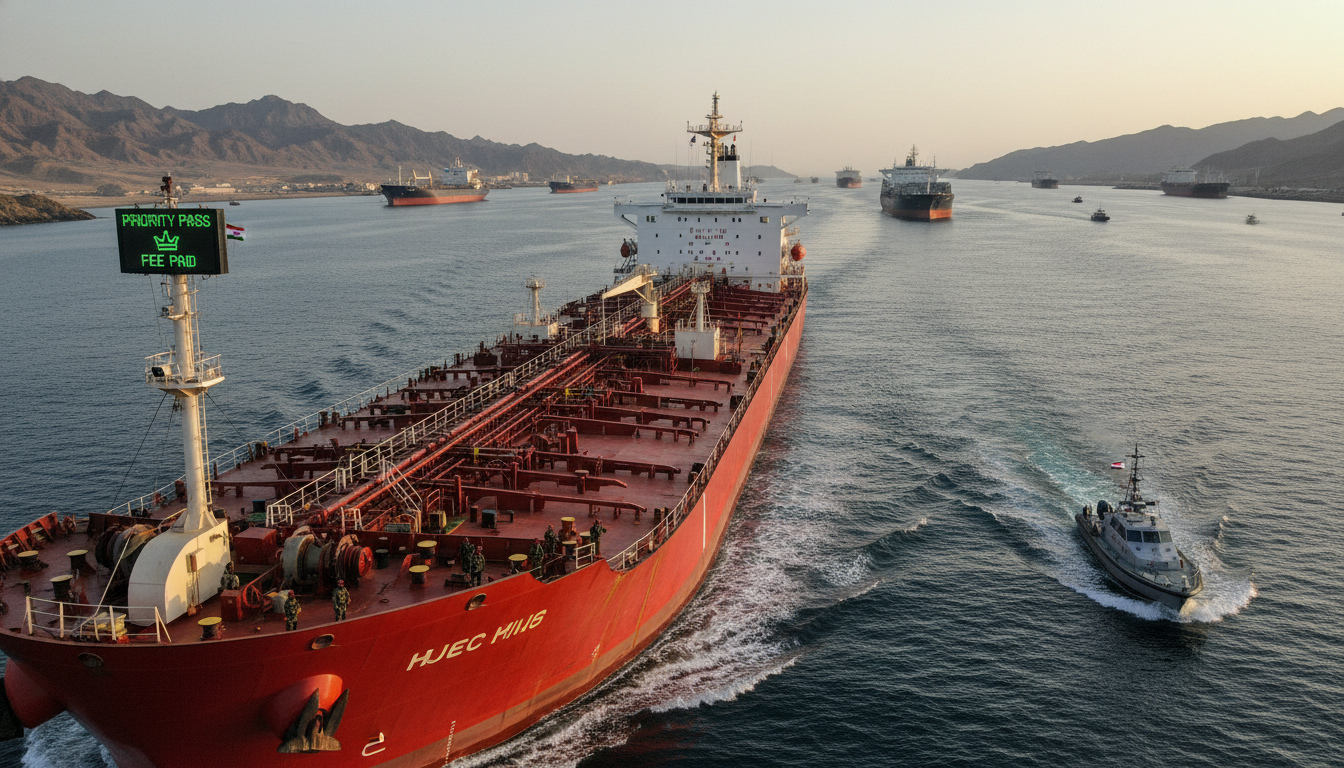
Iran announced a new traffic regime for the Strait of Hormuz that will prioritise vessels which pay security and safety fees, a senior Iranian official told CNN, tightening controls over one of the world’s busiest chokepoints. The move, described by Tehran as necessary after what it called repeated breaches of trust in a recent ceasefire, will limit the number of ships allowed to transit and delay vessels that refuse or fail to pay. Shipping companies and national authorities have raised immediate questions about operational impact and legal implications for passage through the Strait of Hormuz.
New Passage Priority for Fee-Paying Vessels
A senior Iranian official said the government will give priority to ships that quickly comply with Tehran’s new protocols and pay the assessed costs for security and safety services. According to the statement, vessels that do not pay will have their transit “postponed,” effectively creating a paid-priority system for passage through the Strait of Hormuz.
Iran framed the measure as a practical response to limited capacity under tighter controls, saying prioritisation is part of traffic management under the “new order” for the strait. The announcement signals a shift from unrestricted passage to an administratively regulated flow tied to payment and prompt compliance with Iranian procedures.
Tehran’s Justification and Ceasefire Concerns
Iran said it reimposed restrictions on ship movements after citing “repeated breaches of trust” by the United States in a recent ceasefire agreement, according to the official briefed by Tehran. Iranian authorities presented the changes as necessary to protect maritime security and to enforce compliance in a higher-risk environment.
Officials tied the payment requirement to the provision of security and safety services, suggesting that charges will cover escorts, monitoring, and other measures Iran deems necessary. The link between the new rules and the ceasefire disputes highlights how wider geopolitical tensions are now being channelled into maritime control practices in the Strait of Hormuz.
Operational Impact on Shipping and Timelines
Shipping companies face the prospect of slower clearances and potential scheduling disruptions if vessels decline to pay or cannot meet new procedural deadlines. A limited number of daily transits combined with pay-for-priority rules could force some operators to reroute around longer, costlier passages or accept delays that disrupt supply chains.
Commercial consequences may include increased voyage costs, higher insurance premiums and logistical uncertainty for charterers and cargo owners. Ports at either end of affected voyages could see fluctuating arrival patterns while ship operators reassess flag choices and transit strategies for vessels that regularly use the Strait of Hormuz.
Responses from Flags, Carriers and Industry Groups
Maritime registries, commercial carriers and industry groups are likely to seek clarification on the legal basis for fees and the mechanisms for enforcement. States whose flagged vessels operate in the area may lodge diplomatic protests or seek assurances about fair treatment and adherence to international law governing innocent passage.
Shipping insurers and classification societies will review risk profiles associated with transits through the Strait of Hormuz under the new protocol. Industry sources typically request detailed notice periods, fee schedules and operational rules before changing routing recommendations or contract clauses, and this announcement will increase demand for such specifics.
Regional Security and Legal Considerations
The Strait of Hormuz is recognised internationally as a critical international waterway, and restrictions that tie passage to payments raise complex legal questions under the law of the sea. Legal experts will examine whether Tehran’s measures align with obligations to permit transit and what exceptions, if any, Iran cites for the tightened controls.
Governments and maritime legal advisers will scrutinise the balance between a coastal state’s right to ensure security and the principle of unimpeded navigation through international straits. Any escalation in enforcement activities or incidents at sea could prompt diplomatic engagement to prevent wider confrontations affecting commercial shipping lanes.
Implications for Global Energy and Trade Flows
Disruption or delays in transits through the Strait of Hormuz can ripple across global energy markets because the corridor handles a significant share of seaborne oil and liquefied natural gas cargoes. Even temporary chokepoint constraints tend to feed through into freight rates, bunker fuel demand and crude price calculations, depending on the scale and duration of the restrictions.
Energy buyers and traders will monitor shipping patterns closely to gauge whether cargoes are being delayed, rerouted or subject to higher costs that could affect supply timetables. Broader trade continuity depends on predictable transit regimes; uncertainties around timing and cost introduce another layer of risk for supply chains that rely on this strategic waterway.
The announcement by Iranian authorities to prioritise fee-paying vessels in the Strait of Hormuz marks a substantive operational change that shipping interests, governments and legal authorities will watch closely for clarifying details and potential diplomatic ramifications.

