
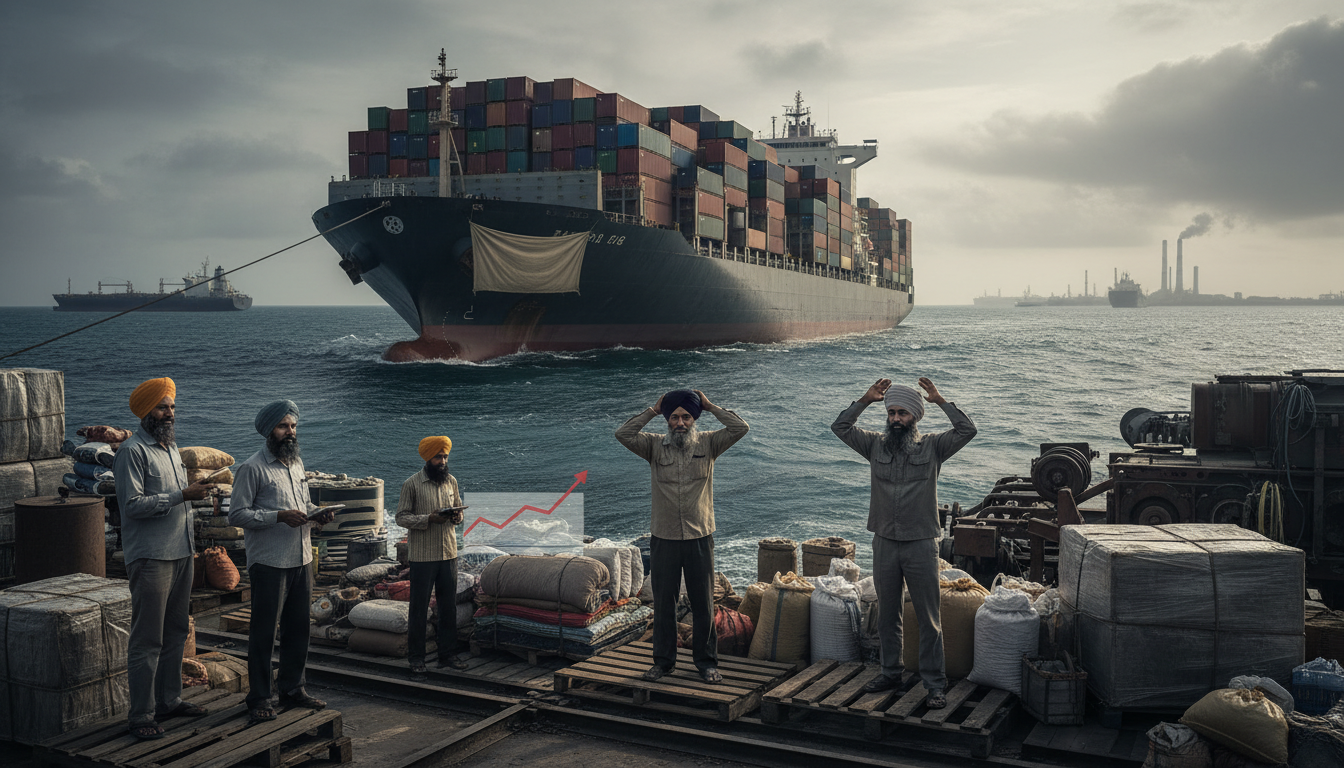
Iran war pushes Indian exporters to absorb soaring freight costs as shipments stall
Iran war raises freight and input costs for Indian exporters, doubling container rates and stopping some shipments as Bengaluru firms absorb rising expenses.
BENGALURU exporters of industrial goods are facing a sudden squeeze after the Iran war disrupted shipping routes and pushed freight and input costs sharply higher on April 23, 2026. The Iran war has driven container rates on key lanes from India to the U.S. and Europe to roughly double in many cases, forcing some manufacturers to absorb added charges rather than pass them on to overseas buyers. Several traders said a minority of orders cannot be shipped at present because carriers and insurers are restricting services on affected routes.
Container rates surge on India–U.S./Europe lanes
Container freight from Indian ports to Western markets has climbed steeply, with prices for a single container reaching up to $4,000 in some trades, according to one shipbroker monitoring the region. The rise reflects a combination of higher bunker fuel costs, constrained vessel availability, and risk premiums applied after the outbreak of hostilities. Shippers report limited slot availability on preferred services, which has amplified short-term rate spikes even as forward contracts remain in place.
Exporters forced to absorb costs amid buyer resistance
Many Bengaluru-based exporters said overseas buyers are refusing retrospective price increases on existing contracts, leaving suppliers to shoulder freight and input inflation. Firms producing industrial components and intermediate goods said margins have thinned materially, with some smaller exporters reporting losses on shipments made under fixed-price agreements. Negotiations on future orders are strained as buyers demand concessions while sellers seek contracts with clearer fuel and surcharge pass-throughs.
Some orders blocked as carriers reroute or suspend services
A number of consignments are being delayed or cancelled because carriers have rerouted vessels, suspended certain sailings or placed embargoes on cargoes destined for ports perceived as higher risk. Exporters described situations where bookings were rejected at short notice and replaced by vessels operating along longer, more expensive corridors. These operational decisions have led to extended lead times and inventory bottlenecks, affecting production schedules for both suppliers and their overseas customers.
Insurance and security premiums add to cost pressure
Insurers and underwriters have raised war and political-risk premiums for shipments transiting affected waters, leading to higher overall logistics bills for exporters. Brokers and logistics managers said cover for some routes now carries explicit exclusions or sub-limits, obliging firms either to accept reduced protection or to pay markedly higher premiums. These increased insurance costs compound the impact of freight spikes, making certain low-margin exports economically unviable without immediate contract adjustments.
Sectoral fallout: who is most exposed
Manufacturers of heavy industrial parts, chemical intermediates and capital-equipment components appear particularly exposed because their goods move in containers or break-bulk and rely on predictable shipping schedules. Exporters of lighter finished goods that can switch to air freight face much higher cost penalties, while commodity exporters with flexible logistics contracts have been better placed to manage disruptions. Analysts warn that prolonged disruption could shift supplier selection and sourcing patterns over the medium term, affecting India’s competitiveness in some overseas markets.
Industry responses and measures under consideration
Export associations and trade chambers in India are engaging with freight forwarders, carriers and insurers to seek temporary solutions such as alternative routing, consolidated shipments and revised surcharge mechanisms. Several firms reported investing in inventory buffers and negotiating contracts that allow fuel- and risk-surcharge adjustments to limit exposure. At the same time, logistics providers are offering tailored routing options and advising customers on documentation and insurance clauses to reduce the risk of rejected sailings.
Access to reliable information and transparency on surcharges are emerging as immediate priorities for exporters aiming to avoid losses and maintain client relationships. Trade financing sources are being tapped to smooth cash-flow pressures caused by delayed payments and higher working capital needs, while some larger buyers are opening talks about shared-cost arrangements for extraordinary disruptions.
The immediate outlook will hinge on how long maritime insurers and carriers maintain heightened premiums and restrictions related to the Iran war, and whether alternative routes can be scaled up without prohibitive cost increases. Exporters and logistics operators say they are monitoring developments closely and preparing contingency plans, but warn that, unless conditions normalize, trade flows between India and key Western markets will remain under strain for the weeks ahead.

