
Japan to Invest ¥1 Trillion in Recycled Resources by 2030 to Strengthen Supply Chains
Japan adopts a ¥1 trillion action plan to secure recycled resources, expand metal recovery and cut reliance on imports, with targets through 2030 this summer.
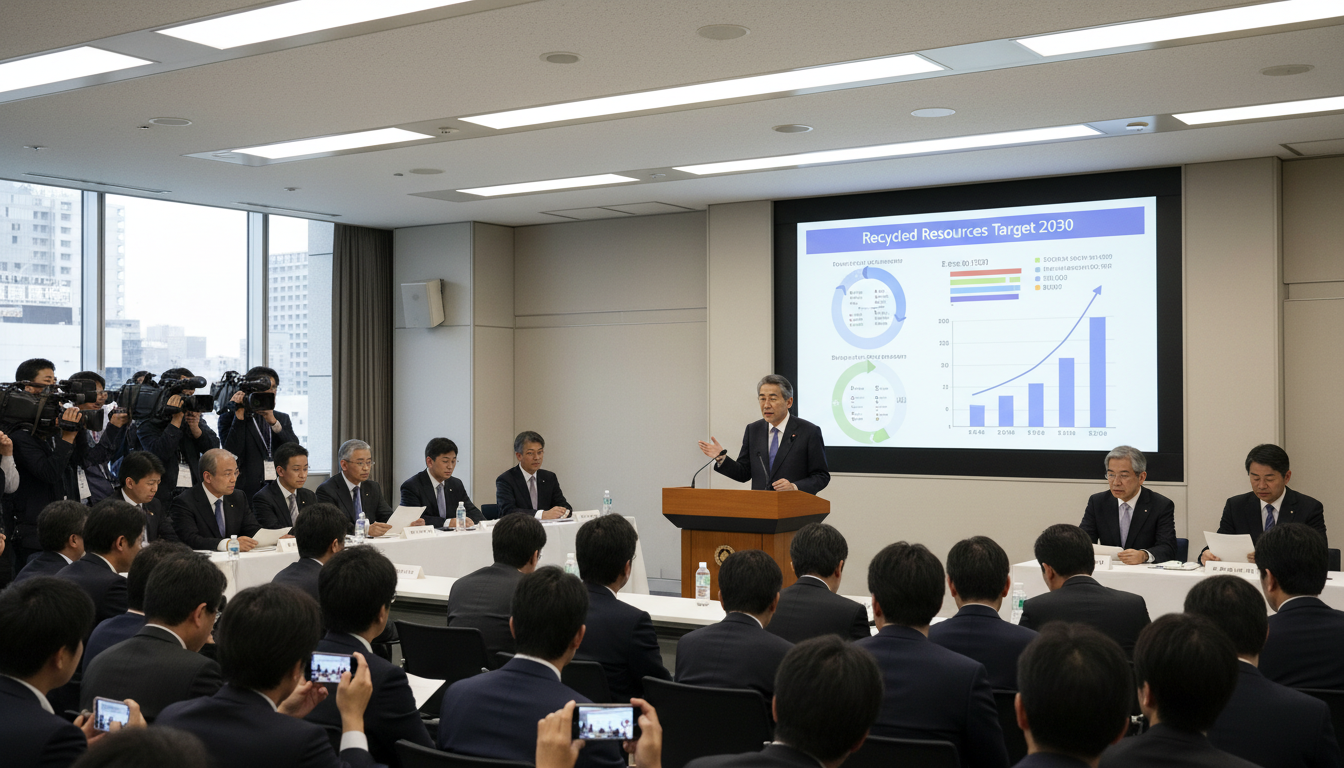
Japan’s cabinet on Tuesday approved an action plan that calls for a combined public and private investment of ¥1 trillion by 2030 to secure recycled resources and bolster the country’s circular economy. The measure sets specific targets for recovered metals and aims to increase domestic supplies of critical materials used in electric vehicles and medical devices. Officials said the plan will be integrated into the government’s economic strategy and reflected in this summer’s basic economic and fiscal guidelines.
Cabinet Adopts ¥1 Trillion Action Plan for Recycled Resources
The plan was adopted at a ministerial meeting on the circular economy and lays out measures to accelerate the reuse of discarded plastics, rare metals and other recyclable materials. Chief Cabinet Secretary Minoru Kihara characterized the initiative as a core element of Prime Minister Sanae Takaichi’s growth strategy, linking environmental objectives with industrial competitiveness. The government signaled it will pursue coordinated action across ministries to translate targets into concrete projects and funding streams.
The new framework emphasizes public-private collaboration as essential to scaling up recycling infrastructure and technologies. Ministers agreed to pursue incentives that attract corporate capital while directing government funding to strategic bottlenecks. Officials also cited monitoring and reporting mechanisms to track progress toward the 2030 investment and supply goals.
Targets for Metals and Permanent Magnets by 2030
A central element of the plan is a target to source roughly 30% of raw materials for permanent magnets from recycled resources by 2030. Permanent magnets are key components in electric vehicle motors and some medical devices, sectors where demand is projected to grow sharply in coming years. The plan further sets targets for increasing the overall supply of major metals recovered domestically through the decade.
Officials say meeting the magnet target will require improvements across collection, separation and refining processes, as well as investment in recovery technologies. The government expects the private sector to pilot advanced sorting and material recovery projects that can be scaled nationwide.
Public-Private Investment and Financing Measures
To mobilize the planned ¥1 trillion, the government will push for greater private financing alongside public funds targeted at infrastructure and R&D. Cabinet discussion included proposals to secure a sufficient budget in annual fiscal planning and to explore loan schemes or credit facilities to support businesses expanding recycling capacity. Policy designers indicated a mix of direct subsidies, tax incentives and concessional loans will be considered to lower investment risk.
Ministries will also review regulatory barriers that can slow deployment of recycling plants and material-processing facilities. Streamlining permitting and harmonizing standards for recycled material quality were named as priority steps to reduce upfront costs and speed commercial uptake.
Economic Security and Rare Earths Supply Concerns
The action plan underscores economic security concerns as a driving factor, responding to intensifying global competition for critical minerals. Officials noted recent moves by China to tighten controls on some rare earth exports have heightened urgency to secure domestic supply chains. The recycling initiative is presented as a means to reduce dependence on imports and stabilize supply for industries deemed strategically important.
Analysts say expanding recycled supplies can mitigate geopolitical risks while supporting decarbonization and industrial policy goals. Government briefings highlighted that a resilient domestic recovery chain for critical metals will complement efforts to diversify overseas procurement and develop secure stockpiles.
Policy Integration, Timeline and Monitoring
The government plans to incorporate the action plan into the annual basic economic and fiscal guidelines to be drawn up in summer 2026, providing a policy backbone for budget allocations and regulatory work. Ministries responsible for industry, environment and finance will produce implementation road maps and set interim milestones ahead of the 2030 deadline. The cabinet also signaled it will convene regular ministerial reviews to assess progress and adjust measures as needed.
A cross-ministerial secretariat is expected to coordinate data collection and performance indicators, ensuring transparency on investment flows and recycled material outputs. The structure aims to enable rapid policy responses if targets lag or if market conditions change.
The government’s initiative frames recycled resources as both an environmental imperative and an economic security priority, seeking to build domestic capability while attracting private capital. If implemented fully, the plan could reshape supply chains for high-demand metals and strengthen resilience for Japan’s manufacturing sectors.

