
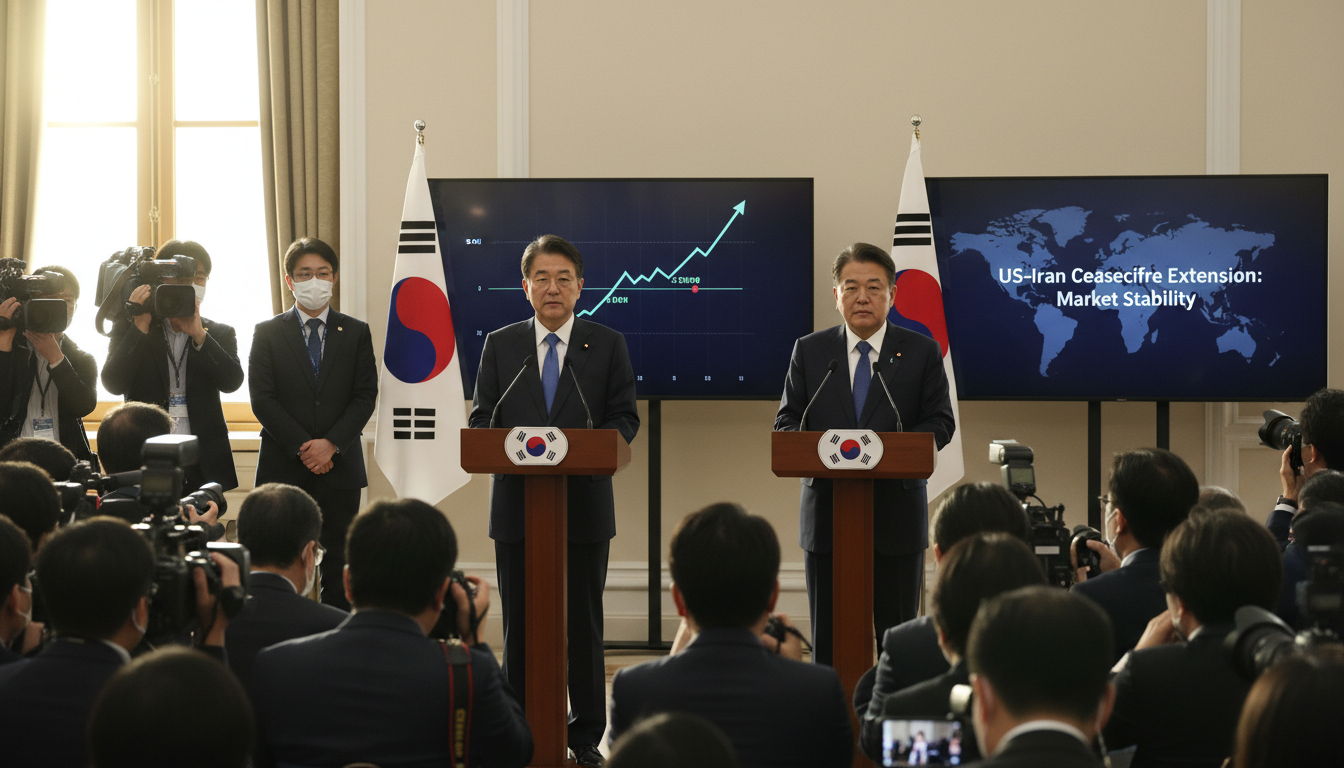
Nikkei steadies as U.S. extends Iran ceasefire; Japan, South Korea benchmarks hold gains
Nikkei steadied on April 22 after a U.S. move extending a ceasefire with Iran; Japan and South Korea benchmarks held gains as investors weighed regional risks.
Asian markets opened mixed on Wednesday, with Japan’s Nikkei Stock Average finishing marginally higher after a previous day’s rally left benchmarks close to unchanged. The market reaction came as a U.S. announcement extended a ceasefire with Tehran indefinitely even as tensions around the Strait of Hormuz and a persistent blockade kept risk sentiment fragile. Traders said the pause in outright escalation allowed investors to consolidate recent gains while remaining cautious about shipping and energy-related disruptions.
Tokyo trading: Nikkei marginally higher after overnight news
Japan’s Nikkei showed modest upside on April 22, reflecting a restrained response to the U.S. bulletin on the ceasefire extension. Market participants described the move as a relief but noted that the underlying geopolitical standoff remained unresolved, limiting aggressive buying. Trading volumes were characterized as subdued, signaling that many institutional players preferred to await further clarity before reallocating sizeable positions.
Seoul and regional benchmarks show limited movement
South Korea’s benchmark also held most of the prior day’s gains and traded nearly flat through the morning session. Across the region, equities displayed a pattern of consolidation: recent rallies were not being materially reversed, yet fresh upward momentum was lacking. Analysts pointed to cross-border flows and earnings season positioning as additional factors keeping index shifts moderate.
Geopolitical backdrop: Strait of Hormuz and blockade concerns
The Strait of Hormuz continued to cast a shadow over investor sentiment despite the ceasefire extension announced by the United States. Market sources noted that reports indicating the blockade remained in place kept traders attentive to shipping disruptions and potential spikes in freight and insurance costs. Energy markets and related stocks were singled out for closer monitoring as participants weighed the odds of renewed supply shocks.
Investor behavior and risk appetite remain cautious
Buyers were selective, focusing on defensive and high-quality cyclicals while trimming exposure to names deemed most sensitive to trade and shipping disruption. Portfolio managers said the environment favored short-term, tactical moves rather than broad market bets. Currency dynamics, particularly the yen’s moves against the dollar, also influenced flows as exporters and importers adjusted hedging strategies.
Commodities and currency link to market direction
Energy and shipping-linked equities experienced the most immediate reaction to the situation in the Gulf, with oil-related names seeing intermittent bids and retreats as traders parsed headlines. The yen’s stability — or lack thereof — was cited as another moderating force for the Nikkei, given the index’s heavy representation of exporters. Market watchers said any sustained yen weakness could underwrite further support for the Nikkei, while yen strength would likely dampen gains.
Analysts’ outlook: cautious optimism but watchful waiting
Many analysts described the near-term outlook as one of cautious optimism: the ceasefire extension reduces the probability of immediate escalation, but persistent operational risks keep a premium on vigilance. Forecasts varied on timing for a sustained rally, with several noting that clearer signals on the blockade and shipping corridors would be required to entice risk-on trades. Strategists recommended watching offshore indicators and corporate guidance for the next directional cues.
Investors entering the second half of the trading week appeared to prioritize balance between capturing consolidation gains and guarding against headline-driven volatility. With the market’s reaction muted yet attentive, the path for the Nikkei and neighboring indices will likely hinge on developments in the Gulf and the evolving assessments of energy and logistics disruptions.

