
U.S. Secretary Seeks $10 Billion for Air Traffic Control Modernization
U.S. Transportation Secretary seeks $10 billion for air traffic control modernization to fix outages, upgrade software and rebuild FAA infrastructure by 2028.
Duffy announces $10 billion request for modernization
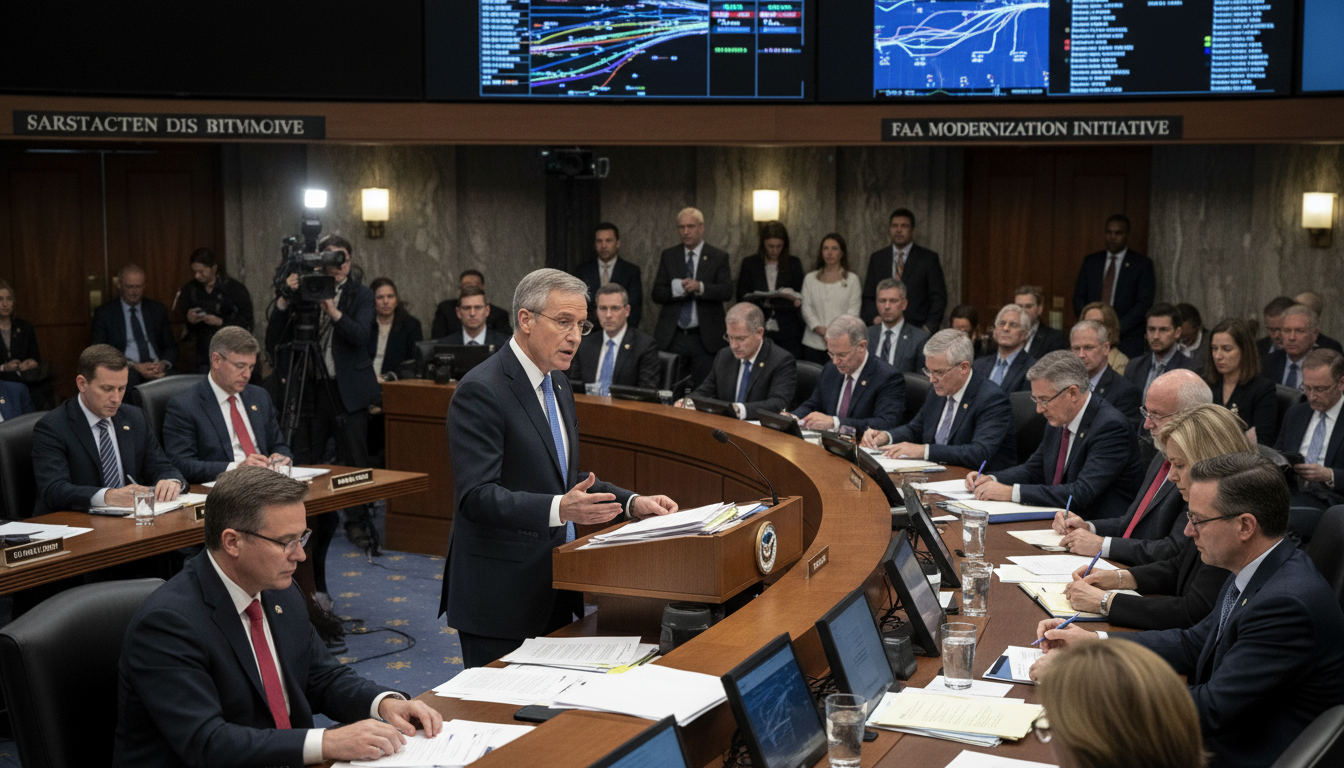
U.S. Transportation Secretary Sean Duffy on Tuesday formally asked Congress for $10 billion to fund the next phase of air traffic control modernization aimed at reducing systemic disruptions across the national airspace.
The request follows a previous congressional allocation of $12.5 billion and targets new software and continued upgrades to the Federal Aviation Administration’s aging communications and tower systems.
Duffy described software development as central to the plan, saying improved tools will let the FAA manage traffic flows more dynamically and minimize the cascading delays that have plagued U.S. airports.
He told officials the immediate funding would be devoted to tower improvements, surface awareness systems and the software needed to spread scheduled flights across available capacity.
Outages and safety alarms that spurred the push
High-profile failures have underscored the urgency of the modernization effort, most notably an outage that halted Newark International Airport operations on May 11, 2025.
In March 2026 the FAA twice halted traffic at all three Washington-area airports for more than an hour because of problems tied to aging technology, officials said, heightening concern among carriers and travelers.
A 2023 assessment found large portions of the FAA’s communications network were obsolete, with many systems no longer supported by spare parts and 51 of 138 telecom elements deemed unsustainable.
Those findings, paired with repeated service interruptions, have driven calls from industry and regulators for a concentrated federal investment in both hardware replacement and software modernization.
Software seen as the key to reducing delays
Officials say the new software will allow air-traffic managers to visualize demand and reposition flights well before disruptions cascade into multi-hour delays.
Duffy emphasized that visibility and redistribution tools would let the FAA “see and then spread flights in a way that allows for way less disruption,” an approach he argues is essential to modern operations.
Airlines commonly publish schedules that far exceed FAA capacity, creating chronic pressure on the system; Duffy noted planners can look 45 days ahead and find schedules about 50% above available capacity.
By enabling finer control of flight sequencing and ground operations, the software aims to smooth peaks and reduce the number of flights that must be held on the ground or delayed in the air.
Progress to date and remaining infrastructure needs
The FAA says it has already completed a number of tangible upgrades, replacing nearly half of legacy copper wiring, converting some 270 radio sites, installing surface awareness systems at 54 airports and moving 17 towers to electronic flight strips.
Agency projections call for a major equipment rollout through 2028, including 5,000 new high-speed network connections using fiber, satellite and wireless links, 27,000 radios and 612 modern radars.
Despite those advances, officials acknowledge substantial work remains to replace end-of-life components and to build a resilient telecom backbone that can support advanced software tools.
Industry stakeholders and airport operators have noted that hardware replacement must be matched by training, staffing and operational changes to fully realize the benefits of new systems.
Cost, congressional debate and competing priorities
Duffy previously indicated a desire for up to $19 billion to complete the program but has tempered the immediate request to $10 billion, reflecting an effort to balance ambition with congressional appetite.
Lawmakers will weigh the request against other spending priorities and are likely to scrutinize projected timelines, procurement plans and measurable outcomes before approving larger sums.
Airlines and airports have generally supported federal investment but have also called for clear benchmarks and transparency on how funds will be allocated and how upgrades will affect operations in the near term.
Republican and Democratic members of Congress may diverge on broader transportation spending, making the outcome of appropriations negotiations a key determinant of the program’s pace.
Operational impacts and expectations for travelers
Officials say the combined investment in hardware and software should reduce the frequency and scale of system-wide delays by allowing managers to reassign flights preemptively and to improve situational awareness on the ground.
The FAA estimates that the new network and radar assets scheduled for delivery through 2028 will strengthen resiliency and cut the number of large-scale outages tied to telecom failures.
Travelers may not notice immediate change at all hubs, but aviation executives argue the improvements will progressively lower delay rates and increase schedule reliability as upgrades roll out.
The administration frames the effort as a national infrastructure lift intended to support commerce and mobility while reducing the economic toll of recurring disruptions.
Both the FAA and the Transportation Department say they will provide more detailed program milestones and timelines as the funding process advances, urging Congress to act to prevent further interruptions and to modernize the system for decades to come.
If Congress approves the requested $10 billion, officials project that the funds will accelerate software deployment and continue replacement of critical communications and radar hardware, while FAA leaders plan to report progress against specific performance metrics through the program’s implementation.

