
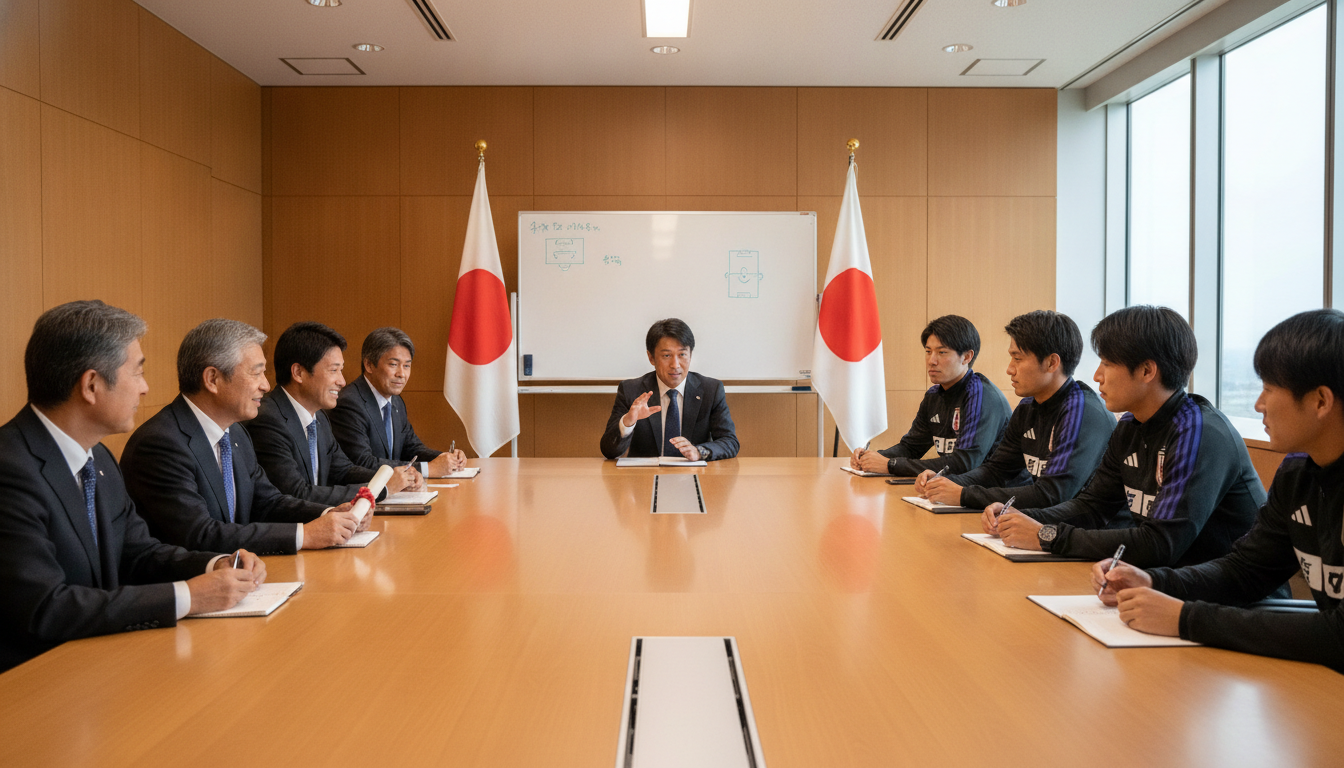
Moriyasu’s eight-year run ends as Japan eliminated from World Cup after Brazil defeat
Moriyasu’s eight-year tenure ends after Japan’s World Cup exit in Houston; veteran support aimed to boost unity but sparked debate over selection and tactics.
Japan’s World Cup campaign ended in Houston on June 30, 2026, when the national team fell to Brazil, closing Hajime Moriyasu’s eight-year spell as head coach. Moriyasu’s strategy of prioritizing “succession” and embedding former players and veteran figures within the delegation was central to the campaign. The decision to use ex-captains and retired stars as support staff drew praise for fostering unity but also renewed scrutiny of player selection and tactical rigidity. Former captain Maya Yoshida, among others, traveled with the squad in a supportive role, underscoring the coaching staff’s emphasis on continuity.
Brazil victory seals Japan’s elimination in Houston
Japan exited the tournament after a knockout-stage defeat to Brazil, ending hopes of a deep run and prompting immediate reflection within the camp. The loss crystallized questions about whether the balance between experience and fresh options was managed effectively. Players and staff were seen consoling each other in the Houston stadium as the significance of the defeat became clear. The result not only concluded the tournament for Japan but also marked the end of a distinct era under Moriyasu’s leadership.
Former captain Yoshida appears as on-site support
Maya Yoshida, the former national team captain now with LA Galaxy, accompanied the squad in a non-playing capacity and was visibly moved after the elimination. Yoshida told team members he still longed to play but that his priority had become supporting the young squad, reflecting a shift from personal ambition to mentorship. His presence, alongside other ex-players, was part of an intentional effort to steady the group during a compact, high-pressure tournament. Inside the team, his intervention after the injury to captain Wataru Endo helped to calm younger players and reinforce collective focus.
Moriyasu prioritized ‘succession’ and veteran integration
One of Moriyasu’s expressed themes for the tournament was “succession,” a plan to pass institutional knowledge to the next generation through elder statesmen. The coach brought veteran figures into coaching and advisory roles, including the late-stage addition of former creative midfielder Shunsuke Nakamura to the staff. Moriyasu framed these moves as deliberate attempts to cultivate leadership and composure within a short tournament window. Supporters argue the approach bolstered team culture and provided emotional resilience at moments of crisis.
Commissioning Minamino and other mentors raised debate
Takumi Minamino, who had not been selected due to injury, traveled with the delegation as a mentor, a role that underlined the staff’s focus on experienced voices off the pitch. The practice mirrored tactics used by recent champions who integrated retired stars and familiar figures to strengthen morale. While many players benefited from the mentorship, critics suggested that the presence of non-playing veterans could not substitute for on-field minutes and questioned whether such arrangements masked deeper selection issues. The strategy prompted pundits and federation stakeholders to weigh the merits of short-term psychological support against the need for clearer pathways for younger talents.
Tactical choices and selection policies come under scrutiny
Beyond the positive reception to veteran support, Moriyasu’s tenure attracted criticism for perceived tactical rigidity and selection conservatism, particularly in high-stakes matches. Analysts pointed to moments when Japan appeared unable to vary its shape decisively against top opponents, creating openings that were exploited by more fluid sides. Debates after the Brazil match centered on whether different personnel or a more adaptable game plan might have yielded a different outcome. As the national program now prepares for structural review, these tactical debates are expected to feature prominently in internal evaluations.
The influence of Argentina’s approach at the previous World Cup was acknowledged by Moriyasu as one source of inspiration for the veteran-inclusive model he applied. The use of former players in staff roles to strengthen cohesion is increasingly common in major tournaments, and Japan’s experiment tested how well such a template transfers across teams with different cultures and playing philosophies. Whether the integration of elders becomes a lasting fixture in Japan’s setup will depend on forthcoming federation decisions and the assessment of on-field results.
Looking ahead, the Japan Football Association faces immediate choices about direction, succession planning and the balance between experience and youth in selection. The tournament exit provides a clear moment for review: to determine how lessons from Houston — both the benefits of veteran mentorship and the limits of tactical conservatism — should shape the next cycle. The coming weeks will be pivotal as officials, coaching staff and players assess responsibility and outline priorities for rebuilding toward future competitions.

